
Level 1 sweep and inspection to the NFPA 211 annual standard - flue, crown, cap, and flashing checked and photographed
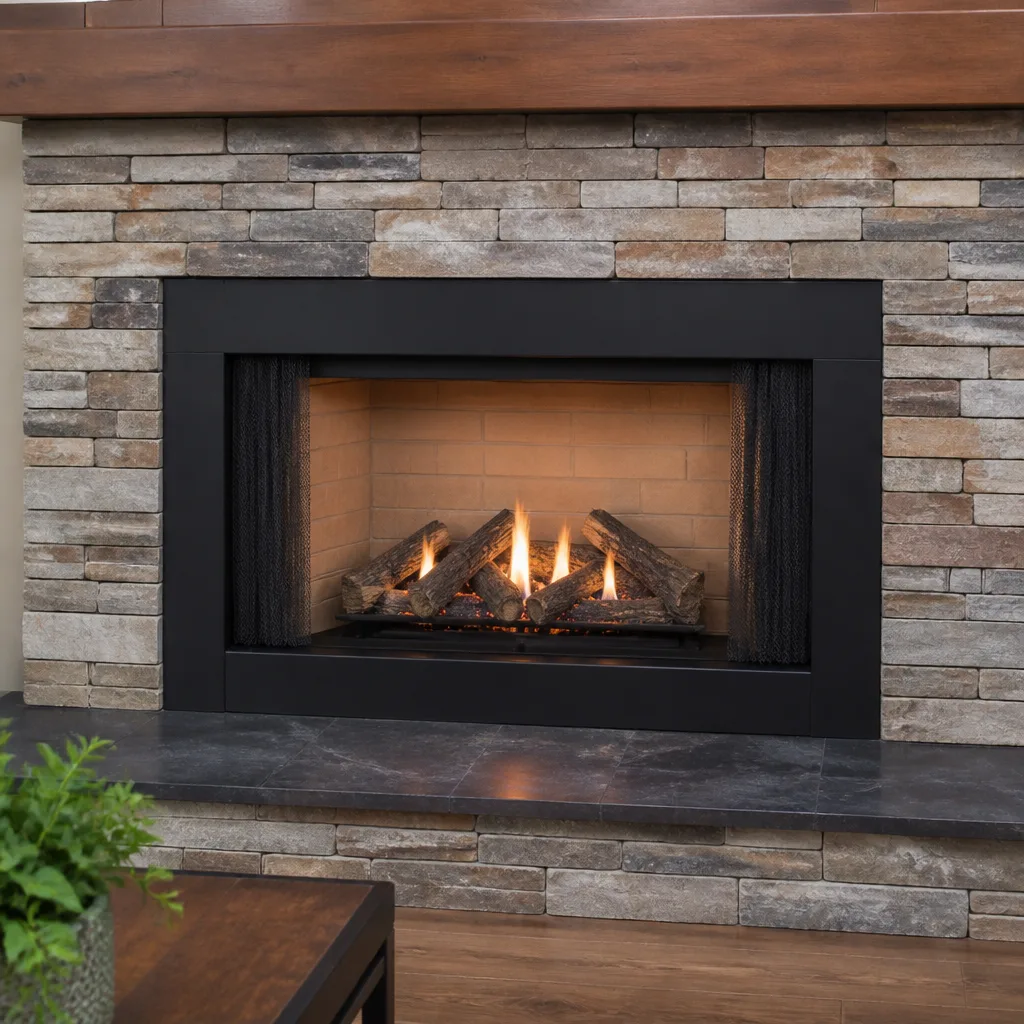
Chimney sweep logs do not sweep chimneys. They loosen some creosote - which then falls where a brush and vacuum still have to collect it.
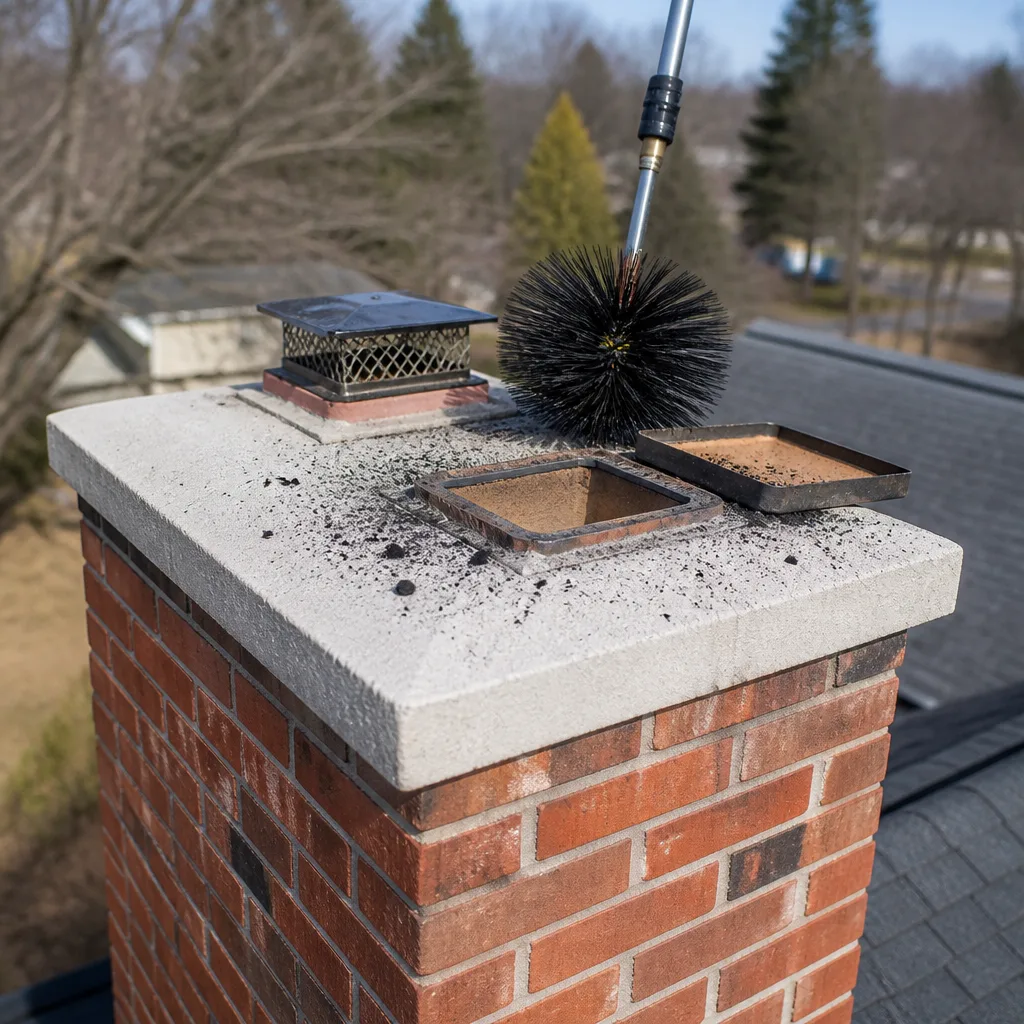
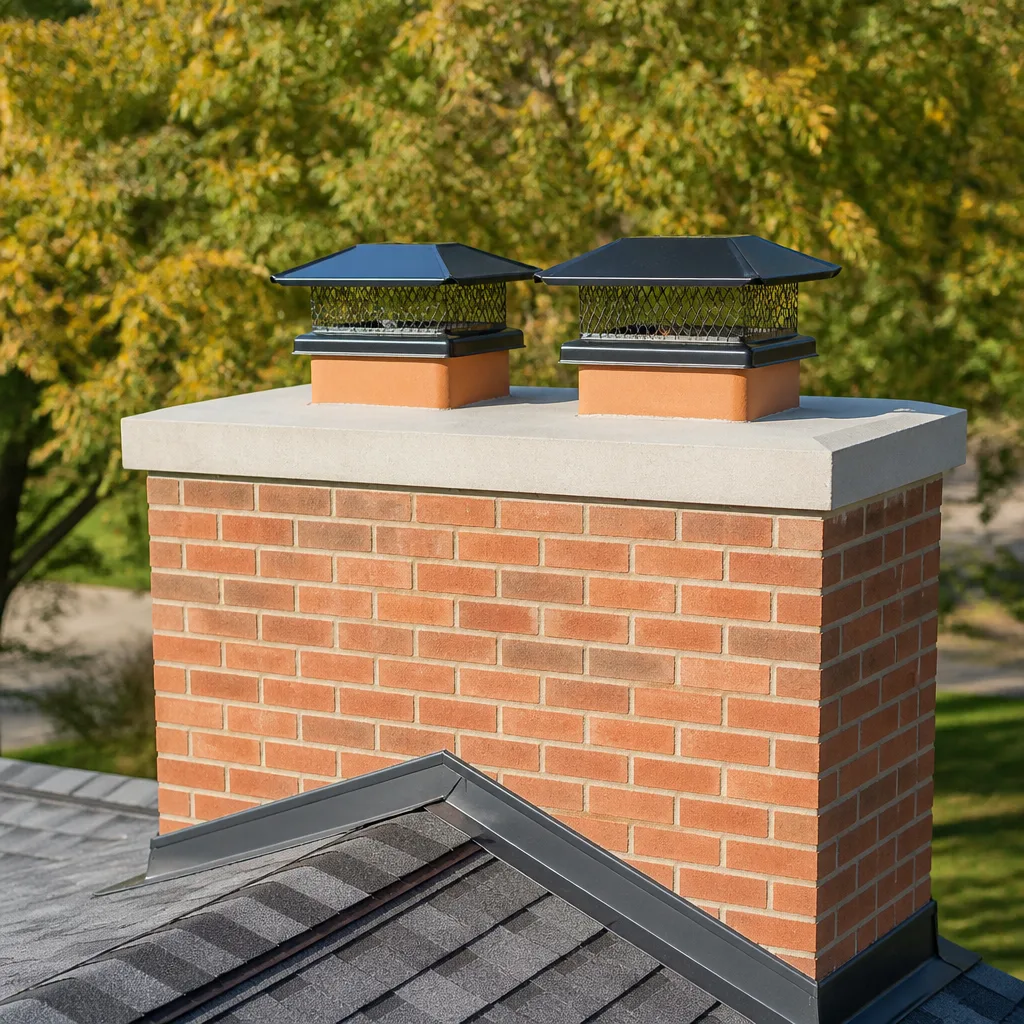
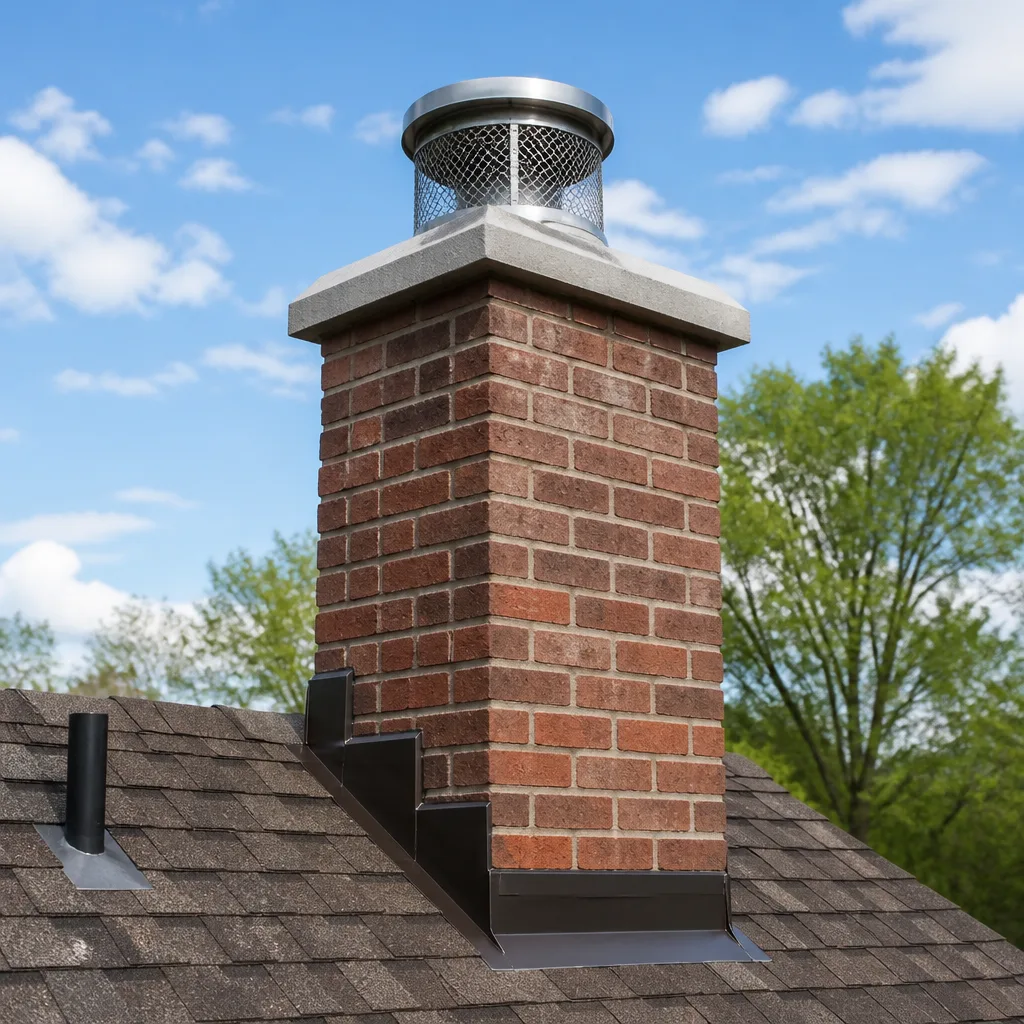
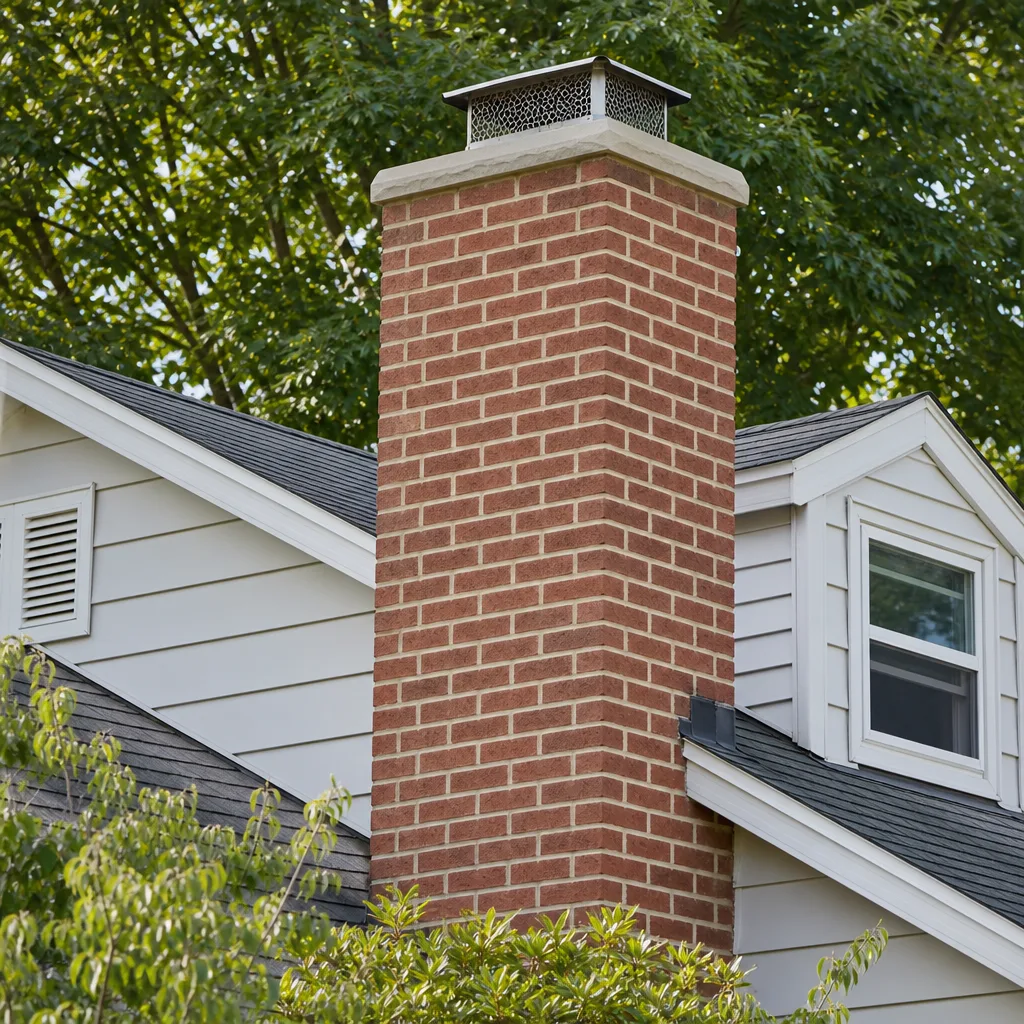
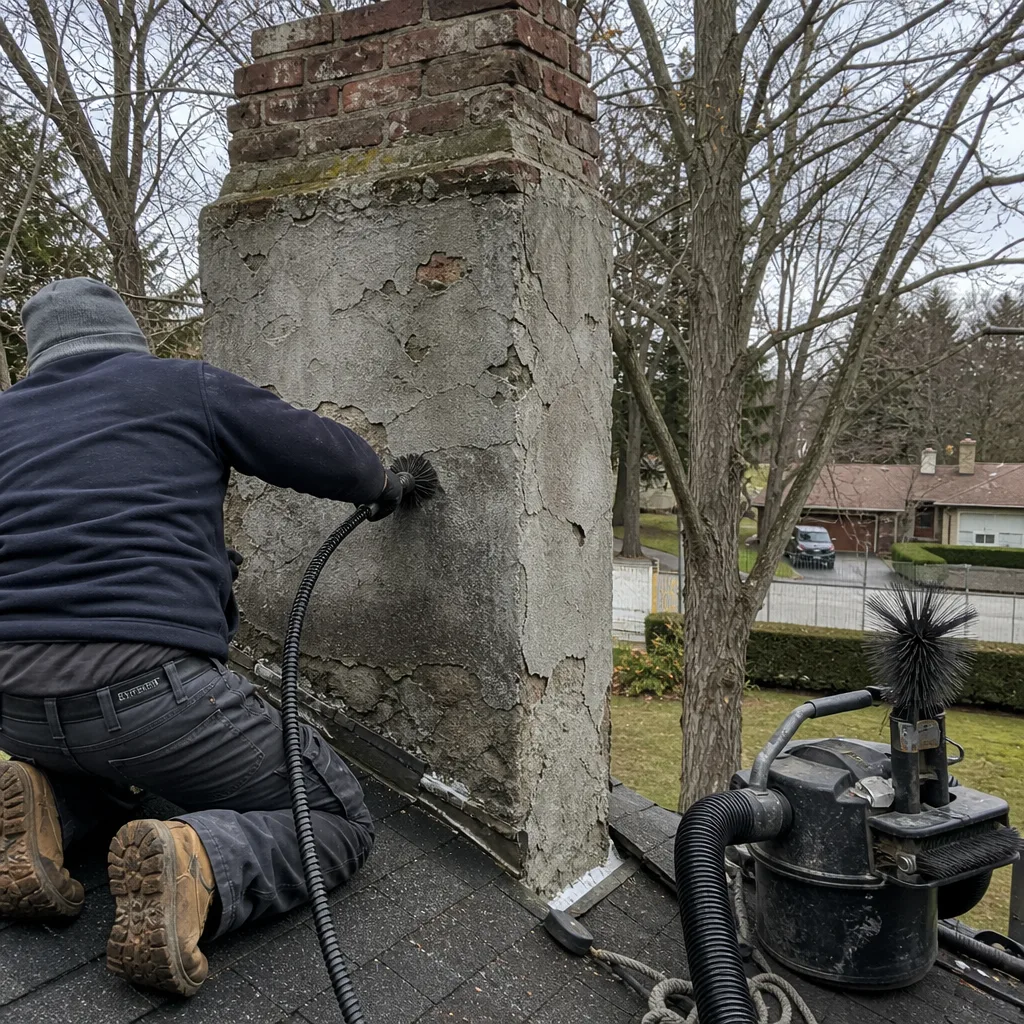 Before
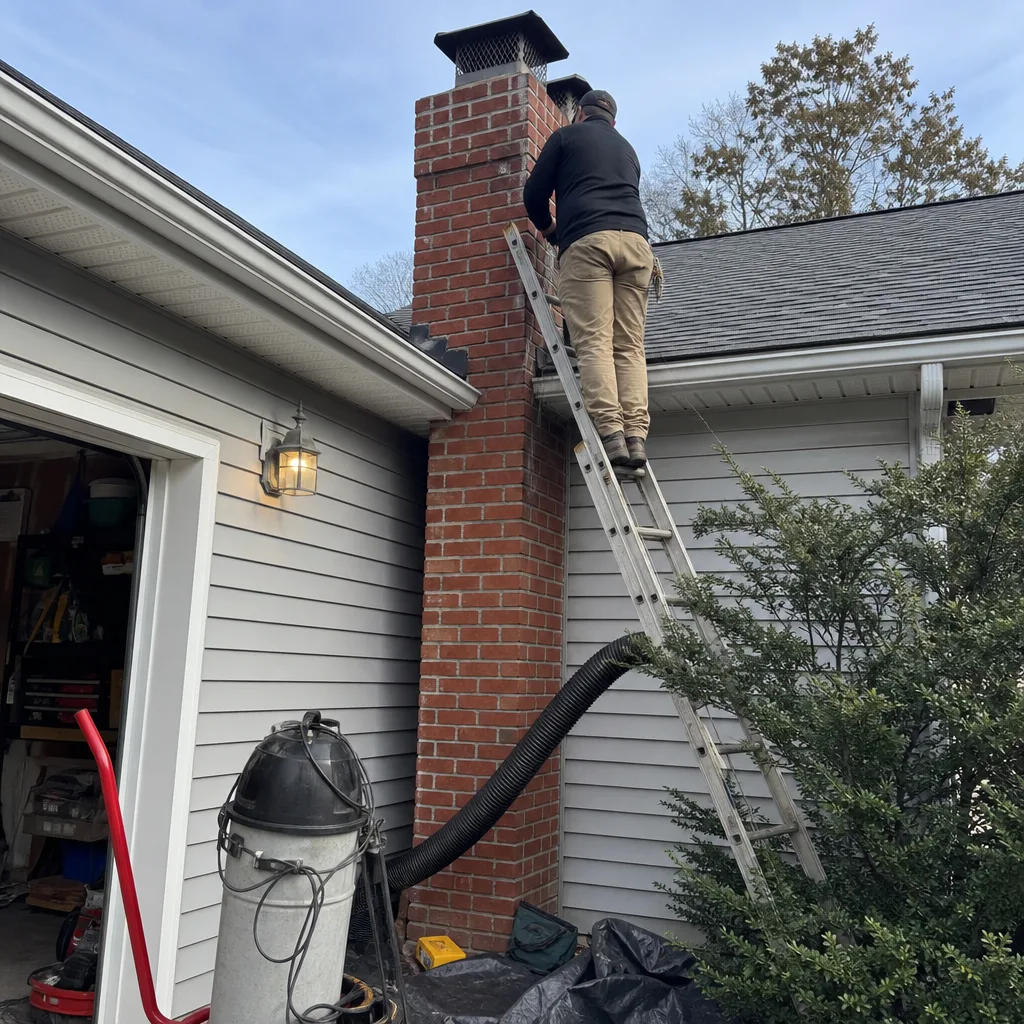 After
After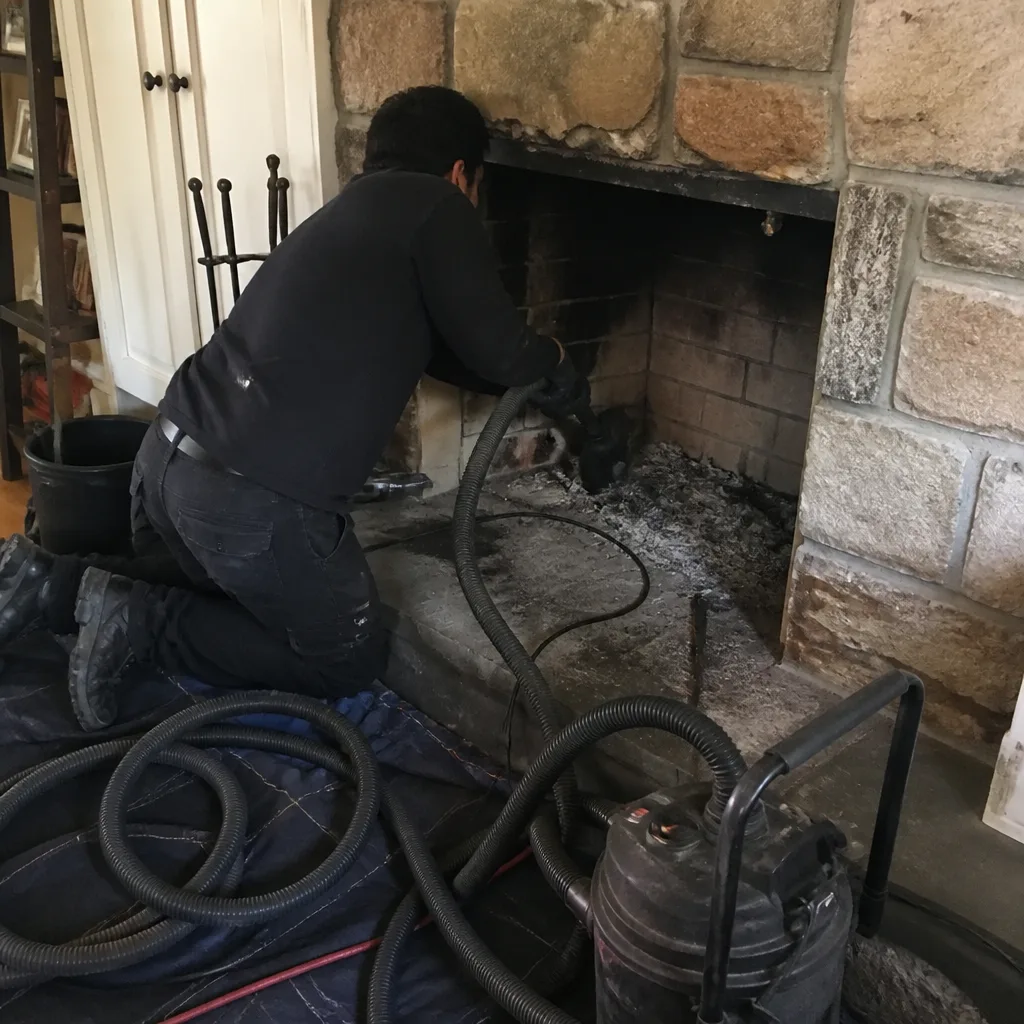 Before
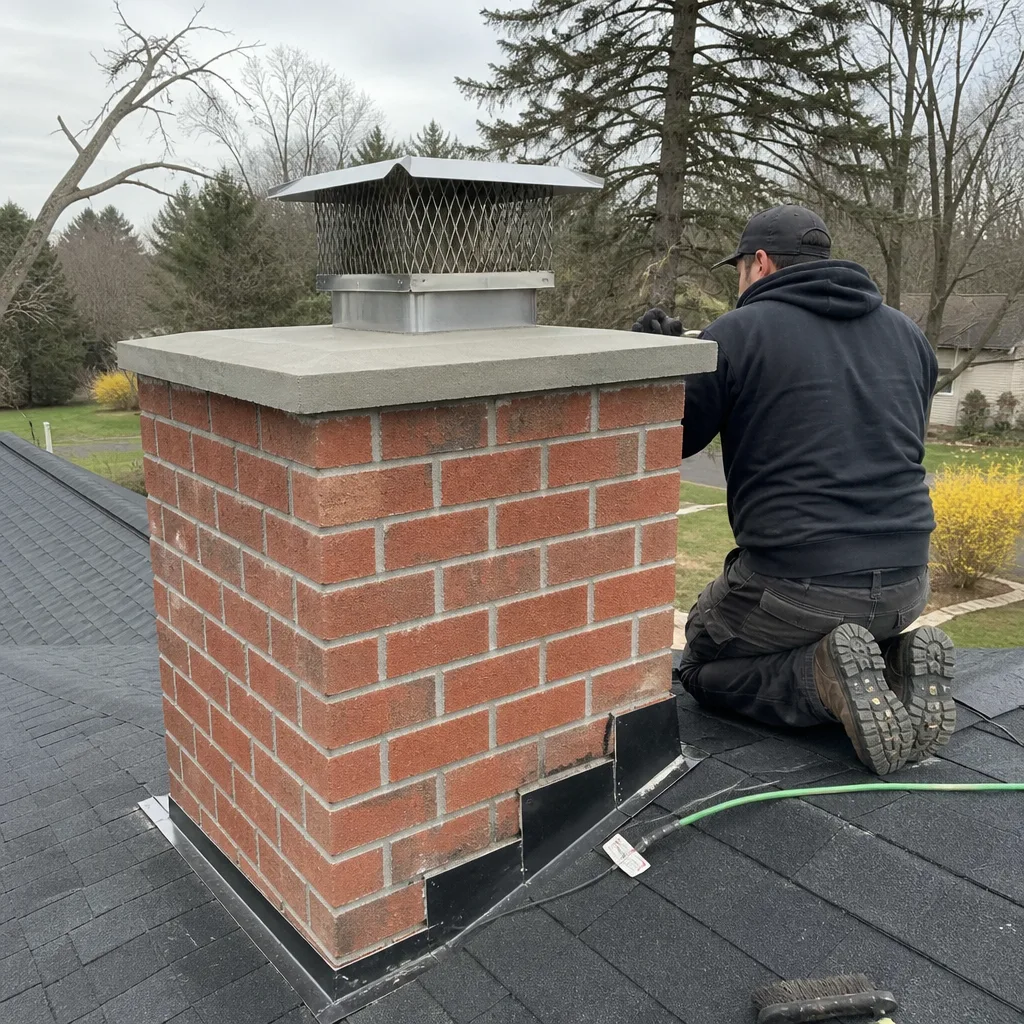 After
After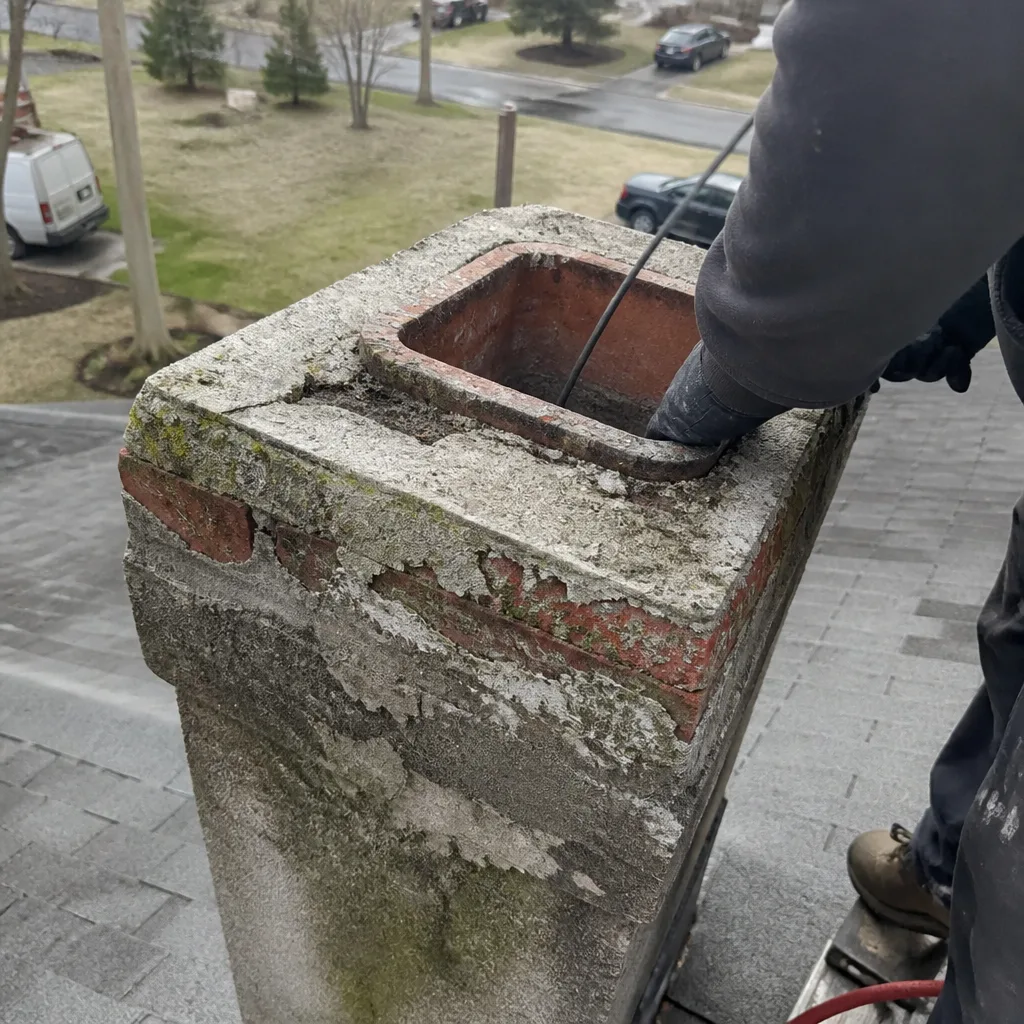 Before
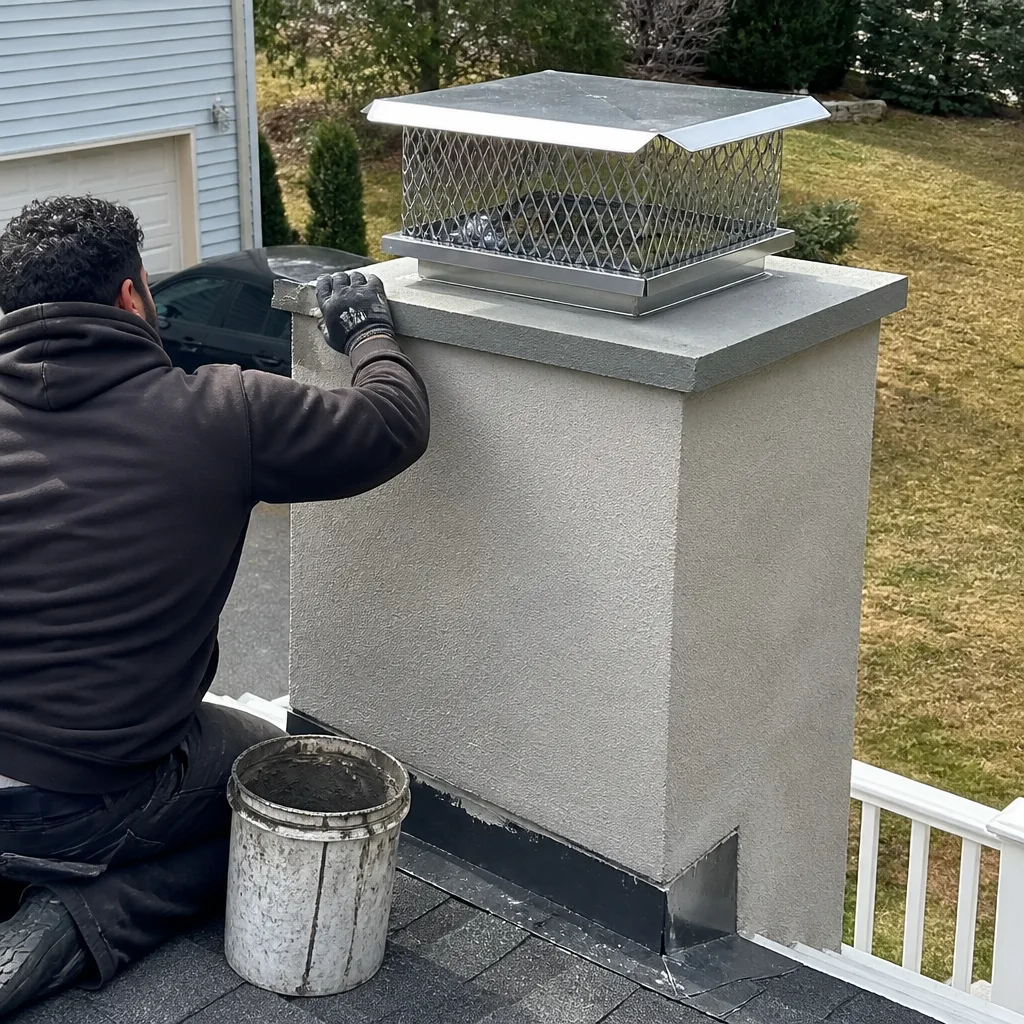 After
AfterCopperfield Chimney Cap Installation: The Dix Hills Owner’s Guide
We stock and install Copperfield chimney caps and replacement parts throughout Dix Hills, with most cap installations running between $275 and $575 depending on the cap size, flue tile shape, and roof access. The job itself usually takes under an hour once we’re on the roof, and we carry the common Copperfield sizes on the truck, so there’s no second trip while a part ships from somewhere in Ohio. Most homeowners in Dix Hills find out their cap has failed the same way: they spot rust streaks on the chimney brick after a hard winter, or a bird starts arguing with itself inside the flue at 6 a.m.
Here’s the quick version: if your Copperfield cap is rusted through, missing its screen, or the mounting collar has come loose, the fix is straightforward and you’ll have an exact number before we unload a single tool. If the cap itself is fine but the chimney crown underneath is cracked, that’s a different conversation, and we’ll tell you that plainly. Either way, the estimate is free, and you’ll know what you’re paying before work begins.
Which Copperfield Models This Applies To
Copperfield makes a handful of cap lines, and most of what we see in Dix Hills falls into three groups: the single-flue caps with the sliding bolt mounting system, the multi-flue caps that sit over the entire chimney crown, and the older band-clamp style that predates Copperfield’s current hardware. The single-flue line runs from 8×8 to 13×13 outside dimensions, and the older 8×12 rectangular caps are the ones we replace most often, because that flue size was wildly popular in Suffolk County homes built in the late 1970s and 1980s.
Here’s the compatibility gotcha: Copperfield changed their mounting bracket design about twelve years ago. If your cap is original to a home built before 2012, the old bracket may not accept the current Copperfield slide-bolt hardware without a small adapter plate. We stock those plates. Top Hat Chimney is an independent service provider, not a Copperfield distributor, so we’ve got no reason to push one line over another, but we do keep Copperfield’s current mounting hardware on hand because half of Dix Hills already has it up there and matching the existing footprint saves you money on crown patching. Aftermarket options from Gelco and Olympia fit the same dimensions and hold up just as well; whether you want the Copperfield name or a solid equivalent, we’ll quote both.
To identify what you have, look up at the cap from the ground. If it’s a single rectangle sitting on one flue tile, measure the tile with a tape from inside the firebox or from the roof, and we can match a cap to your existing collar size over the phone. If it stretches across the whole crown, it’s a multi-flue unit and we’ll need the overall crown length and width before we bring the right cap.
Signs Your Copperfield Chimney Cap Installation Is Failing
- Rust bleed on the chimney brick. Copperfield caps are galvanized or stainless depending on the series, but the hardware underneath, the bolts and collar, is often plain steel. Once those bolts rust, rain carries the stain down the brick face, and you’ll see orange or brown streaks below the cap line within a season or two. That’s the cap telling you water is getting under the mounting surface.
- Birds, bats, or squirrels inside the flue. The screen mesh on a Copperfield cap is the first thing to go. It’s made of expanded metal, and in Dix Hills weather, which means wet springs and freeze-thaw cycles through February, that mesh weakens and tears. A torn screen is an open door for starlings and squirrels, and a squirrel in a flue is a problem you do not want to discover at 9 p.m. on a Tuesday.
- The cap rattles in the wind. Copperfield’s older band-clamp design relied on friction, not bolts. After enough seasons of Long Island wind off the Sound, those clamps loosen and the cap shifts. If you hear a metallic sound on windy nights, the cap is one good gust from coming off the flue entirely, and a falling cap chips crown corners and dents gutters on the way down.
- Water stains around the ceiling near the chimney chase. A cap that isn’t sealed properly lets rain fall straight down the flue or between the cap collar and the crown. That water ends up either in the firebox or in the chase framing. By the time you see a ceiling stain in the room below the chimney in Dix Hills, the cap has been leaking for a while.
- The cap is visibly leaning or off-center. After a heavy snow season, the freeze-thaw cycle works on the mounting hardware like a crowbar. Caps that were installed level start to list. If you can see from the ground that the cap sits at an angle, the mounting bolts or bracket have failed, and the cap should come off before the next big storm.
Replacement Cost & What’s Included
In Dix Hills, expect to pay between $275 and $575 for a Copperfield chimney cap installed, with most single-flue jobs landing around $325 to $400. The spread comes down to three things: the cap size, whether you need a new mounting plate or adapter, and how much the roof access slows us down. A straightforward single-flue cap swap on a ranch or colonial with a standard pitch runs lower. A multi-flue cap for a wide crown, a steep roof, or a chase-top unit that needs custom sizing runs higher.
Every cap quote we give includes the cap itself, the mounting hardware, any adapter plate needed to bridge an older Copperfield bracket, and the labor. There’s no separate line item for “roof access fee” or “disposal.” If we’re already up there and the crown has minor hairline cracking, we’ll seal it as part of the job at no extra charge, because the cap is only as good as the surface it sits on. The work is covered by our 90-Day Done Right Promise in writing. If the cap shifts, rattles, or leaks, one call brings us back, and that’s the whole promise. No fine print, no phone tag.
The $40 off any repair over $200 applies to cap replacement work, and if you’re a senior or veteran, it’s 10% off always. Inside the county, there’s no trip charge.
| Job Type | Typical Installed Price in Dix Hills | What’s Included |
|---|---|---|
| Single-flue Copperfield cap, 8×8 to 9×13 | $275 – $350 | Cap, standard hardware, roof access, minor crown sealing |
| Single-flue cap with adapter plate (pre-2012 bracket) | $325 – $400 | Cap, adapter plate, hardware, crown sealing |
| Multi-flue Copperfield cap, standard crown | $425 – $525 | Custom-cut cap, mounting, crown corner sealing |
| Multi-flue custom chase cap with screen | $475 – $575 | Custom sizing, full perimeter mount, crown sealing |
For an exact price, call (631) 318-8656. Tell Wendell what you’re looking at on the chimney and he’ll give you a real number on the phone, not a ballpark that turns into a surprise when the truck arrives.
DIY or Call Us?
Here’s the honest split. You can safely check a few things from the ground: look for rust streaks, check whether the cap sits level, and see if the screen is torn. Use binoculars if you have them. You can also shine a light up the flue from inside the firebox to see if daylight is coming through the cap where it shouldn’t. None of that requires a ladder.
What we do not recommend is a homeowner doing the actual cap swap on a roof. The part itself is simple, but the access is not. Dix Hills roofs are steep enough in places that one missed footing is a life-changing mistake, and you’re working at the edge of a roof with a metal object in one hand and a drill in the other. Wendell and his crew do this with roof anchors and the right ladder setup, and we still treat it as the most dangerous part of the job after the flue itself. If the cap is loose now, the next storm is coming, and the risk of waiting too long is water in the flue and a crown that keeps cracking. Call (631) 318-8656 and we’ll get it right the first time, and you won’t have to find out what your roof looks like from upside down.
FAQs
Plan on twelve to eighteen years for a Copperfield cap on a Long Island chimney, with the screen mesh failing first, usually by year eight or nine. Salt air from the Sound, freeze-thaw cycles through the winter, and the general moisture of Suffolk County spring seasons all work against galvanized steel and hardware. Stainless caps go longer, but even stainless hardware eventually lets go at the bolts. If your cap is older than the last presidential administration, it’s worth a look.
Sometimes, yes. If the cap itself is solid and only the mounting bracket or bolts have failed, we can often replace the hardware and remount the cap for less than a full swap. If the screen is torn but the cap frame is intact, some Copperfield models allow screen replacement. But if the cap shell is rusted through or the collar is warped, patching it is throwing money away, and we’ll tell you that. Call (631) 318-8656 for an honest read.
A single-flue Copperfield cap swap takes under an hour from the time we set the ladder to the time we’re back on the ground. Multi-flue and custom chase caps run an hour to ninety minutes. We book a two-hour window for every cap job so we’re not rushing the roof work, which is when mistakes happen.
We stock the common Copperfield single-flue sizes, the adapter plates for pre-2012 brackets, and the standard multi-flue caps on the truck. Custom chase caps and oddball rectangular sizes may take a few days to cut and prep, but we’ll tell you that on the phone before you’ve even booked. If it’s on the truck, it goes on the chimney the same day.
Written by Wendell Pike, Owner, Top Hat Chimney at Top Hat Chimney, serving Dix Hills and nearby areas.