

Level 1 sweep and inspection to the NFPA 211 annual standard - flue, crown, cap, and flashing checked and photographed
Chimney sweep logs do not sweep chimneys. They loosen some creosote - which then falls where a brush and vacuum still have to collect it.
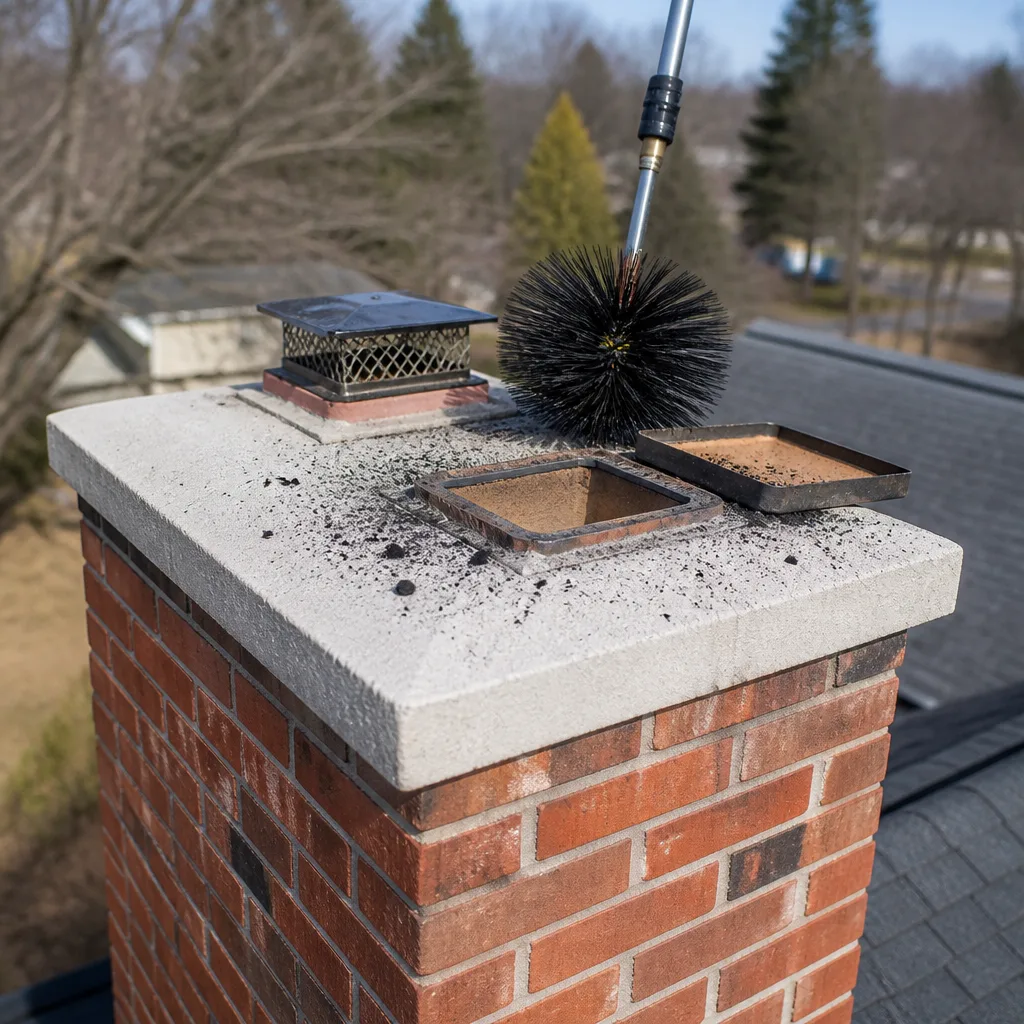
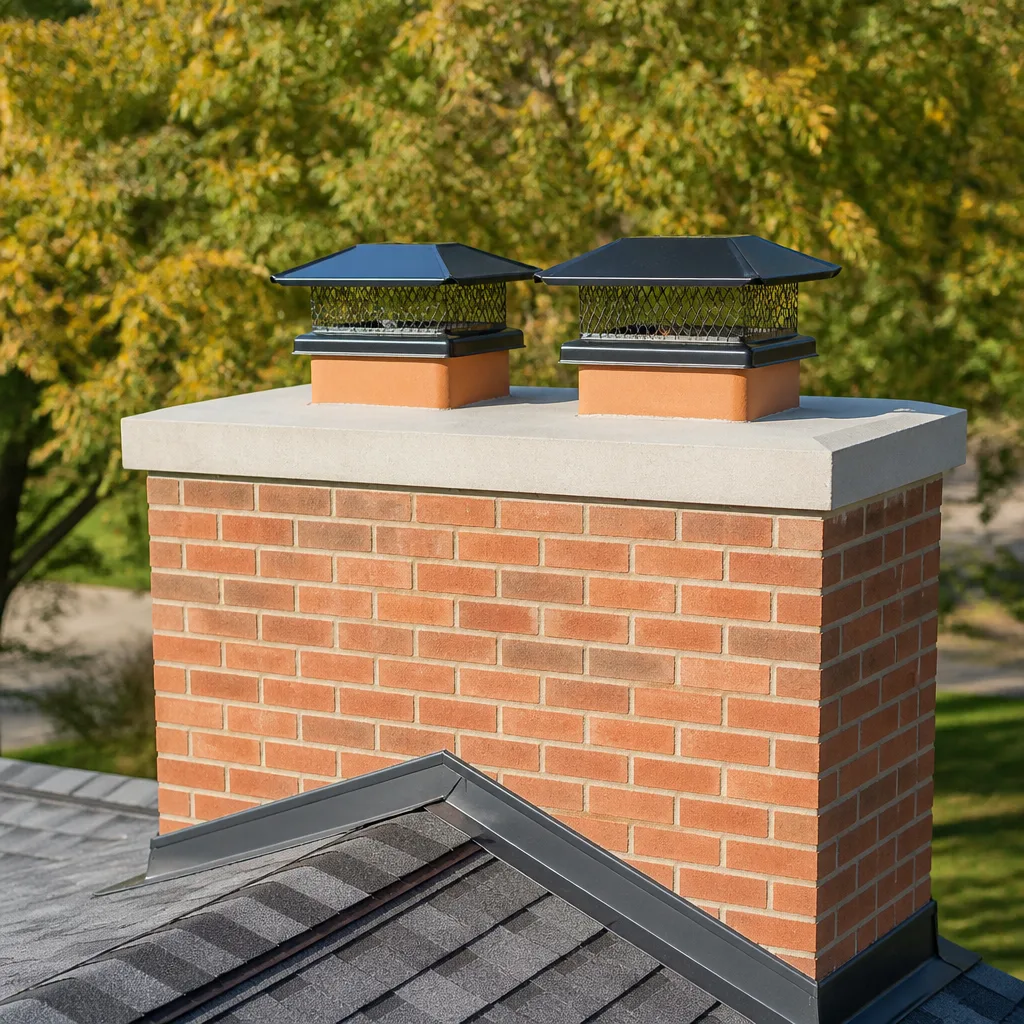
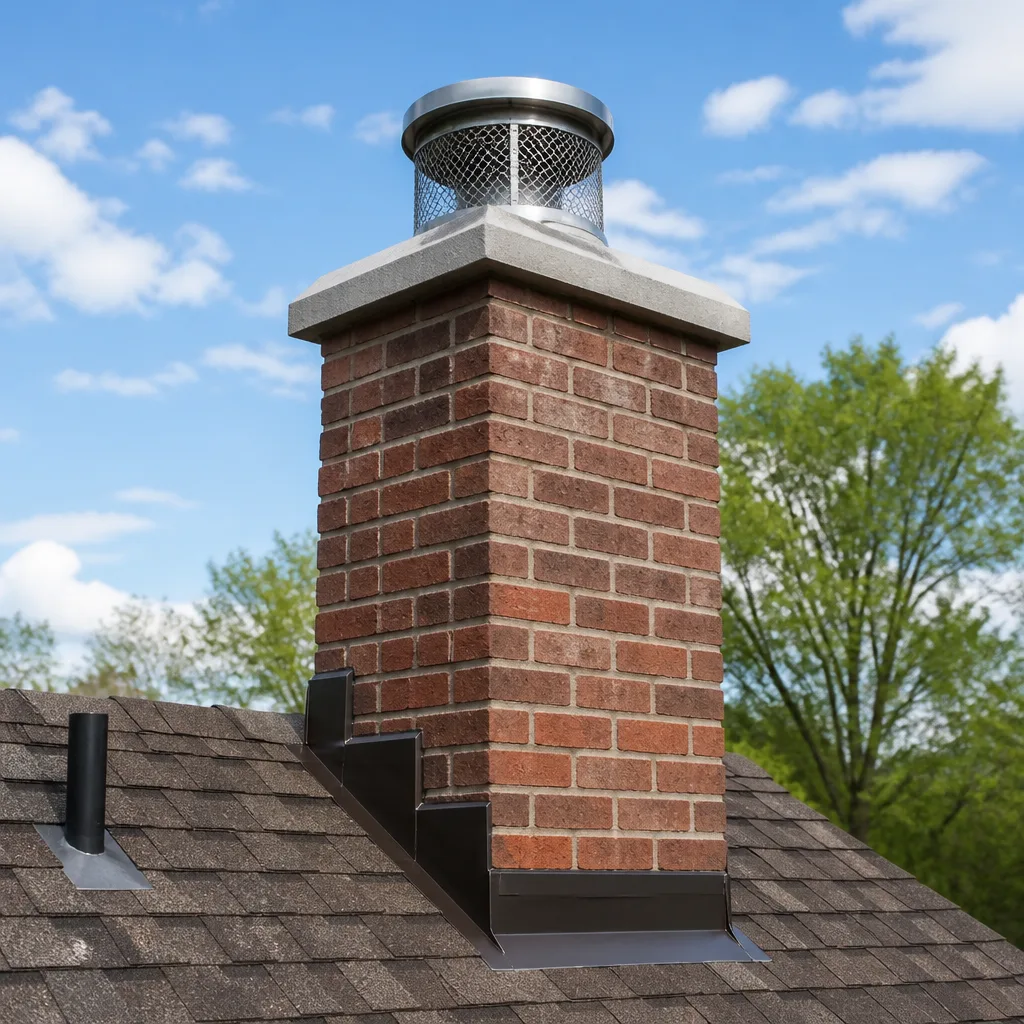
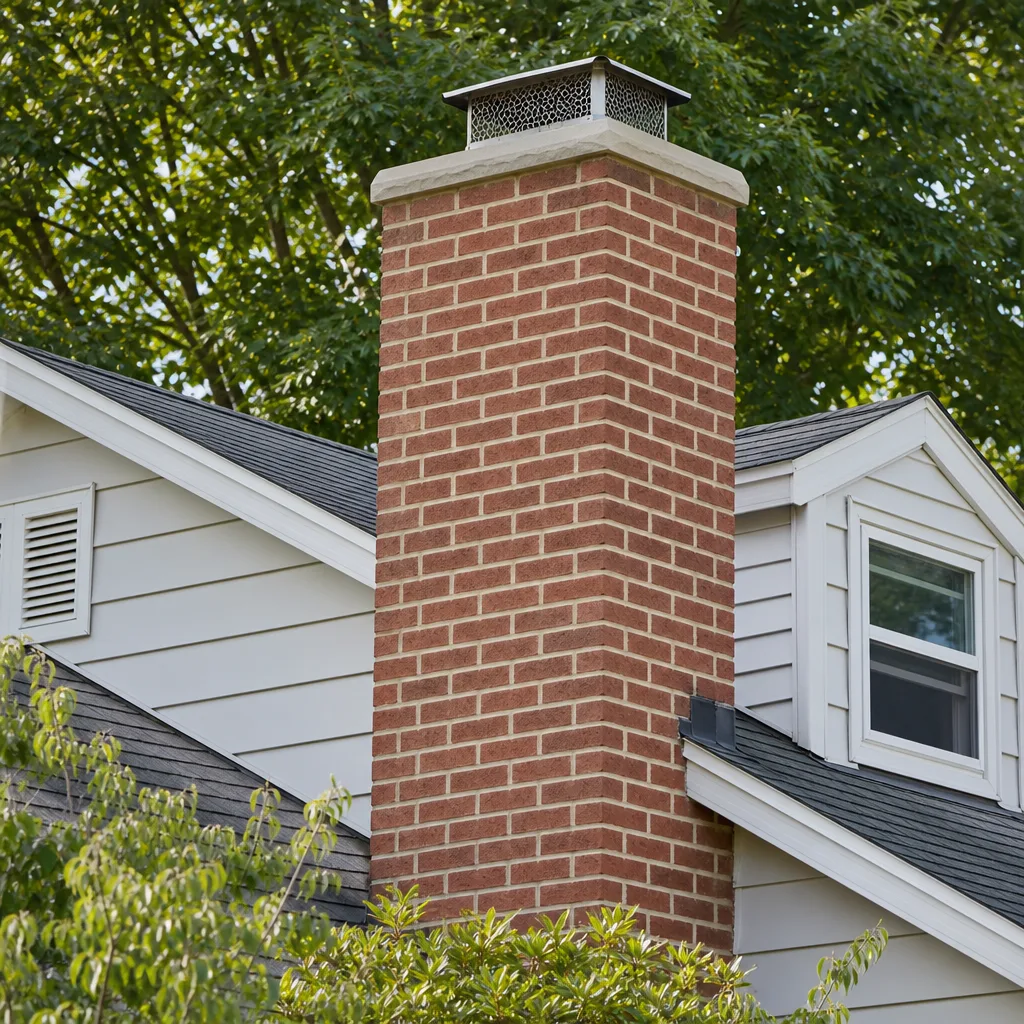
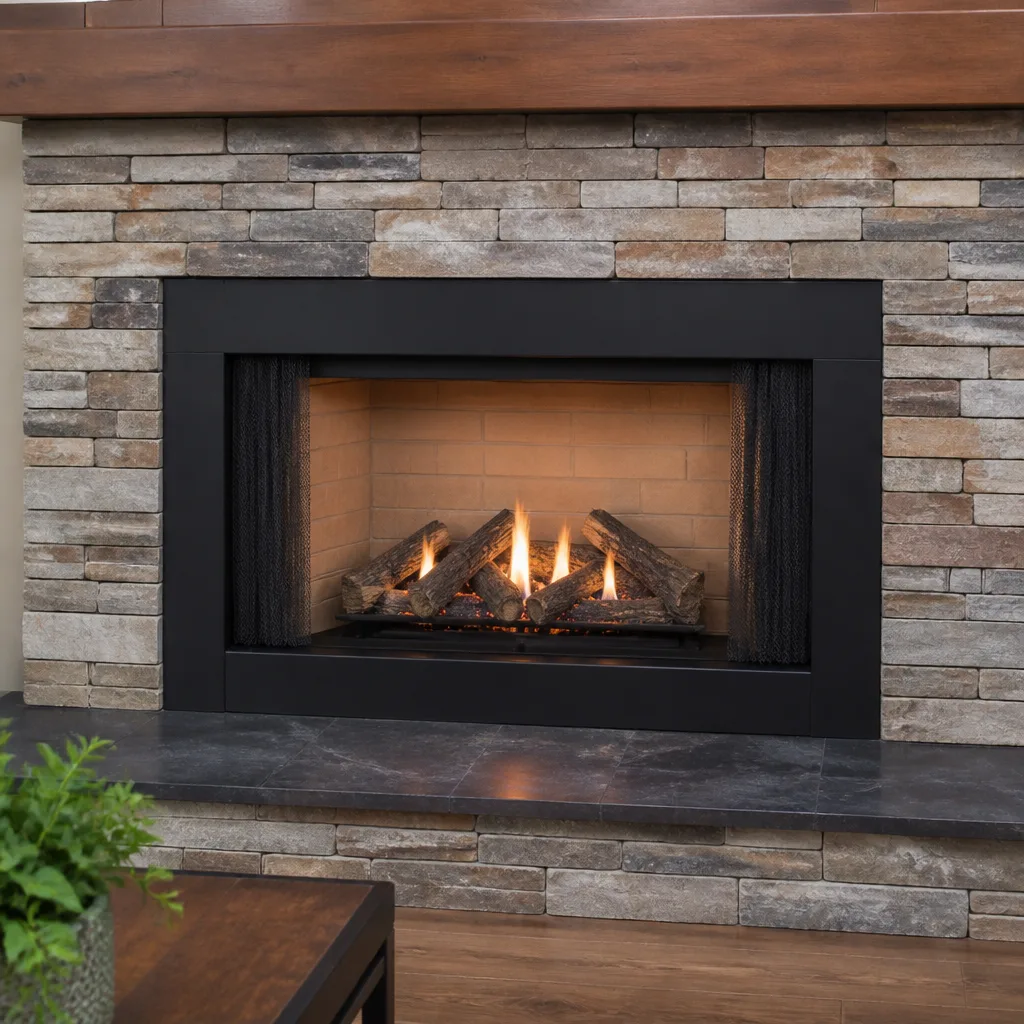
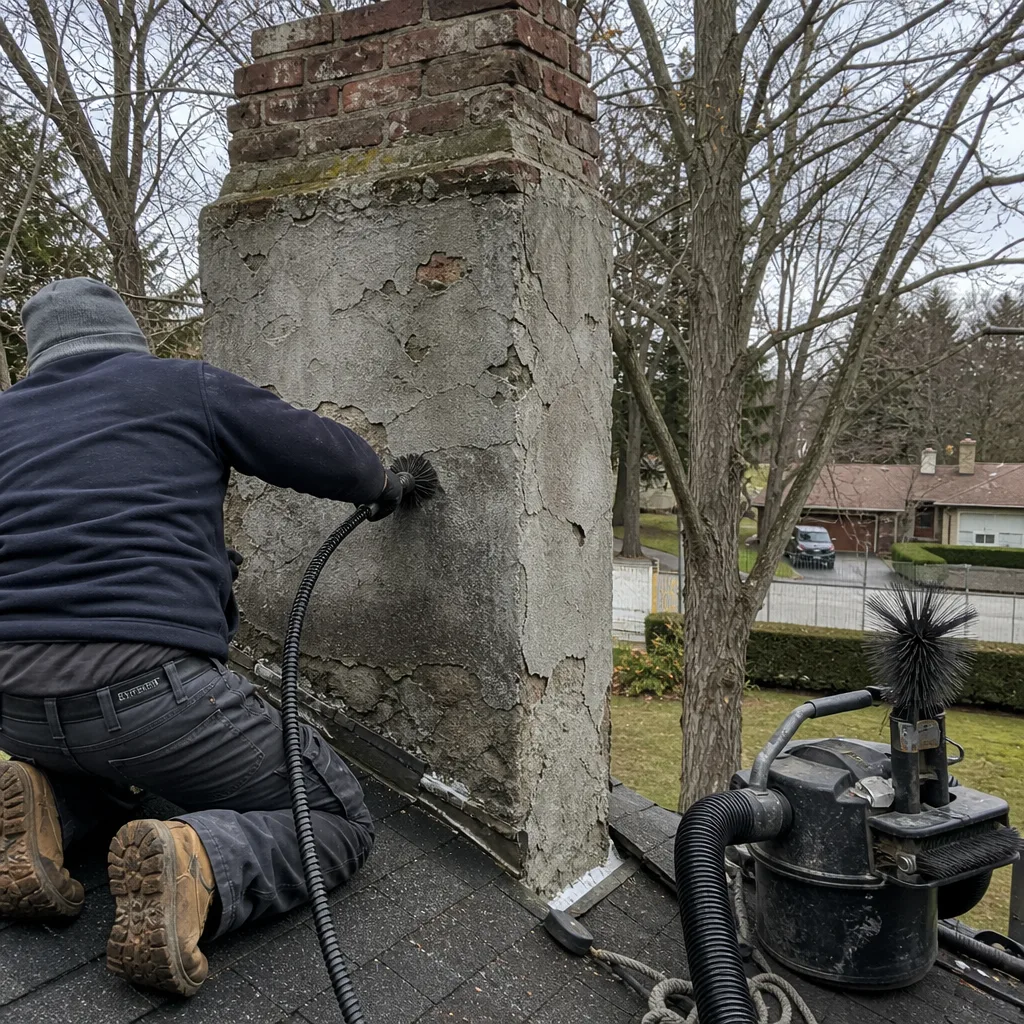 Before
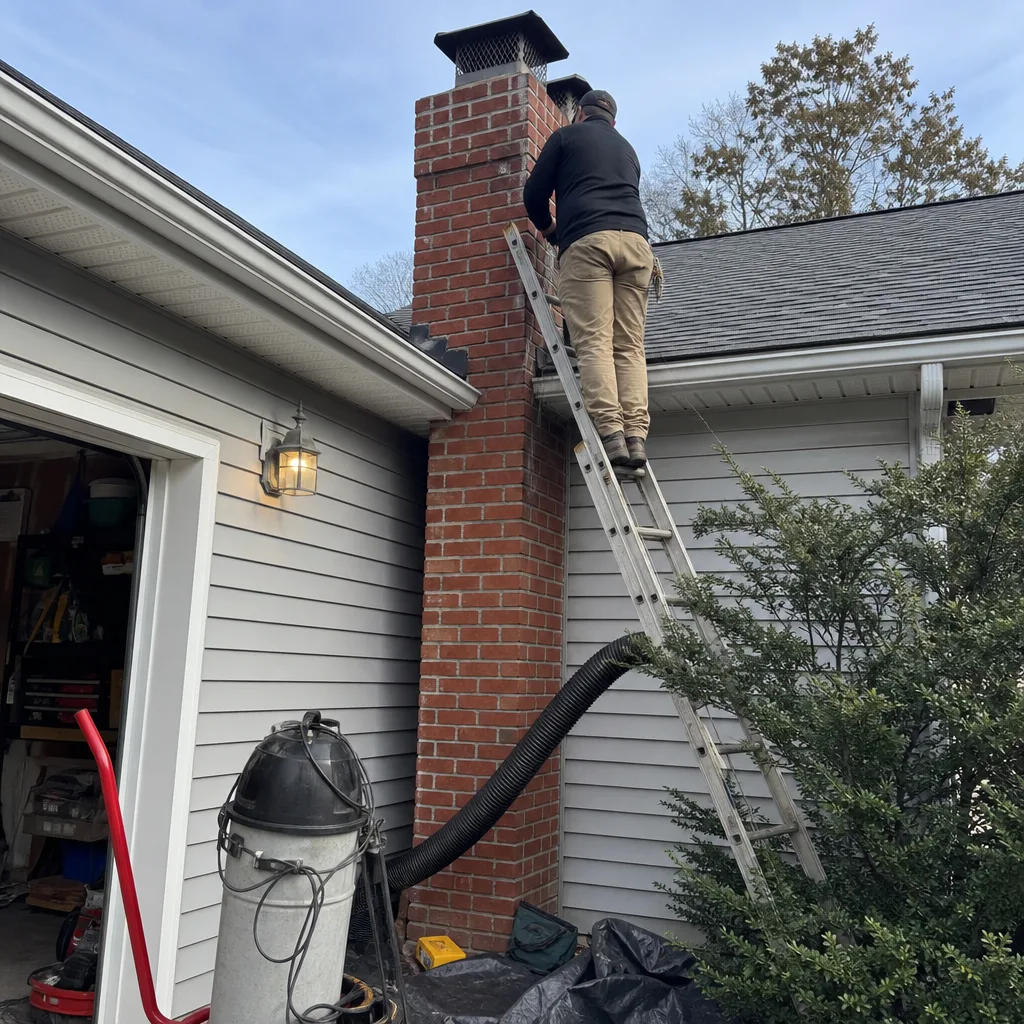 After
After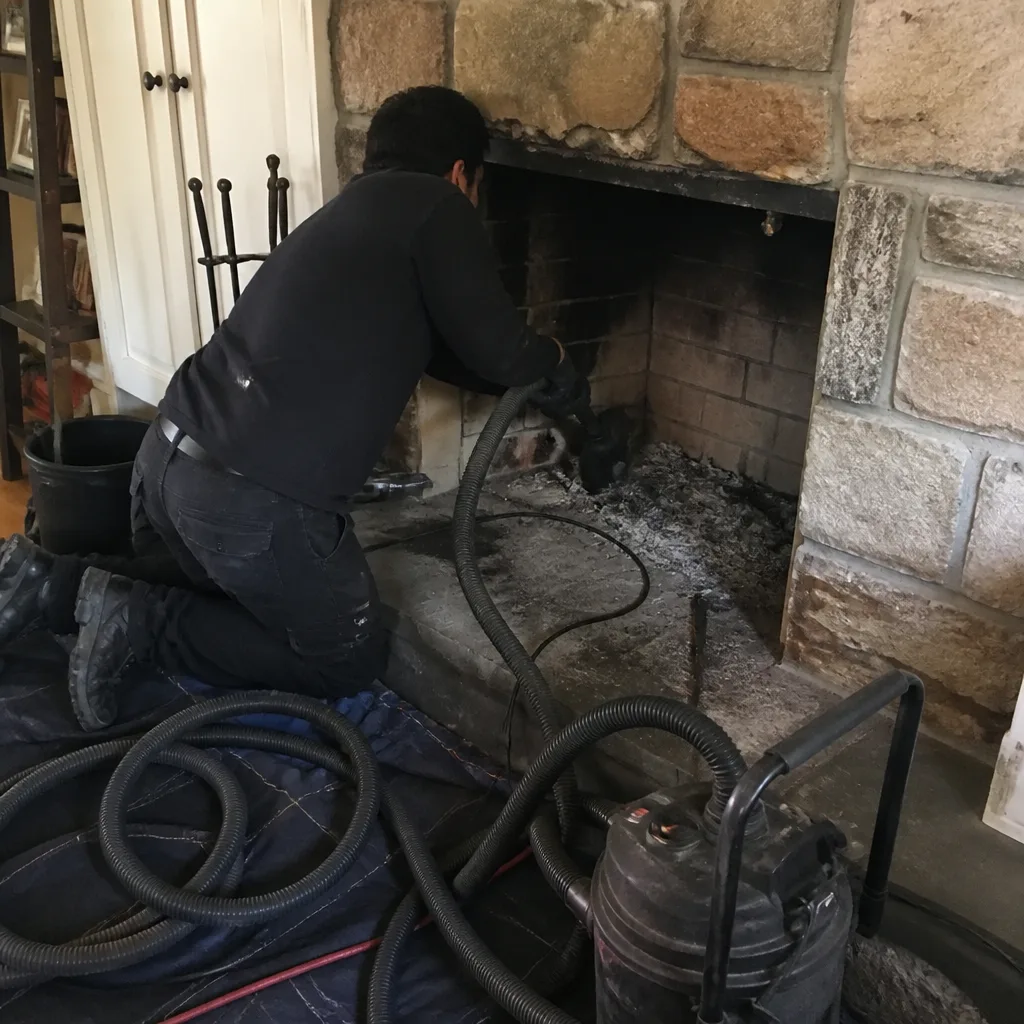 Before
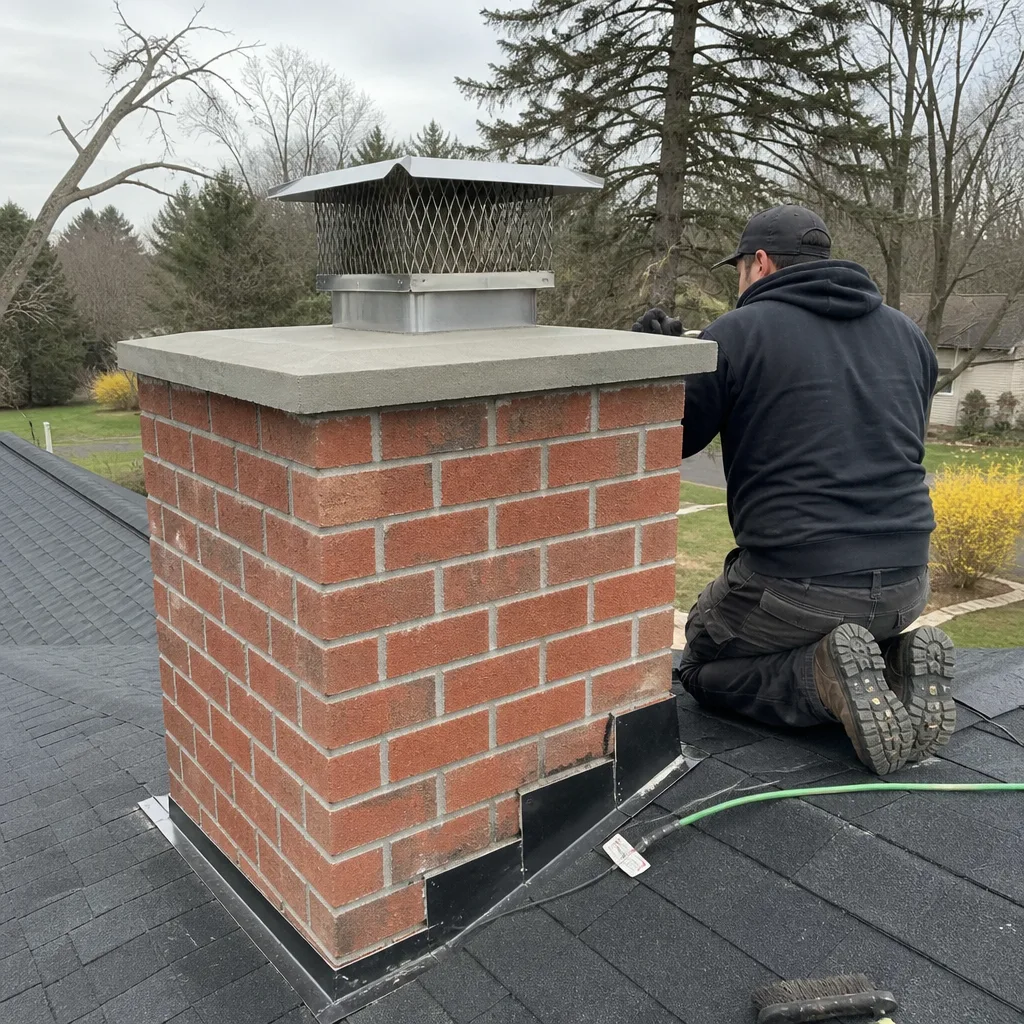 After
After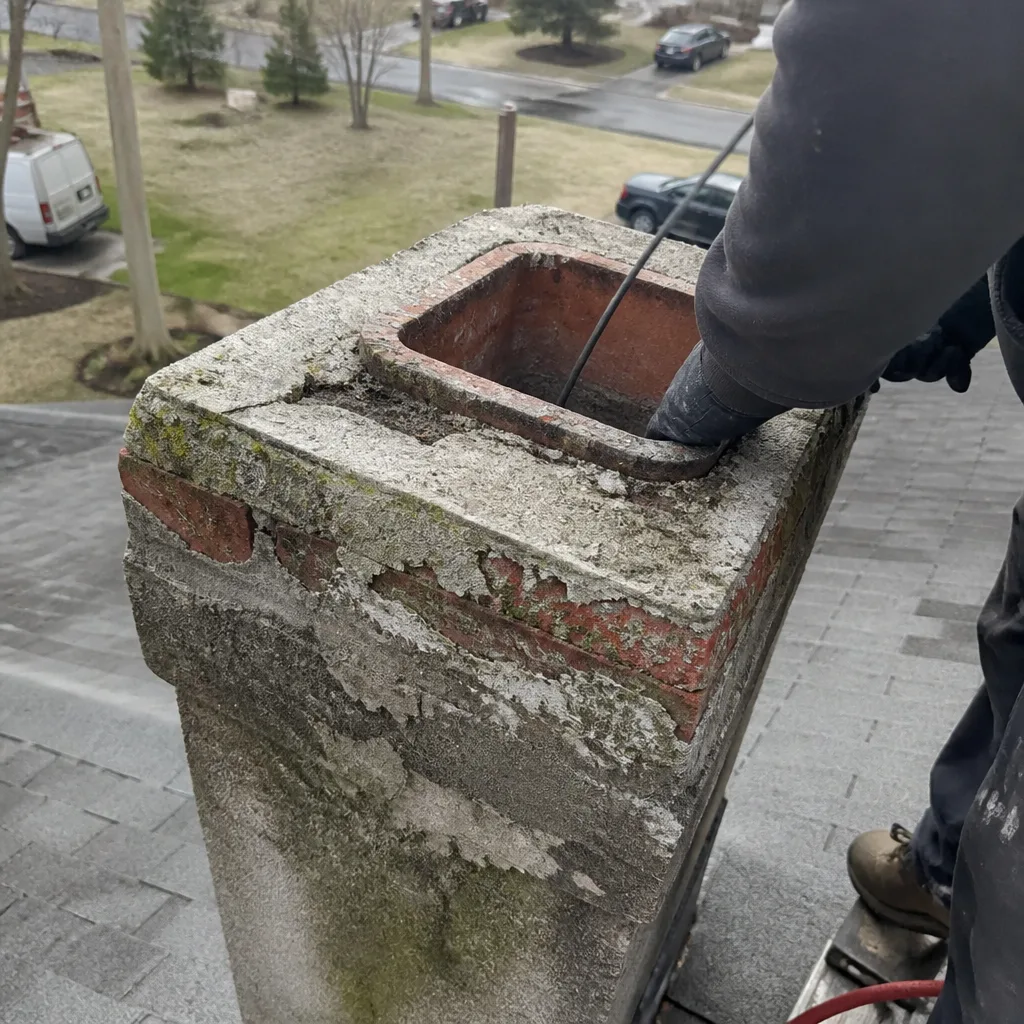 Before
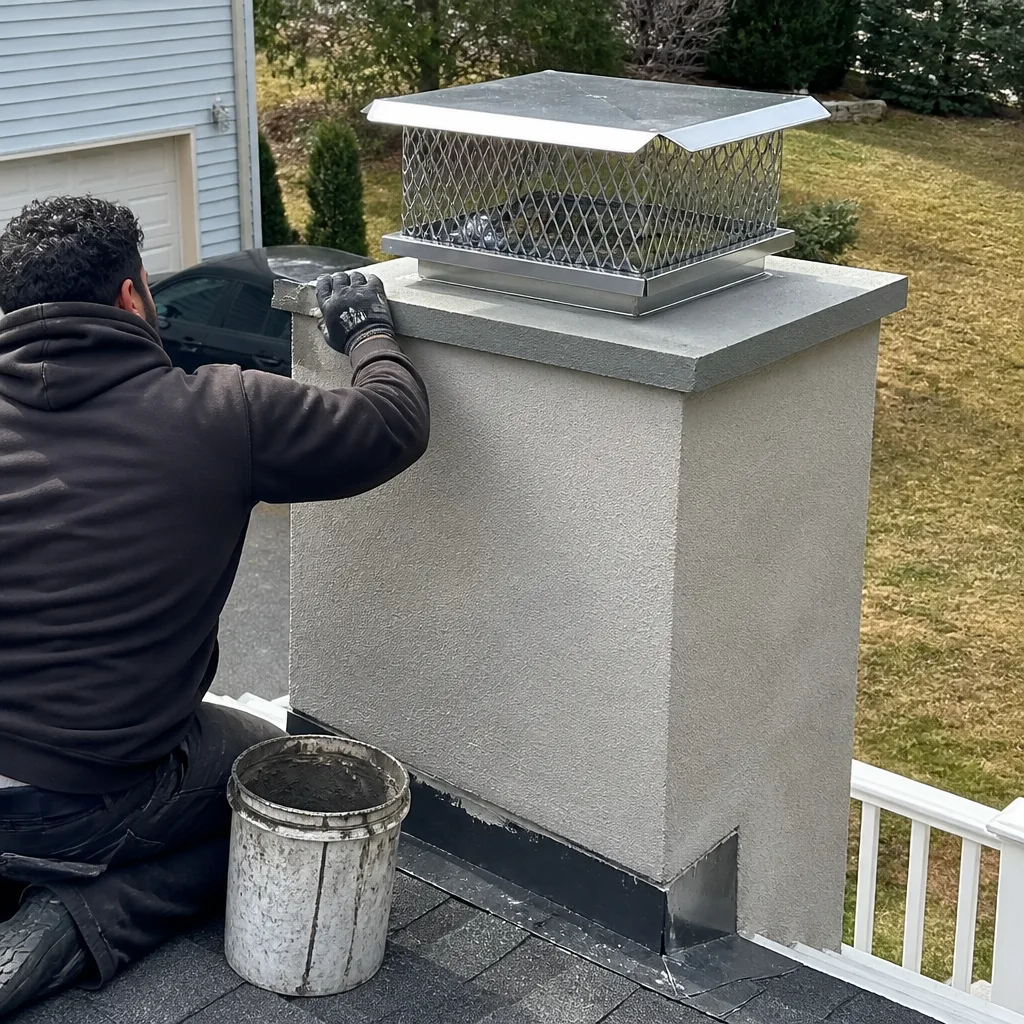 After
AfterCreosote Removal in Dix Hills, NY
Creosote removal in Dix Hills typically runs between $150 and $450, depending on how much buildup is in your flue and which stage of creosote you’re dealing with. Most jobs are completed in a single visit, and if we catch it early, it’s often handled right alongside your Chimney Cleaning & Sweep services. If you’re not sure what’s in your chimney, call us at (631) 318-8656 and we’ll take a look – no obligation, no guesswork.
Dix Hills homes sit in one of the heavier wood-burning pockets of Suffolk County. The older colonials and cape cods along Deer Park Avenue and the stretches off Half Hollow Road were built when fireplaces were the primary heat source, and a lot of those flues have gone years – sometimes decades – without a proper cleaning. We’ve been inside enough of them since 1999 to tell you: creosote buildup is the rule out here, not the exception. It’s also the leading cause of chimney fires in residential homes, which is exactly why we take it seriously.
As part of our full Chimney Cleaning & Sweep in Dix Hills service, we assess and remove creosote at every stage. Wendell Pike has been doing this work in the area for over 29 years, and he’ll tell you straight when it’s a simple brush job and when it needs more. No upsell. No inflated scope. Just an honest read on what your flue actually requires.
What Creosote Is and Why It Matters in Dix Hills
Creosote is the byproduct of burning wood. When smoke rises through your flue and meets cooler air near the top, combustion gases condense on the flue walls and leave behind a residue. That residue is creosote, and it comes in three distinct forms.
First-degree creosote is a light, flaky soot. A stiff rotary brush clears it in a single pass. Most homeowners who burn two or three cords a season and schedule Fireplace Cleaning every year are dealing with first-degree creosote – manageable, not alarming.
Second-degree creosote is darker, denser, and crunchy. It sticks to the flue wall and takes more aggressive brushing to dislodge. You see a lot of this in Dix Hills homes that skipped a year or two of maintenance, or that burned green wood – which, if you’ve ever bought a cord from a roadside seller on Commack Road, you know is a real possibility.
Third-degree creosote is the one that commands full attention. It’s a tar-like glaze, sometimes half an inch thick, and it ignites at temperatures a wood fire can absolutely reach. Rotary brushing alone won’t remove it. This stage often requires chemical treatment first to dry the glaze out so it can be broken down and extracted. We’re trained for this, and we use professional-grade products – including formulas from Copperfield – to do it safely and thoroughly.
Your flue doesn’t care how the fire looks. It cares how it breathes. A heavily coated flue restricts draw, pushes smoke back into your living space, and in a worst case, ignites. First-degree creosote is a brush job. Third-degree is a glaze – catch it early, and you save yourself a much harder conversation down the road.
When You Need Creosote Removal
- You smell smoke in the house during a fire. Restricted draw from creosote buildup is one of the most common causes of smoke rollback. If your living room is pulling in smoke that should be going up, don’t keep burning – call us first.
- You haven’t had a sweep in more than a year. Once a year, burn or no burn. Chimneys break in the off-season too, and creosote doesn’t stop accumulating just because you weren’t paying attention to it.
- You burn frequently through the cold months. In a Dix Hills winter, a fireplace that runs three or four nights a week from November through March can build meaningful creosote deposits faster than most homeowners expect. High-use fireplaces sometimes need a mid-season check.
- You’ve been burning softwood or green wood. Softwoods like pine, and any wood that hasn’t been seasoned for at least a year, produce significantly more smoke and creosote per cord than dry hardwood. We hear from homeowners in the Half Hollow Hills area fairly regularly after a batch of subpar wood made its way through the neighborhood.
- You can see dark, shiny residue inside the firebox opening. If you shine a flashlight up into the damper area and see a glossy black coating rather than dusty gray soot, that’s second or third-degree creosote. It needs to come out.
- There’s been a chimney fire – even a small one. A lot of chimney fires go unnoticed. Homeowners hear a low rumble or see flue temps spike briefly, and brush it off. After any suspected chimney fire, get an inspection. The camera footage and a plain-English verdict – every time, no exceptions.
Our Creosote Removal Process
- Visual and camera inspection first. Before any tools come out, Wendell or one of his crew will assess the flue top-to-bottom. We use a closed-circuit camera system to get an accurate picture of what’s in there – how much buildup, which degree, and whether there are any structural concerns that could affect how we clean. You see what we see. No mystery, no invented problems.
- Fireplace and furniture protection. Drop cloths go down, the firebox is sealed with a dust containment barrier, and the room stays clean. We’ve been doing this in Dix Hills homes long enough to know that a good job inside the chimney shouldn’t mean a mess in your living room.
- Mechanical removal for first and second-degree buildup. Rotary brushes – sized to your specific flue diameter – break loose soot and moderate creosote deposits. A commercial-grade HEPA vacuum captures everything as it falls. For second-degree buildup that’s packed tight, we use heavier brush systems designed to work through the resistance without damaging the flue liner.
- Chemical treatment for third-degree (glazed) creosote. When the glaze is heavy, a chemical creosote remover goes in first. These products work by drying out and modifying the structure of the tar so it becomes brittle enough to brush away. We let the chemistry do its job before we go back in mechanically. Trying to skip this step and just brush glaze is a good way to chip a liner – we don’t do that.
- Post-clean camera verification. Once the flue is clear, we run the camera again. You see the before and after on the same visit. If there’s anything left, we go back in. That’s what the 90-Day Done Right Promise means in practice: if it’s not done right, one call brings us back at no additional cost.
- Plain-English debrief and written report. Before we leave, we tell you exactly what we found, what we removed, and what – if anything – needs attention beyond the cleaning itself. If your liner looks good and the flue is clear, we say that. If there’s something that needs repair, we give you a written estimate on the spot, upfront, before you commit to anything.
Creosote Removal Pricing in Dix Hills
Pricing for creosote removal in Dix Hills varies based on what’s actually in your flue – not a flat rate we recite before we’ve seen anything. Here’s an honest breakdown of what drives the cost:
| Situation | Typical Price Range |
|---|---|
| Light first-degree buildup (included in standard sweep) | $150 – $250 |
| Moderate second-degree buildup, single flue | $200 – $325 |
| Heavy second-degree or early third-degree, single flue | $275 – $450 |
| Severe third-degree glazed creosote requiring chemical treatment | $350 – $600+ |
| Two-flue systems (common in older Dix Hills colonials) | Add $100 – $175 per additional flue |
A few things that affect where your job falls in those ranges: how long it’s been since the last cleaning, what kind of wood you burn, whether your damper has been keeping moisture out during the off-season (a problem we see frequently in homes along the wooded stretches near Sweet Hollow Road), and whether the flue liner is terracotta tile or a metal insert – both are cleanable, but they respond differently to rotary brush systems.
Every quote is delivered upfront, before a single tool comes off the truck. The number you hear on the phone is the number on the invoice. We’ve been doing business that way since 1999, and we don’t plan to change it.
If any repair comes out of the inspection – a cracked tile, a damaged crown, anything – and it runs over $200, you automatically get $40 off that repair. Seniors and veterans always get 10% off, no paperwork required. And if you’ve already got a written estimate from another company, we’ll give you a free second opinion on it – no trip charge if you’re in our service county.
Why Dix Hills Homeowners Call Top Hat Chimney
There’s a particular pattern we see in Dix Hills. A homeowner calls a company they found online – sometimes one running ads with stock photos and a 1-800 number – gets quoted one price on the phone, and then watches the number climb once someone is actually standing in the living room. By the time they call us, they’re frustrated enough to do some actual research.
Wendell Pike started Top Hat Chimney in 1999. He grew up working in this trade, and he runs it the same way now as he did then: show up when you say you will, do the work the right way, charge what you quoted. The 90-Day Done Right Promise isn’t a marketing line. It’s in writing on every job we complete. If something isn’t right, one call brings us back – not a voicemail box, not a call center. Phones are staffed around the clock, and on a lot of nights, it’s Wendell himself who picks up.
We work with trusted products in this trade – HeatShield for flue liner restoration and Gelco caps and damper systems when replacements are needed. We stock what we carry because we’ve used it long enough to trust it. If a product has let a customer down, it doesn’t stay on the truck.
Ask anyone on your street. If they’ve had their chimney cleaned by someone they’d actually call again, there’s a good chance that name is Top Hat Chimney.
Key Takeaways
- Creosote removal in Dix Hills runs $150 to $600+ depending on severity – light buildup is handled in a standard sweep, severe glaze requires chemical treatment first.
- Three degrees of creosote, and only the first is a straight brush job. Don’t let anyone tell you otherwise without showing you the camera footage.
- Annual sweeping prevents third-degree buildup from developing. Once a year is the standard; high-use fireplaces may need a mid-season check.
- Top Hat Chimney has been serving Dix Hills since 1999. Every job carries the 90-Day Done Right Promise in writing.
- Upfront pricing before any work begins. What you hear on the phone is what you pay.
- Seniors and veterans always receive 10% off. Any repair over $200 gets $40 off automatically.
FAQs – Creosote Removal
How much does creosote removal cost in Dix Hills?
Creosote removal in Dix Hills typically costs between $150 and $600, depending on how severe the buildup is and how many flues need to be cleaned. Light first-degree buildup is usually handled as part of a standard sweep in the $150 to $250 range. Third-degree glazed creosote – the tar-like stage that requires chemical treatment before brushing – runs closer to $350 to $600 on a single flue. We give you the exact number before any work starts. Call (631) 318-8656 for a free estimate.
Is creosote removal dangerous – should I attempt it myself?
You should not attempt creosote removal yourself, particularly for anything beyond the lightest surface soot. Rotary brush systems generate fine particulate that requires containment equipment to keep out of your living space. More critically, third-degree creosote is a fire hazard, and disturbing it incorrectly – without first applying a chemical modifier – can cause chunks to shift inside the flue in ways that create blockages or ignition risks. Creosote is also a known skin and respiratory irritant. A trained sweep has the protective equipment, the tools, and the camera system to do this safely. The cost of a professional visit is far less than the cost of a chimney fire or an ER trip.
How do I know what degree of creosote I have?
You can get a rough sense by shining a bright flashlight up through the damper opening: dusty gray or brown flakes indicate first-degree, a darker crunchy layer is second-degree, and a hard shiny glaze – almost like tar or roofing pitch – is third-degree. That said, most of the flue is not visible from the firebox opening, and the worst buildup is often further up. The only accurate way to assess your full flue is with a Level 1 Inspection using a closed-circuit camera. We do that at every visit in Dix Hills – you see the footage, we explain what we’re looking at, and the verdict is in plain English, not trade jargon.
How often should I have creosote removed from my chimney?
Once a year is the standard, whether you burn heavily or barely at all. Chimneys that see frequent use – three or more fires per week through a Dix Hills winter – may benefit from a Level 2 Inspection in January or February to catch buildup before it advances to second-degree. Homes that burn green or softwood should schedule more frequently, since those fuel types generate creosote significantly faster than seasoned hardwood. The National Fire Protection Association recommends annual inspection and cleaning, and that’s the floor, not the ceiling. Call (631) 318-8656 to book a sweep and we’ll tell you honestly where your flue stands.
Schedule Your Creosote Removal in Dix Hills
If you haven’t had your flue checked this season, now is the right time – before the cold settles in and the fireplace becomes the thing standing between your family and a cold house. Wendell and his crew are working throughout Dix Hills and the surrounding communities, and we’ll give you a real arrival window when you book, not a four-hour stretch where you wait around guessing.
Call (631) 318-8656 to schedule a free estimate. A live person picks up every call, at any hour. No voicemail, no call center. If you’ve already got a written estimate from another company, bring it – we’ll give you a second opinion at no charge. And if you’re a senior or a veteran, mention it when you call. The 10% discount applies to every job, every time.
Top Hat Chimney has been serving Dix Hills since 1999. The 90-Day Done Right Promise is on every job we do – in writing. That’s not something a franchise rotating in from out of town can offer you. We’re here, we’re local, and we’re not going anywhere.
Written by Wendell Pike, Owner at Top Hat Chimney, serving Dix Hills.