

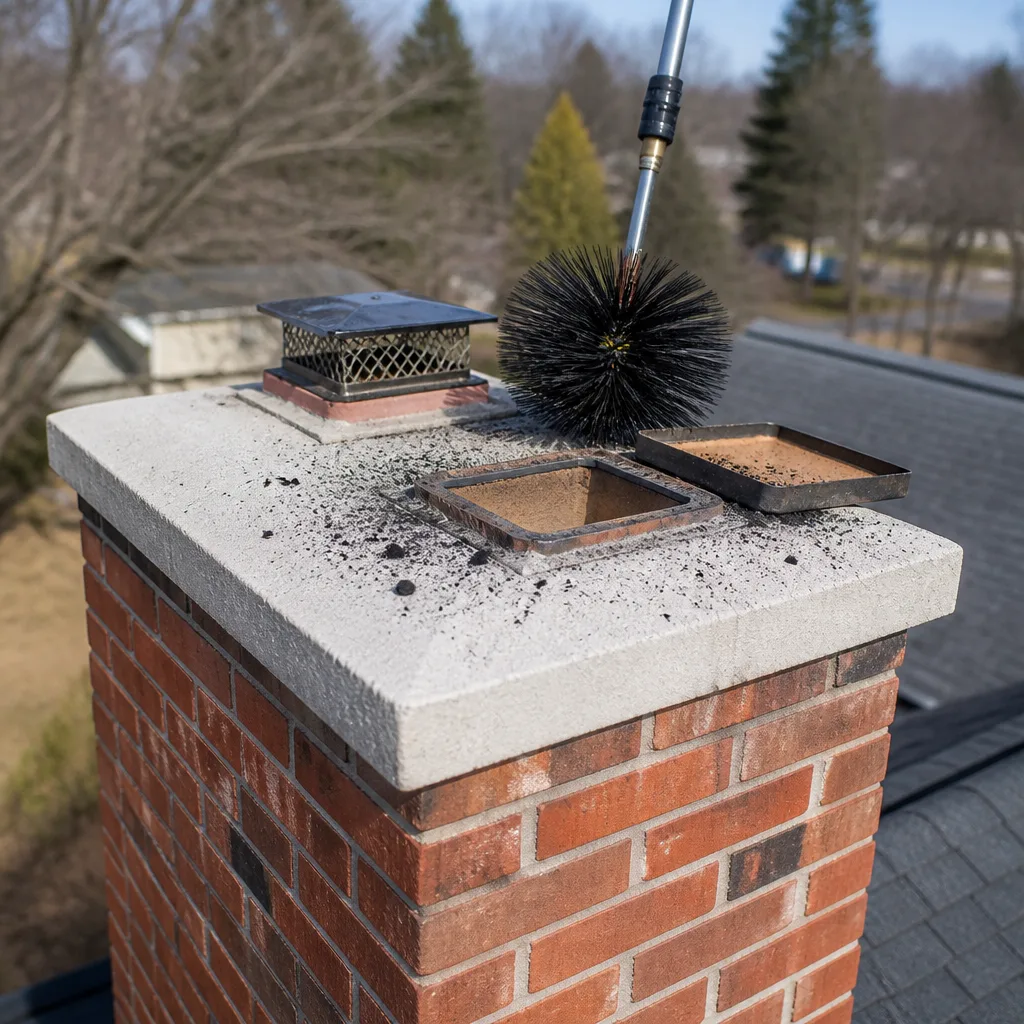
Level 1 sweep and inspection to the NFPA 211 annual standard - flue, crown, cap, and flashing checked and photographed
Chimney sweep logs do not sweep chimneys. They loosen some creosote - which then falls where a brush and vacuum still have to collect it.
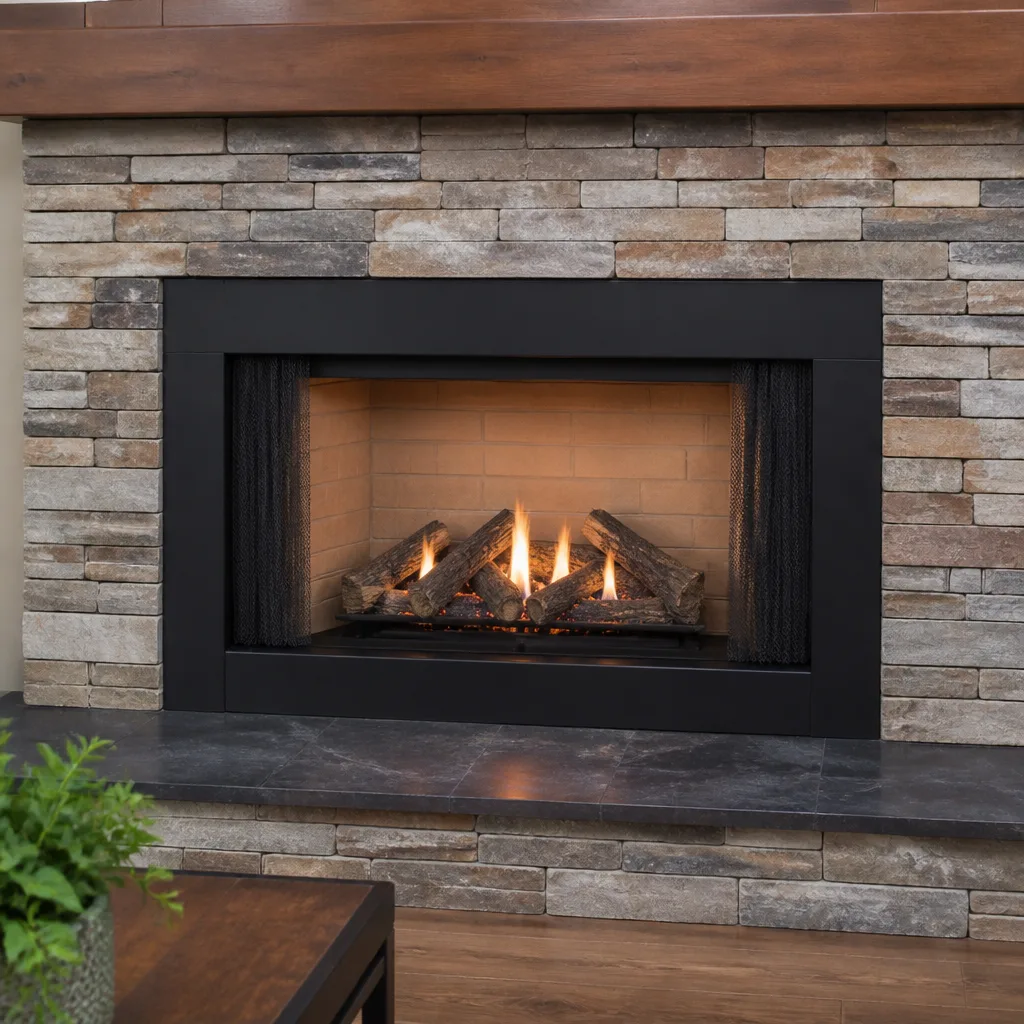
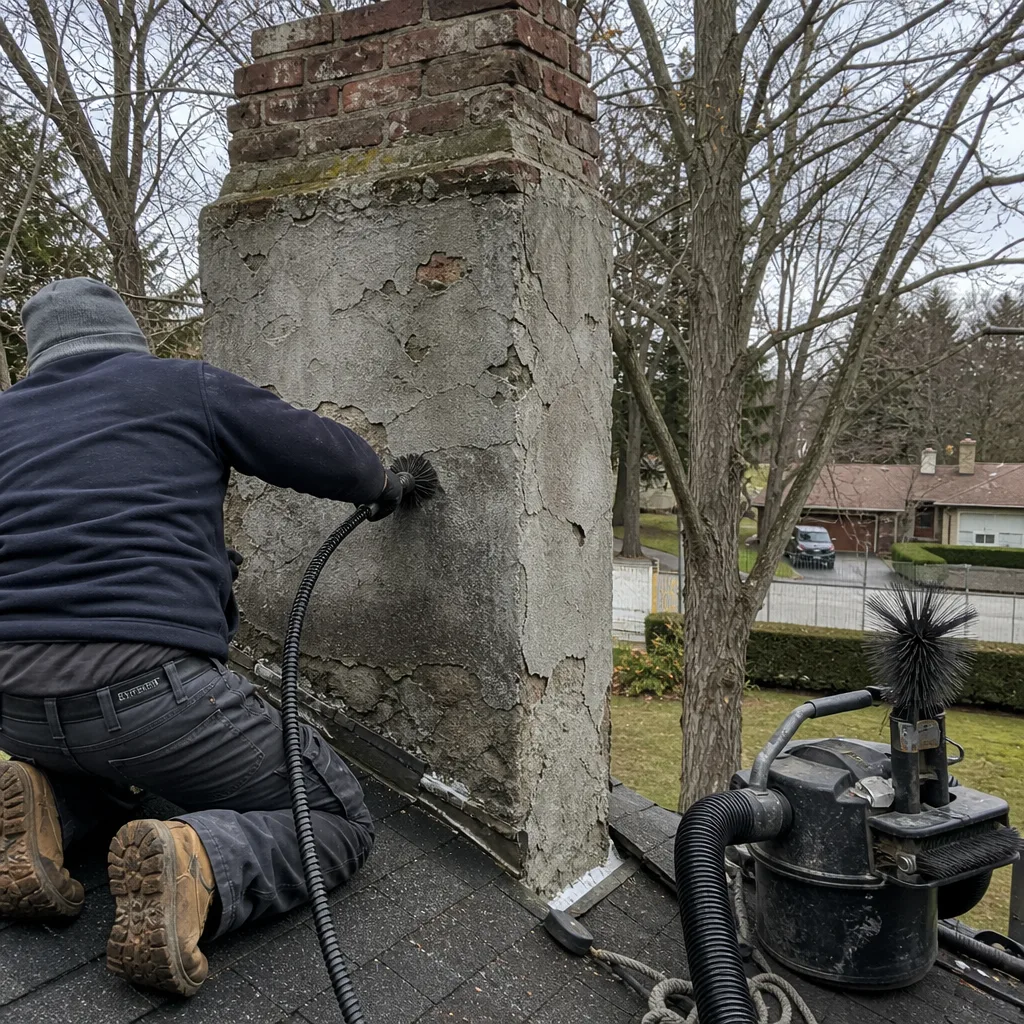 Before
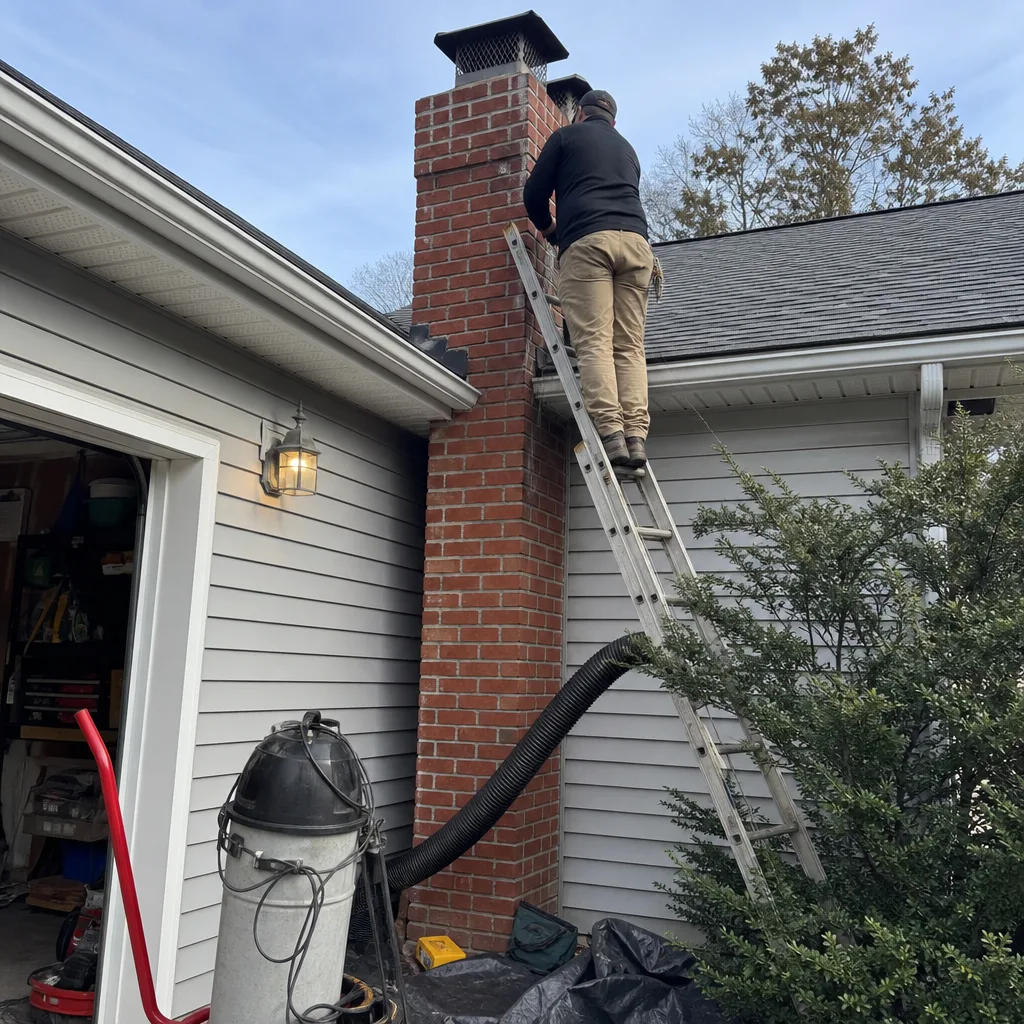 After
After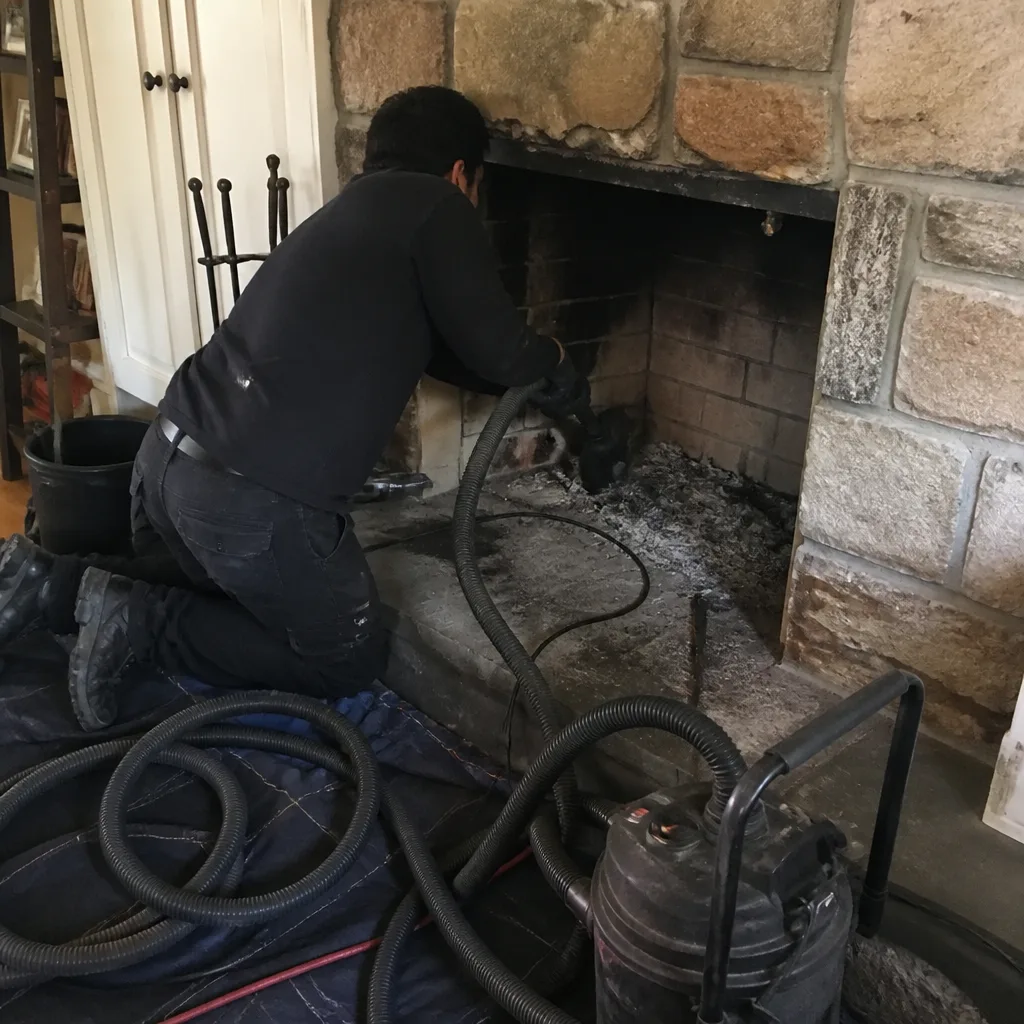 Before
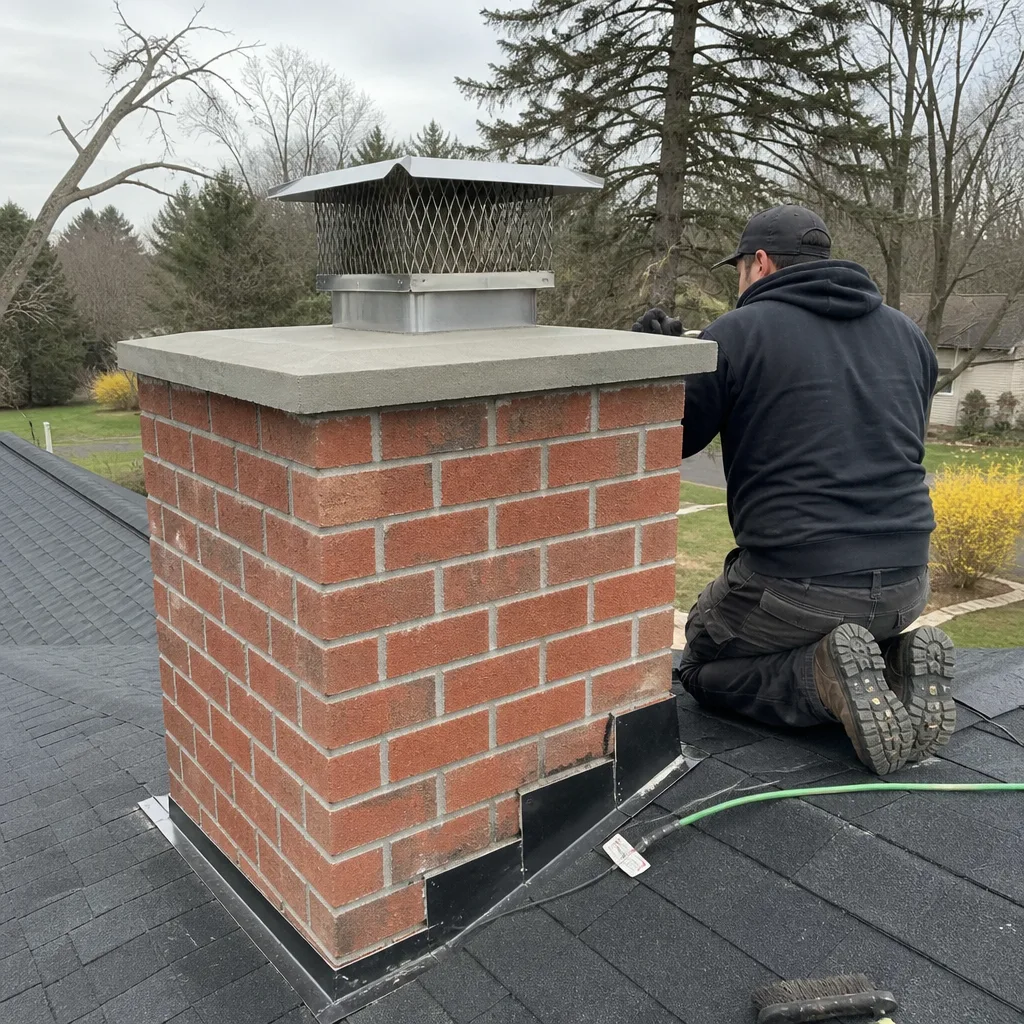 After
After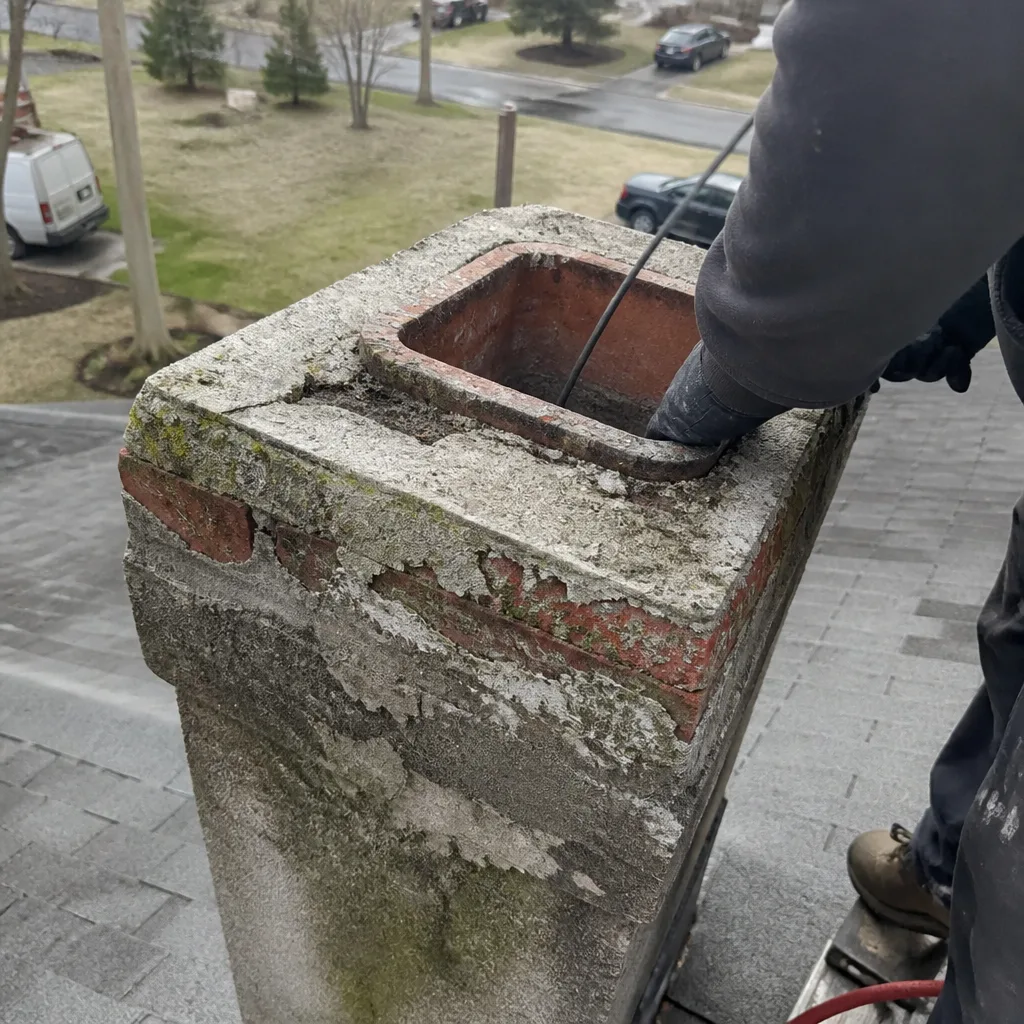 Before
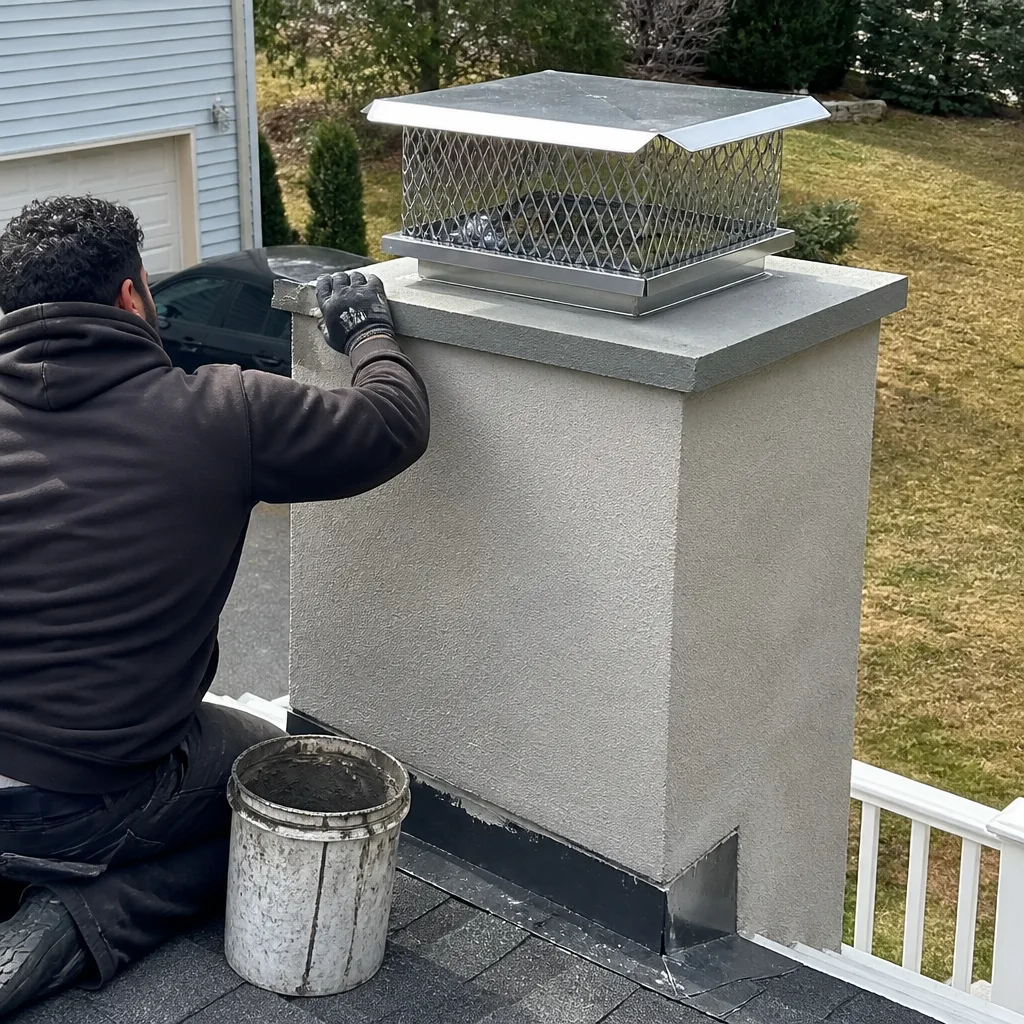 After
AfterSpalling Brick Repair in Dix Hills, NY
Spalling brick is what happens when moisture works its way into the face of a brick, freezes, expands, and then pushes the outer layer right off. In Dix Hills, where we get genuine freeze-thaw cycles every winter – sometimes several in a single week – it is one of the most common reasons homeowners schedule our Chimney Repair services with Wendell. Left alone, a handful of flaking bricks can become a structural issue within two or three seasons. Caught early, most repairs are straightforward and cost a fraction of a full rebuild.
Top Hat Chimney has been fixing spalling brick on chimneys across Dix Hills and the surrounding Half Hollow Hills area since 1999. If you are seeing red dust or brick chips in your fireplace firebox, on your roof, or piling up against the side of your house, call us at (631) 318-8656. We answer around the clock – live, not voicemail – and we will give you a straight answer before we ever put a tool on your chimney. For a full picture of what we cover, visit our Chimney Repair in Dix Hills page.
What Causes Brick Spalling in Dix Hills
The short answer is water. But the longer answer matters, because the source of that water tells you what the actual fix is.
Dix Hills sits in the middle of Long Island’s north-south slope, and the homes here – many of them built in the 1960s and 1970s – have brick chimneys that are now 50 to 60 years old. The original mortar on those chimneys was mixed to a formula that worked fine for its era but is often harder than the surrounding brick. When that rigid mortar cracks, water gets in. It freezes. The brick face pops off. That is the classic Dix Hills spalling pattern Wendell sees from early December through March.
There are a few other contributors worth knowing:
- Missing or failed chimney cap: Rain falls straight down the flue and saturates the brick from the inside out. In Dix Hills, uncapped chimneys almost always show spalling within five years.
- Cracked or eroded crown: The concrete crown at the top of the chimney is supposed to shed water away from the brick. When it cracks – and they all crack eventually – water pools at the base of the stack and soaks in.
- Failed parging or waterproofing: Some chimneys were painted or parged decades ago with products that trap moisture instead of repelling it. That trapped moisture has nowhere to go but through the brick face.
- Efflorescence: The white chalky staining you see on some Dix Hills chimneys is a sign that water has already been moving through the brick for a while. The spalling usually follows within a season or two.
- Overly aggressive acid washing: A few homeowners or contractors have used acid cleaners on brick over the years. Done wrong, it opens the pores of the brick and makes it absorb water faster than it should.
Knowing the cause is not just academic. Replacing the spalled bricks without fixing the water source is like patching a tire that still has a nail in it. Wendell will not hand you a repair quote without first identifying where the water is coming from.
When You Need Spalling Brick Repair
Some of these signs are obvious from the ground. Others only show up on a close inspection or camera scan. Here is what to watch for:
- Brick chips or red grit on the roof or in the gutter: If you are finding what looks like coarse sand or small brick fragments in your gutters after winter, the face of your chimney is shedding. This is the earliest visible sign, and the best time to act.
- Visible flaking on the chimney face: You can often see this from the driveway in Dix Hills – look for bricks that have a layered, peeling appearance, especially on the north-facing or shade side of the stack, which stays damp longer.
- White staining (efflorescence) on the exterior: As noted above, this is a water signal. The staining itself is harmless, but the pattern it leaves tells Wendell exactly where water is penetrating.
- Loose or missing mortar joints: When the mortar between bricks erodes – a process called spalling mortar, or tuckpointing failure – water gets direct access to the brick faces. This often happens in tandem with brick spalling itself.
- Crumbling brick inside the firebox: If you are seeing deterioration on the interior walls of the firebox, spalling has usually been active on the exterior for longer than you realize.
- A crack that runs through a brick rather than around it: Cracks that follow the mortar joints are usually a settling issue. Cracks that go straight through the body of a brick suggest the structural integrity of that brick is already compromised.
Our Spalling Brick Repair Process
Every job starts with an honest look. Not a sales pitch – a real assessment. Here is how the work goes from first call to finished chimney:
- Visual inspection and, where needed, camera scan: Wendell or the sweep who shows up at your door will assess the chimney from the ground, from the roofline, and from inside the firebox. On older Dix Hills homes where the damage may extend into the flue, we run a camera so you can see exactly what we see. You get the footage and a plain-English verdict, every time.
- Moisture source identification: Before any brick is touched, we determine why the spalling happened. That may mean checking the cap, inspecting the crown, probing mortar joints, or looking at how the chimney is flashed where it meets the roof. Fixing the symptom without fixing the cause is not something we will do.
- Removal of damaged brick and mortar: Spalled bricks that have lost structural integrity come out. Mortar joints that have eroded below the face of the brick are ground out to a clean depth – typically about three-quarters of an inch – before anything goes back in. We do not patch over compromised material.
- Re-laying brick and tuckpointing: Replacement brick is sourced to match the color, texture, and size of your existing masonry as closely as possible. New mortar is mixed to match the original joint profile. For the mortar formulation, we use mixes compatible with the products Copperfield and Gelco supply to professional chimney trades, which are specifically rated for exterior chimney exposure and freeze-thaw cycling.
- Crown repair or cap installation if needed: If the inspection revealed a cracked crown or missing cap – the reason the water got in to begin with – that gets addressed in the same visit where possible. A spalling repair without crown or cap work on a compromised chimney is a repair you will need again in three years.
- Waterproof sealant application: Once the new masonry has cured, we apply a vapor-permeable masonry sealant. This is important: the sealant has to breathe. A film-forming paint or non-permeable sealer traps moisture inside the brick and makes spalling worse. The product we use allows water vapor to escape from inside the chimney while blocking liquid water from entering the face.
Spalling Brick Repair Pricing in Dix Hills
If you are wondering How Much Does Chimney Repair Cost? (2026 Price Guide) - Dix Hills, NY, spalling brick repair typically runs between $350 and $1,800, depending on how many bricks are affected, how accessible the chimney is, and whether additional work – crown repair, cap replacement, or tuckpointing – is needed at the same time. Most single-chimney repairs on a standard two-story Dix Hills home fall in the $450 to $900 range when the damage is caught before it spreads to the upper courses of brick.
| Scope of Work | Typical Range (Dix Hills) |
|---|---|
| Minor spalling – up to 10 bricks, one face | $350 – $550 |
| Moderate spalling – 10 to 25 bricks, tuckpointing included | $550 – $900 |
| Extensive spalling – multiple faces or upper stack | $900 – $1,800 |
| Crown repair added to spalling repair | Add $150 – $350 |
| Cap installation added to spalling repair | Add $75 – $200 |
| Waterproof sealant application | Add $80 – $160 |
A few things affect where your job lands in those ranges. Chimney height matters – a three-story chimney on one of the larger homes off Vanderbilt Parkway requires more setup time than a single-story ranch. The number of affected faces matters. And the age of the existing brick matters, because older soft brick from the 1960s sometimes crumbles further during removal, which means more replacements than the surface inspection suggested.
What does not change is how we quote: upfront, in plain numbers, before a single tool comes off the truck. The number you hear on the phone is the number on the invoice. No adjustments at the door, no “we found more once we got started” surprises billed without your sign-off first.
If your repair comes to more than $200 – which most spalling jobs do – you get $40 off automatically. Seniors and veterans always get an additional 10% off. And if another company has already given you a written estimate, we will give you a free second opinion at no charge and no obligation.
Call (631) 318-8656 to schedule a free estimate. We do not charge a trip fee for calls inside our service area.
Why Dix Hills Homeowners Call Top Hat Chimney
Wendell Pike founded Top Hat Chimney in 1999, and he has been working chimneys in Dix Hills, Melville, Commack, and the surrounding communities for over 29 years. That is not a marketing figure – it means Wendell has seen the same chimneys in different states over decades, knows which neighborhoods have clay-heavy soil that drains poorly and keeps chimney bases wet, and knows which era of construction used mortar mixes that are now showing up as spalling problems across the area.
He is not running a franchise. There is no regional manager between you and the person who puts his name on your paperwork. When you call, a live person answers – any hour, any day – and it may well be Wendell. If a job is not done right, the 90-Day Done Right Promise means one call brings the crew back at no additional cost. That is in writing on every job, not just something said on the phone.
The crews who show up are background-checked, they arrive in uniform, they give you a real arrival window, and they call if it slips. After 29 years, Wendell runs into his customers at the grocery store and the hardware store. That does something for the quality of work that no corporate policy ever replicated.
Spalling Brick Repair and Long Island’s Freeze-Thaw Reality
Long Island does not get the brutal sustained cold of upstate New York, but it gets something arguably harder on masonry: repeated short freeze-thaw cycles. A January week in Dix Hills might see temperatures drop below freezing four nights in a row, climb to 45 degrees in the afternoon, and drop again by evening. Each one of those cycles is a compression-and-expansion event inside every saturated brick on your chimney.
Brick that is in good condition, with intact mortar joints and a sound crown, handles this without much trouble. Brick that already has micro-cracks, eroded joints, or a failed cap above it does not. That is why spalling in this area tends to compound quickly – a few chips one winter, a few dozen the next. The brick face that looked stable in October can shed a full course by April.
Timing the repair matters too. Mortar and masonry sealants need temperatures above 40 degrees to cure properly. Wendell schedules spalling repairs for late spring through early fall when possible, or during mild winter stretches, so the repair has time to cure before the next freeze cycle. If you are calling in January and the chimney is actively deteriorating, he will tell you honestly whether an emergency stabilization makes sense or whether it is safer to wait six weeks for a proper repair.
Related Chimney Services in Dix Hills
Spalling brick rarely arrives alone. Most chimneys that are spalling also show at least one of the following issues, and addressing them together saves a second round of labor costs:
- Crown repair and resurfacing
- Chimney cap installation or replacement
- Tuckpointing and mortar joint repointing
- Chimney waterproofing
- Flashing repair and resealing
- Annual chimney inspection and cleaning
All of these fall under our broader Chimney Repair in Dix Hills work. If the inspection turns up liner damage or flue deterioration alongside the spalling, we use HeatShield resurfacing systems for interior flue repairs – it avoids the cost of a full liner replacement in many cases and is backed by a manufacturer warranty that Wendell will walk you through before you decide anything.
FAQs – Spalling Brick Repair
How do I know if my chimney brick is spalling or just dirty?
Spalling brick will show actual material loss – pieces of the brick face physically missing, a layered or flaking appearance, or red grit collecting at the base of the chimney or in your gutters. Dirty brick looks discolored but the surface is still intact. If you run your hand along the chimney face and feel rough cavities or loose layers where the brick face should be flat, that is spalling. A straight look from the roofline removes any doubt – call (631) 318-8656 and we will tell you what we are looking at before we quote anything.
Is spalling brick a structural emergency?
Early-stage spalling – a few bricks on one face – is not an immediate emergency, but it is not something to defer indefinitely either. In Dix Hills, one or two freeze-thaw winters can turn a minor cosmetic problem into a structural one. If spalling has reached the upper courses of the chimney near the crown, or if you are seeing bricks that are cracked through rather than just flaking on the face, that warrants a faster look. If you are unsure, call us and describe what you see. We will give you a straight answer about urgency at no cost.
Can I seal my brick chimney myself to stop the spalling?
You can buy masonry sealants at a home center, but the wrong product will make spalling worse. Film-forming sealants and exterior latex paints trap moisture inside the brick instead of letting it breathe out. The result is accelerated spalling from the inside. The correct product is a vapor-permeable, water-repellent sealer rated for chimney masonry exposure – and it needs to go on after the damaged brick and failed mortar joints have been replaced, not over them. Sealing over spalled brick without repairing it first is like painting over rust. We would rather come out, assess the situation, and tell you whether a DIY sealant application is actually appropriate for your chimney’s current condition before you spend money on the wrong approach.
How long does a spalling brick repair last?
A properly done spalling repair – meaning the water source is fixed, the damaged bricks are replaced rather than patched over, the mortar joints are correctly repointed, and a good sealant is applied – should hold 15 to 20 years on a Dix Hills chimney with normal maintenance. Annual inspections catch any early mortar erosion before it leads to another cycle of moisture intrusion. Every spalling repair we do is covered by the 90-Day Done Right Promise: if anything we worked on is not right within 90 days, one call brings Wendell back. That is in writing on your invoice, not a handshake.
Schedule Your Free Spalling Brick Assessment
If you are seeing chips in the gutter, red dust on the roof, or bricks that look like they are peeling, do not wait for the next winter to decide how bad it is. Spalling moves faster in Dix Hills winters than most people expect, and the repair cost climbs quickly once it spreads past the first few courses.
Call Top Hat Chimney at (631) 318-8656 – any time, live answer. Wendell and his crew serve Dix Hills and all of the surrounding area. Free estimates, upfront pricing before any work starts, no trip charge inside the service area, and the 90-Day Done Right Promise on every job. Seniors and veterans, ask about the 10% discount when you call.
We have been doing this since 1999. We will still be here when you need us again.
Written by Wendell Pike, Owner at Top Hat Chimney, serving Dix Hills since 1999.