
Last updated September 10, 2026
Level 1 sweep and inspection to the NFPA 211 annual standard - flue, crown, cap, and flashing checked and photographed
Chimney sweep logs do not sweep chimneys. They loosen some creosote - which then falls where a brush and vacuum still have to collect it.
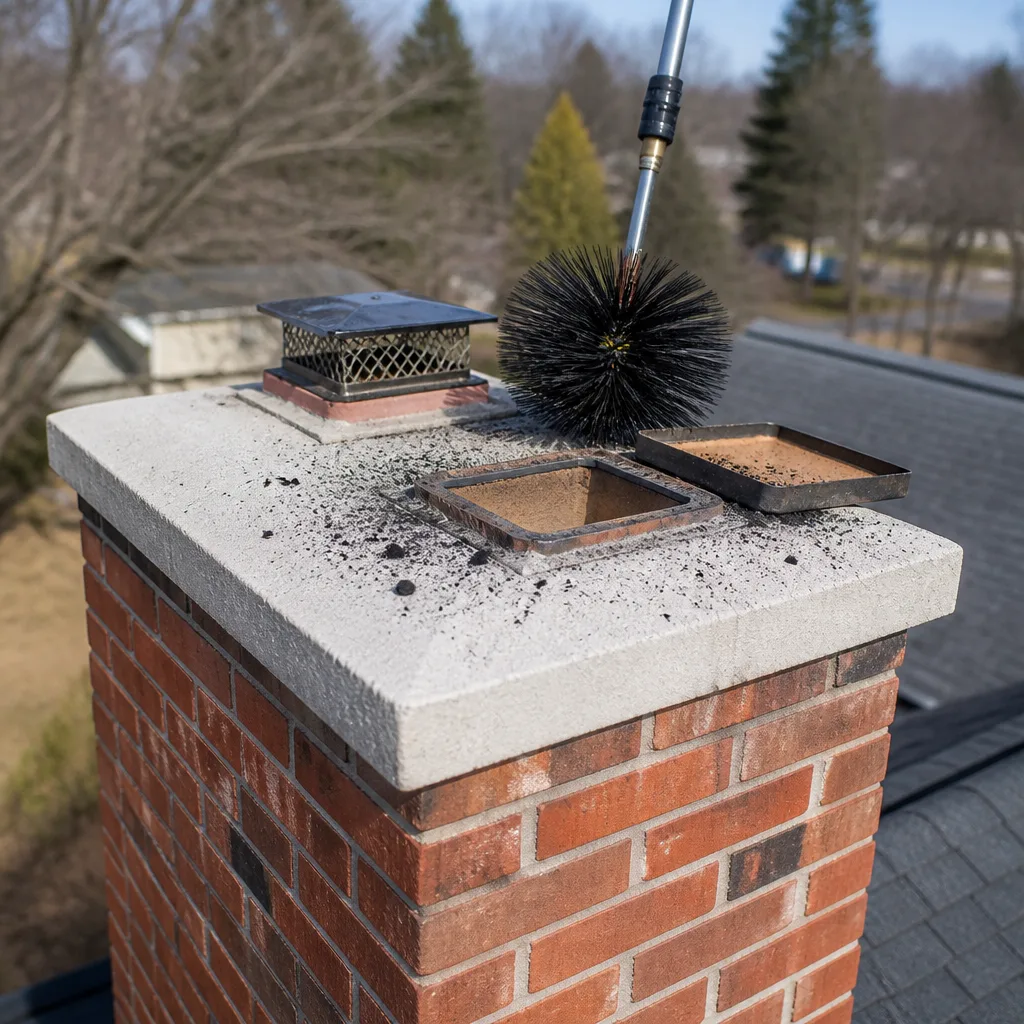
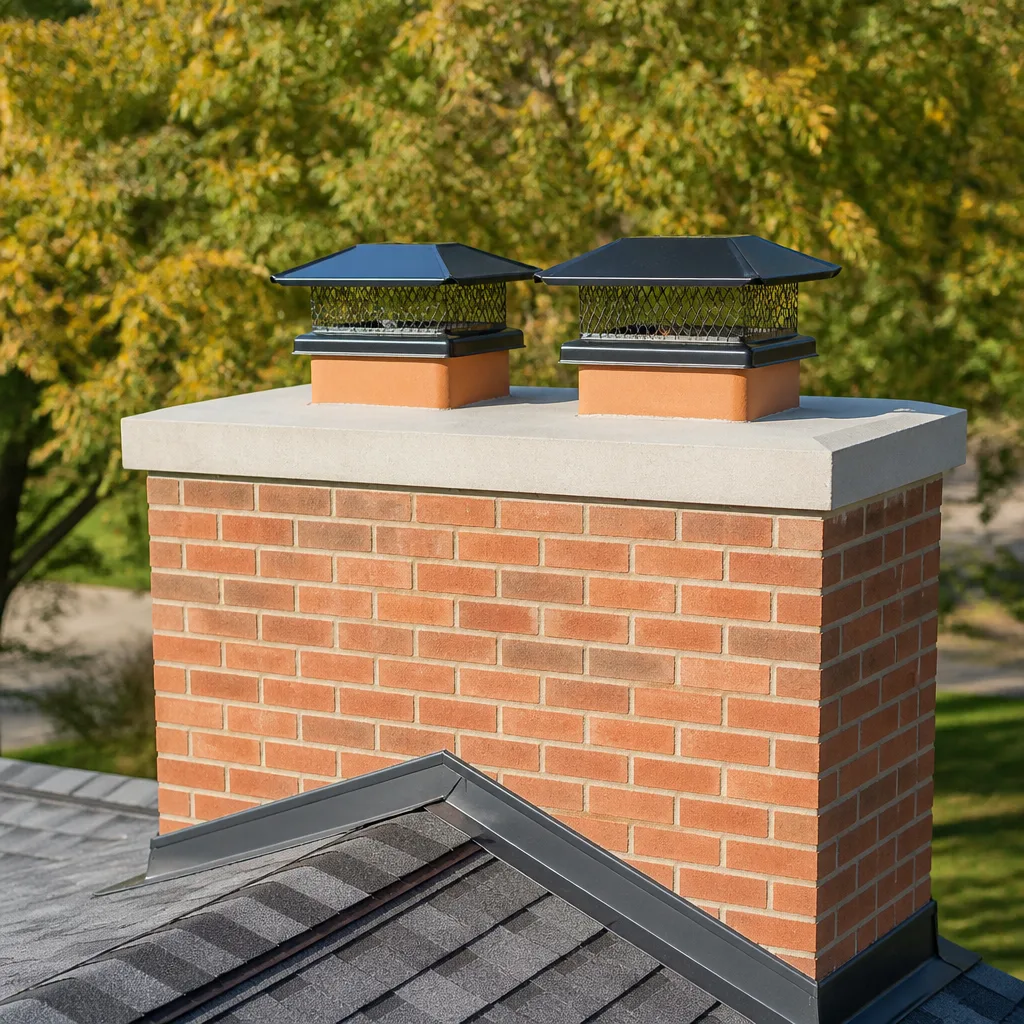
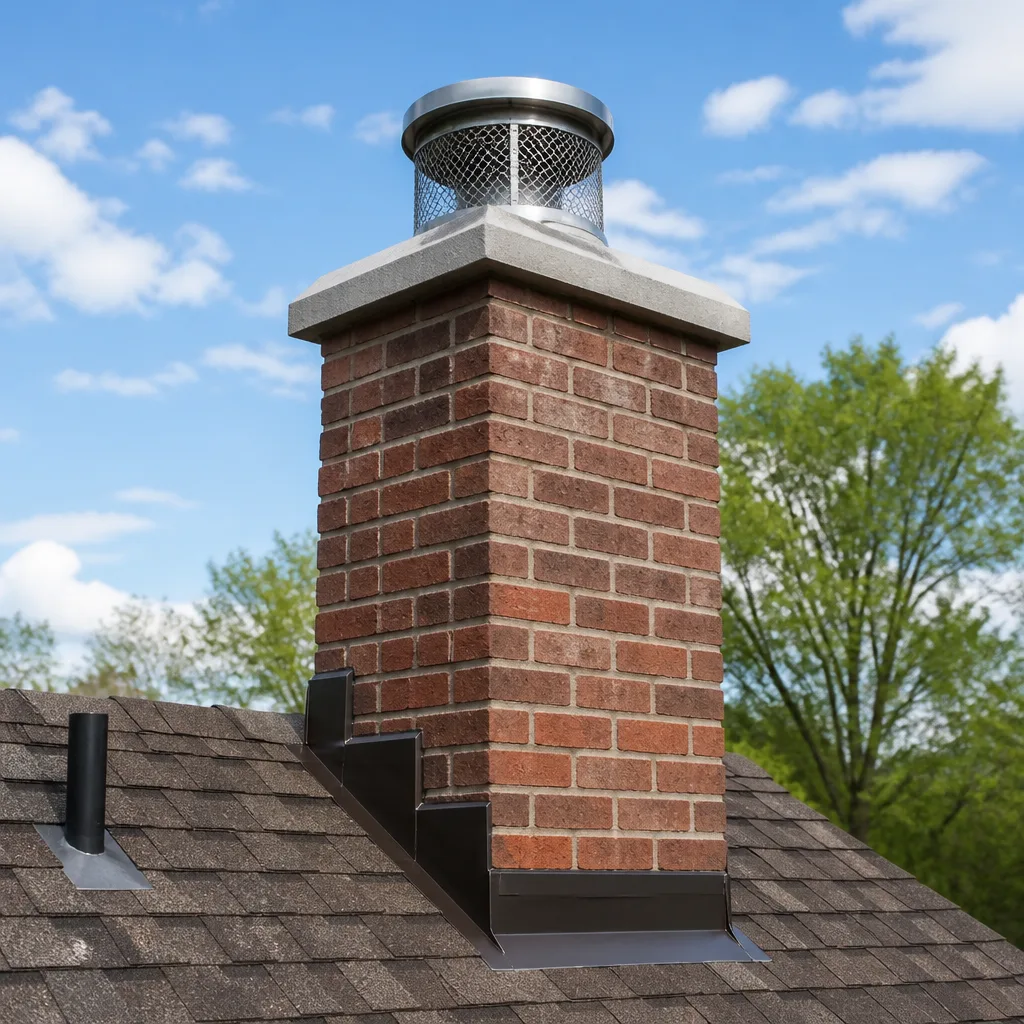
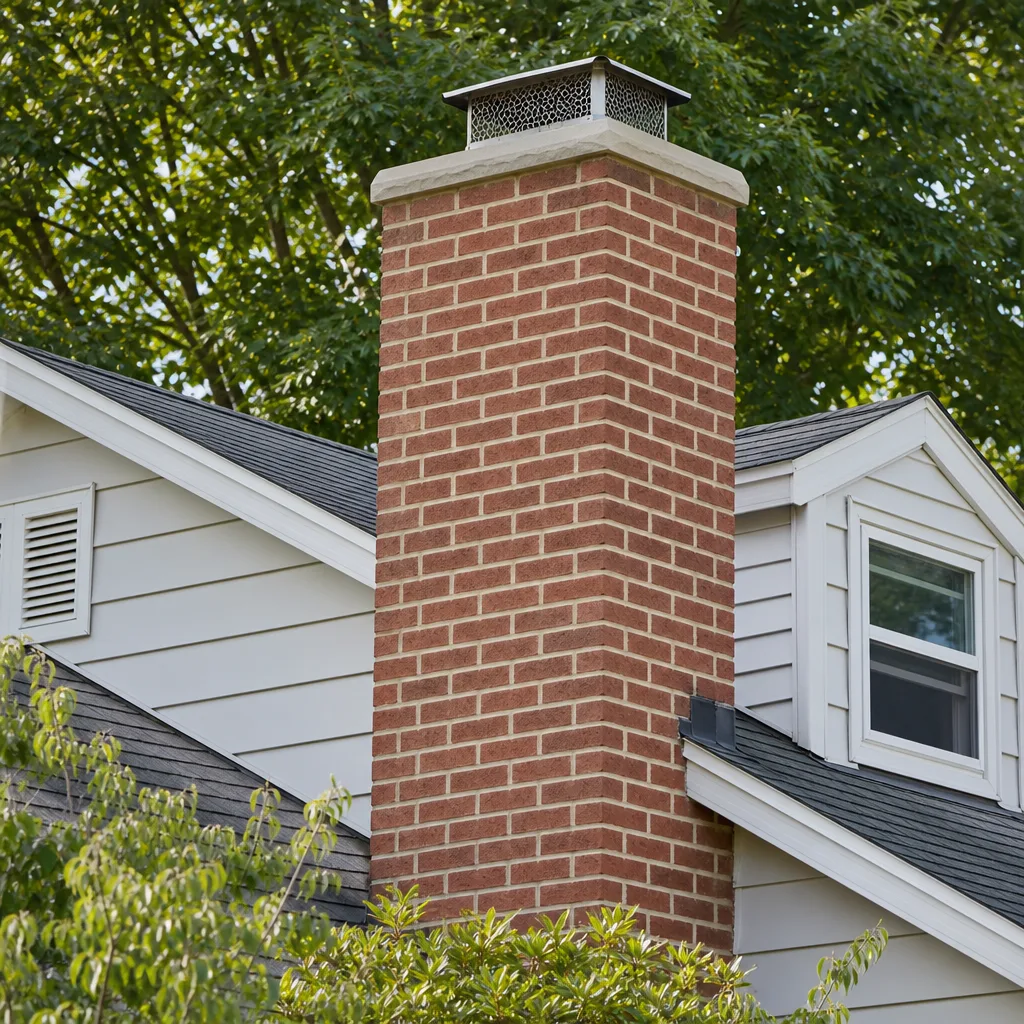
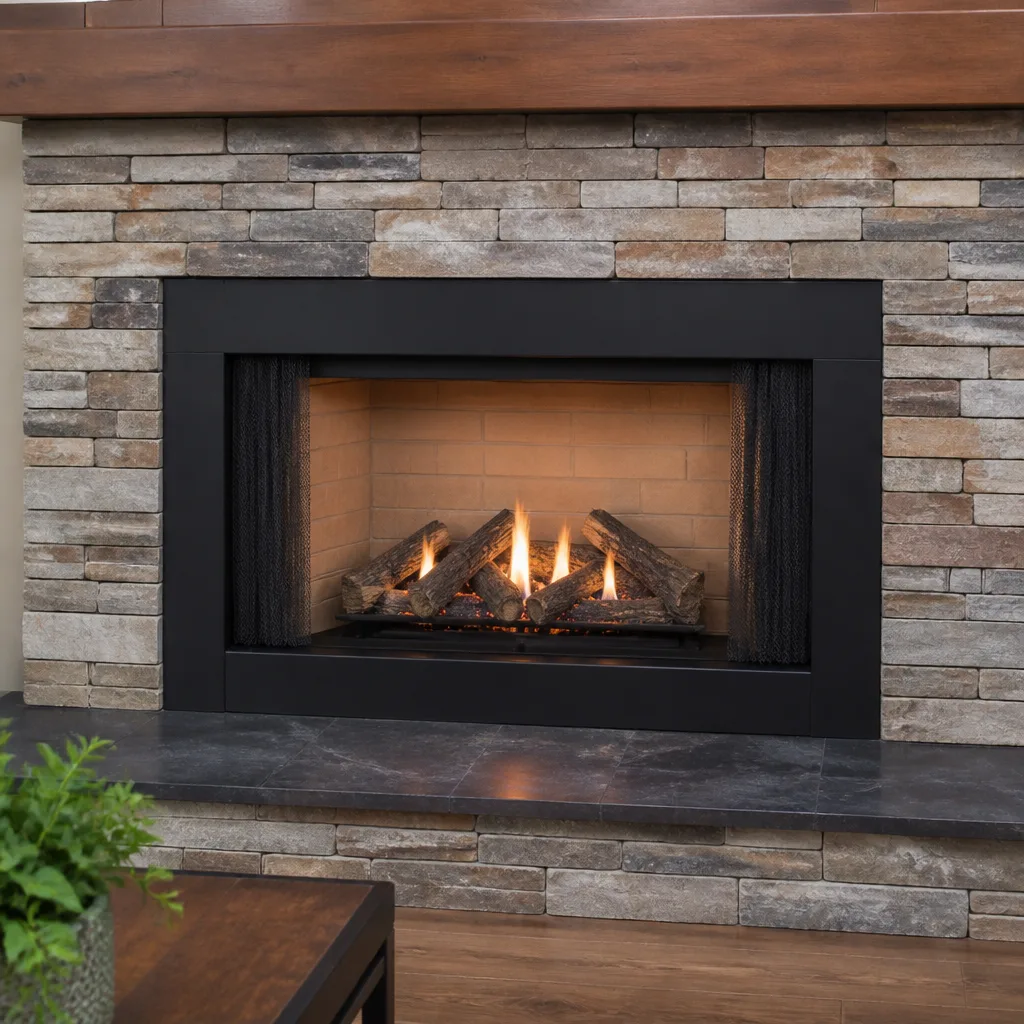
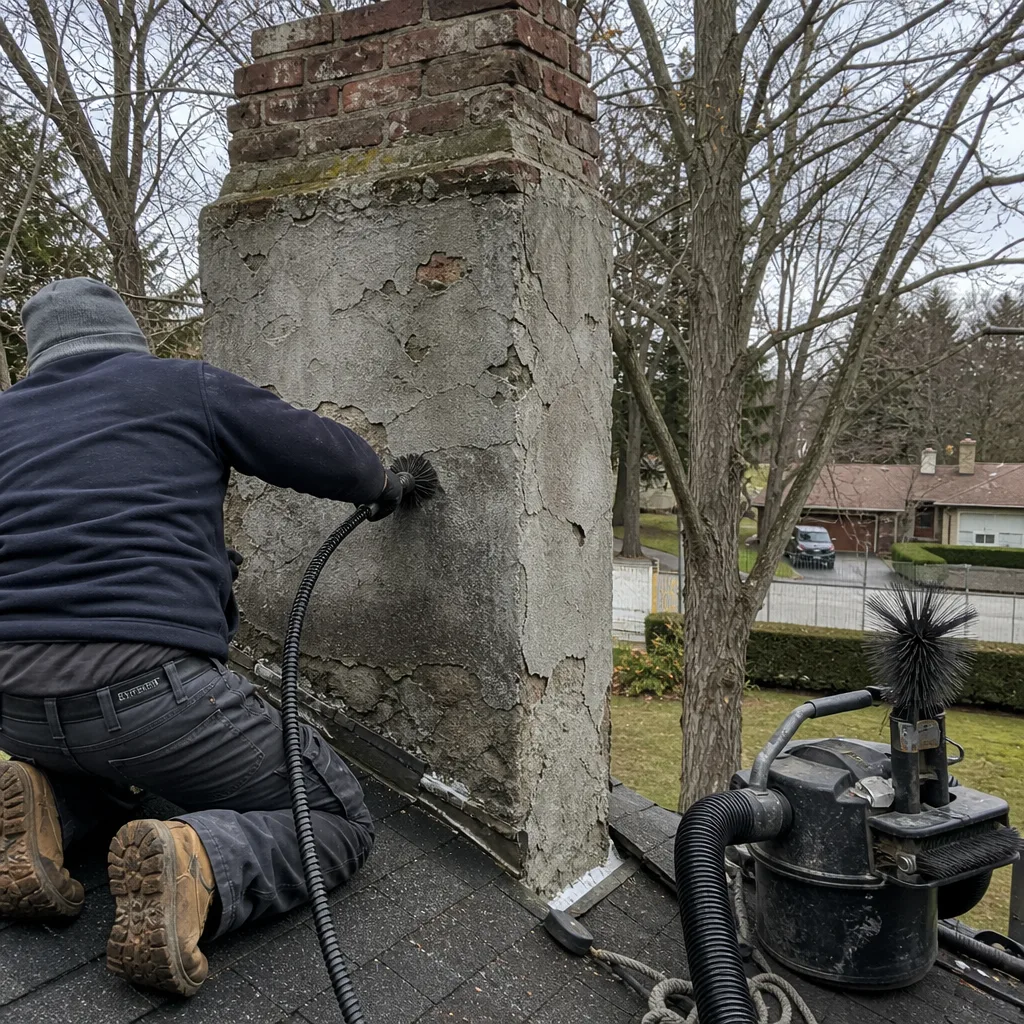 Before
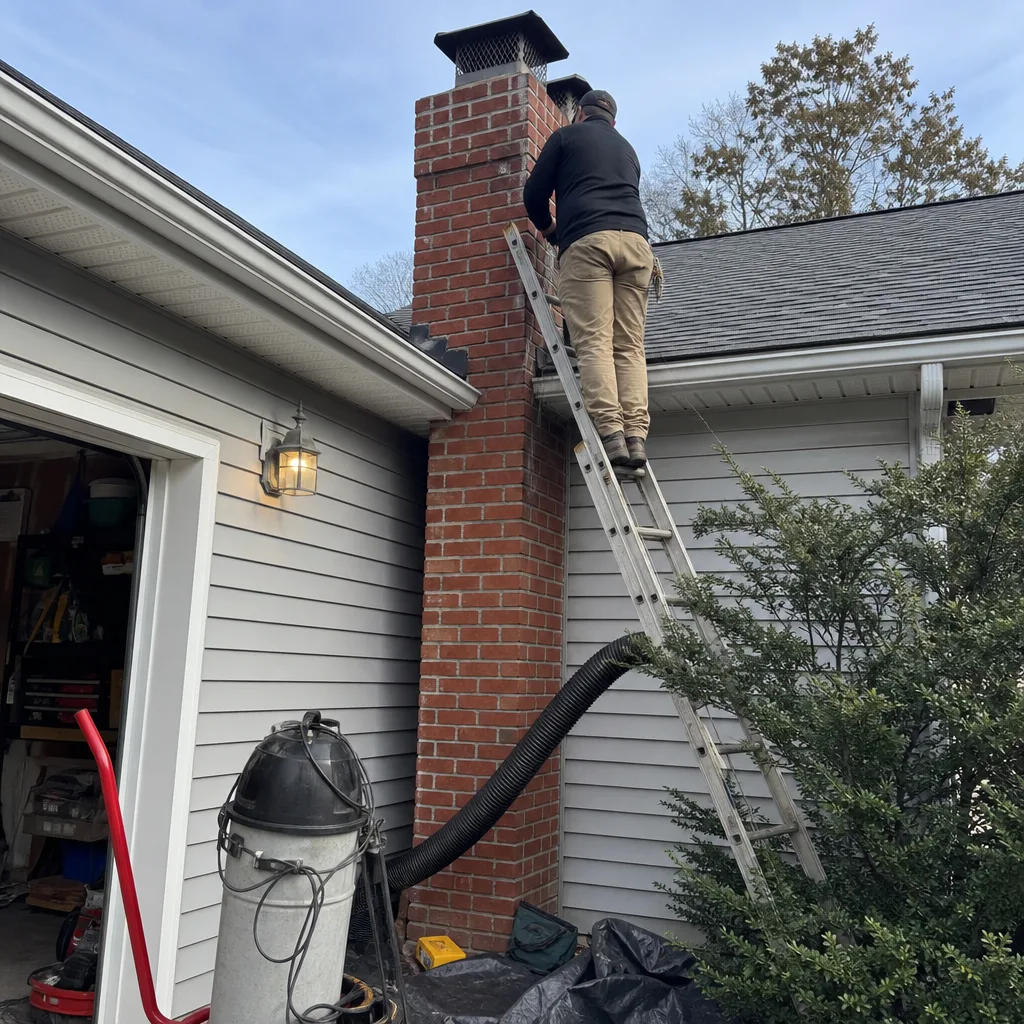 After
After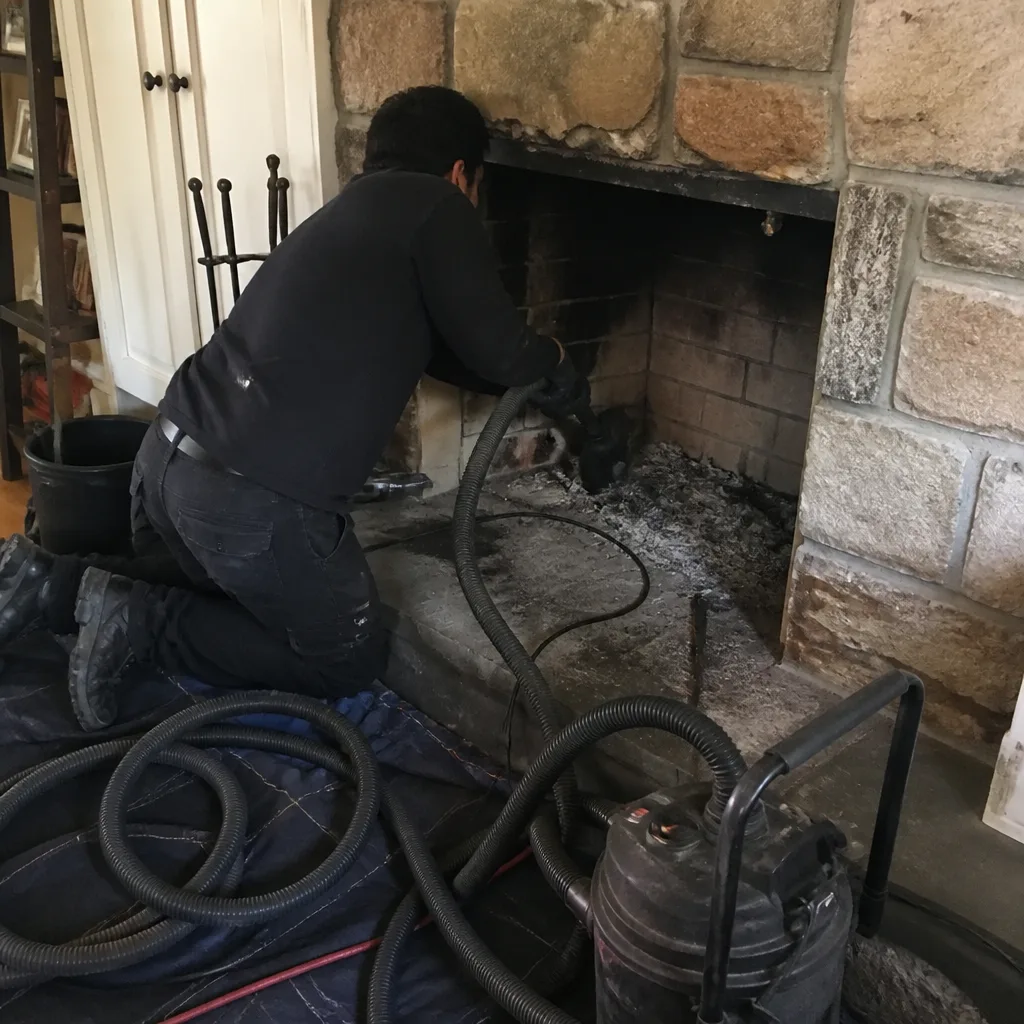 Before
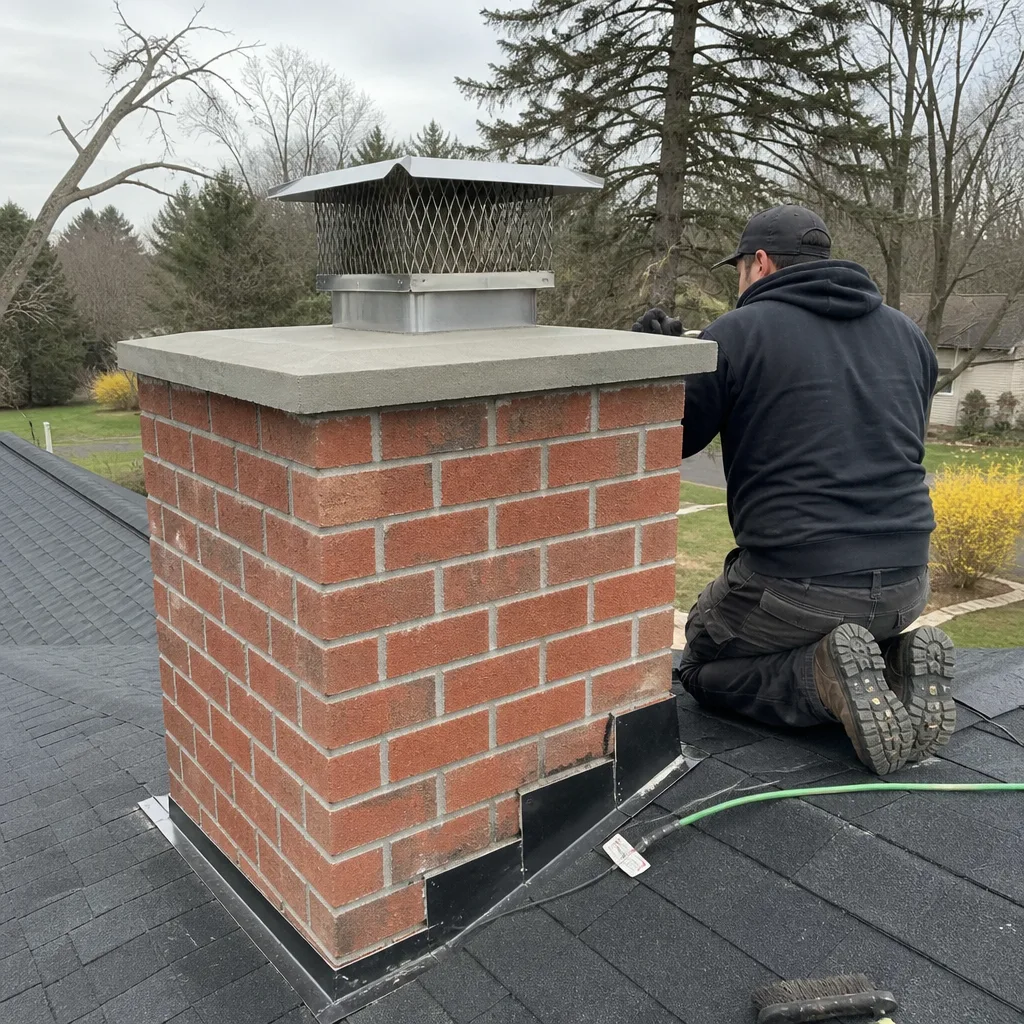 After
After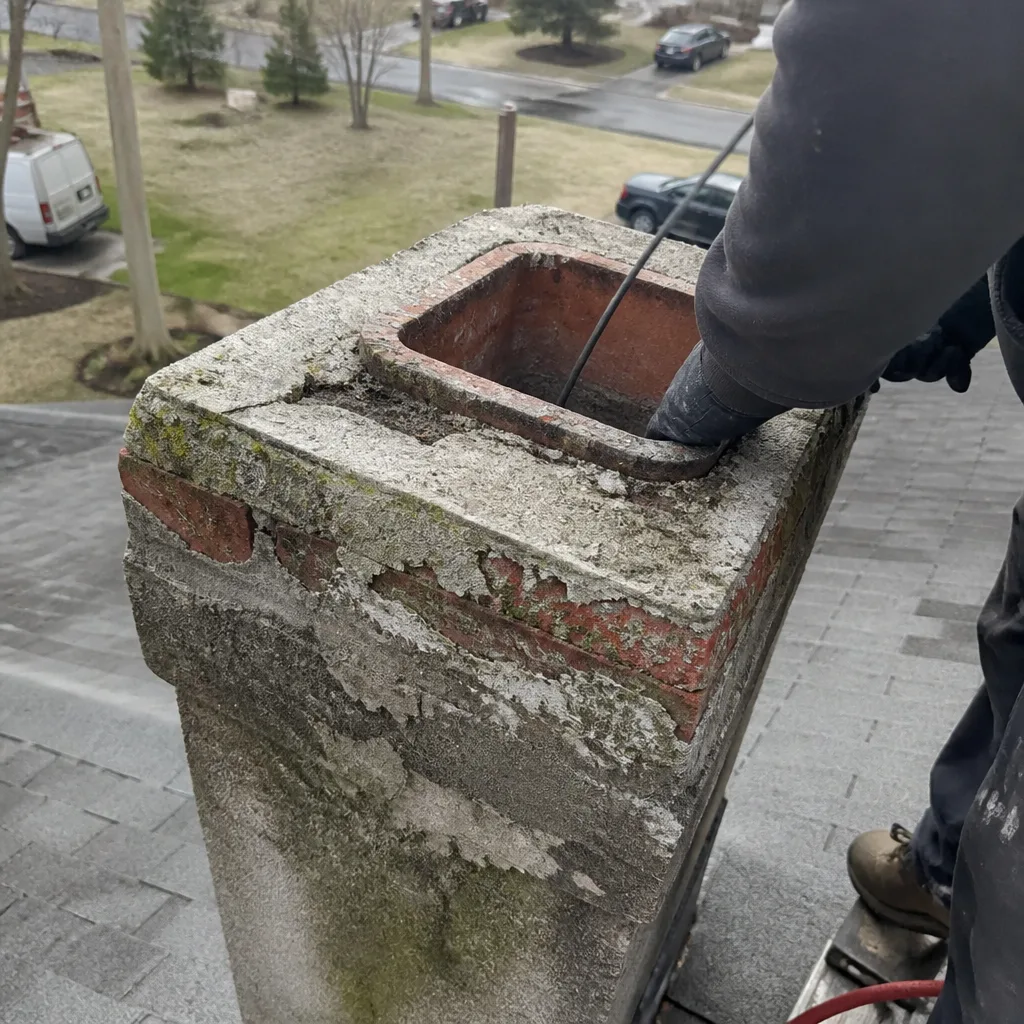 Before
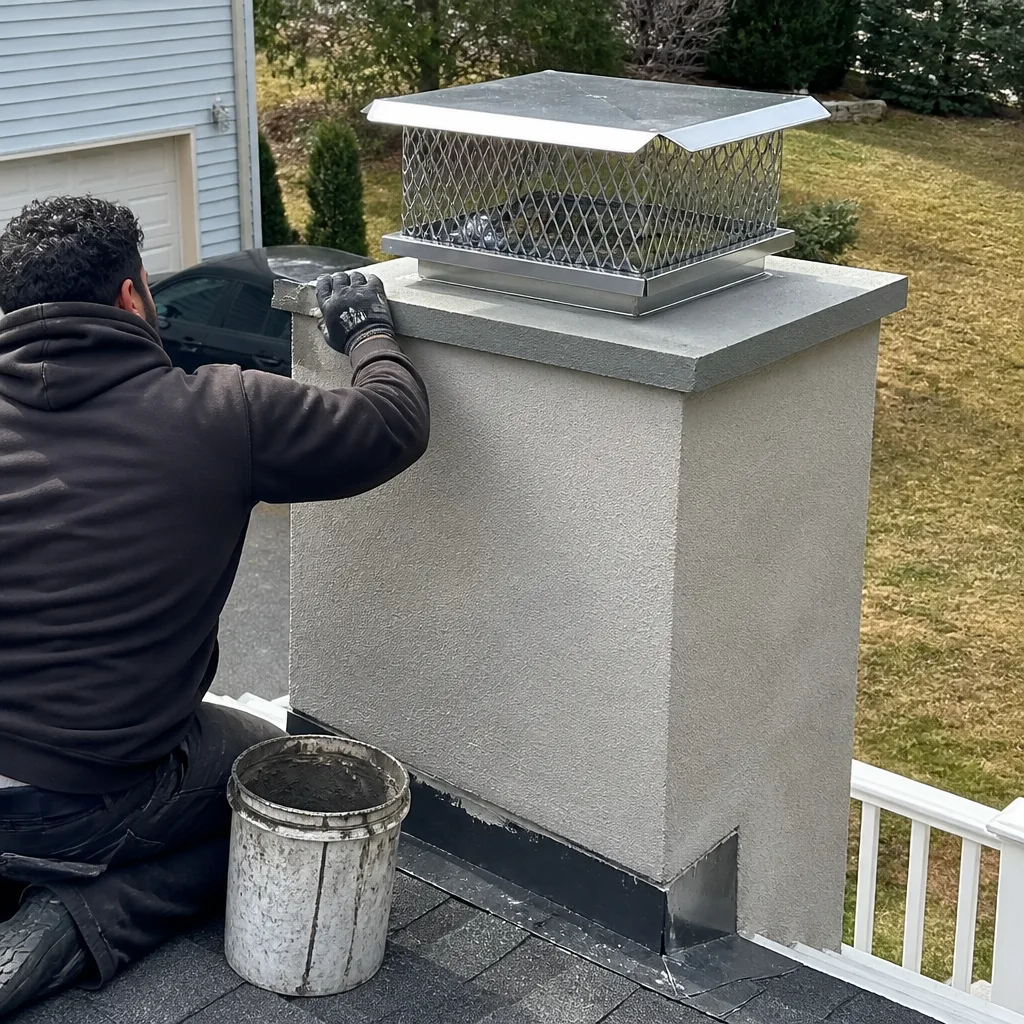 After
AfterHow to Hire a Chimney Cleaning Contractor in Dix Hills: A Step-by-Step Guide
New York State doesn’t license chimney sweeps the way it licenses electricians or plumbers. That single fact explains more about this industry than anything else. A man with a van, a brush kit, and a magnetic sign can call himself a chimney company in Dix Hills tomorrow morning, and nobody in Albany will stop him. The credential check falls entirely on you, the homeowner. Most people skip it. That’s how the $49 special turns into a $1,200 visit. This guide walks you through the exact questions and checkpoints that separate a legitimate sweep from a phone-quote operation, so you can hire with your eyes open. For more guides & resources on chimney care, see our blog.
Quick Answer
To hire a chimney cleaning contractor in Dix Hills, verify three things before anyone touches your roof: proof of liability insurance, CSIA certification you can confirm yourself on the CSIA website, and a written quote that matches the phone quote. Then ask the two questions that expose a bait-and-switch operation: “Will the price change after you inspect?” and “Can you show me the camera footage before recommending repairs?”
Table of Contents
- Why the Vetting Process Matters More in Chimney Work Than Other Home Services
- Step 1: Check Credentials Before Anyone Sets Foot on Your Roof
- Step 2: The Phone Script That Separates a Straight Sweep From a Sales Pitch
- Step 3: Verify Suffolk County Business Registration and Liability Insurance
- Step 4: Why Owner-Operated Matters More Than Company Size
- Step 5: What a Written Guarantee Should Actually Say
- Step 6: Red Flags That Signal a Bait-and-Switch Operation
- Step 7: What a Legitimate Chimney Cleaning in Dix Hills Should Look Like
Why the Vetting Process Matters More in Chimney Work Than Other Home Services
The chimney industry has almost no barrier to entry. In Suffolk County, there’s no state licensing board, no mandatory apprenticeship, and no required certification to advertise chimney sweeping services. Compare that to an electrician or plumber, who needs years of supervised work, a state exam, and an active license number to pull a permit. A chimney sweep needs a ladder and a willingness to climb on your roof. That’s the whole list.
This isn’t an argument against hiring a sweep. It’s an argument for hiring carefully. A chimney that’s cleaned improperly or a “repair” that’s actually a sales script can leave you with a flue that drafts worse than it did before, a crown that leaks, or a liner that was never actually needed. And because there’s no state oversight, the person who makes that mess has no governing body to answer to. You’re left holding the invoice.
That’s the reason the questions in this guide exist. They aren’t niceties. They’re the vetting process New York State declined to create, and they protect your house from the business model that thrives in unlicensed industries: quote low on the phone, find problems at the door, and leave with a deposit for work you can’t verify.
Step 1: Check Credentials Before Anyone Sets Foot on Your Roof
The credential you’ll hear most often in chimney work is CSIA certification. It’s the industry’s most recognizable standard, issued by the Chimney Safety Institute of America. What it actually means: the person holding it passed a written exam on fire codes, draft dynamics, and safety practices, and they agree to follow a code of ethics. It does not mean they’re a master craftsman, and it does not mean they’ve been doing this for 30 years. It means they studied for a test and passed it.
Here’s what matters more than the certificate itself: you can verify it in 60 seconds. Go to the CSIA website, click “Find a Certified Professional,” and type in the name or company. If the certification is real, it shows up. If the person on the phone says “I’m certified” but you can’t find them in that database, that’s your first red flag. Not a deal-breaker by itself. But it’s a reason to ask a follow-up question: “Why doesn’t your name come up in the CSIA lookup?” A legitimate sweep will help you verify. A phone-quote operation will get defensive or change the subject.
In our experience working Dix Hills homes since 1999, the sweeps with something to hide are the ones who make verification hard. The ones with nothing to hide hand it over without being asked. Certification is the starting point, not the finish line. It tells you the person on your roof understands the mechanics of a chimney. It doesn’t tell you whether they’ll be honest with you about what the camera finds.
What Else to Look For
- Background checks on everyone who enters your home. Ask if the company runs them and when. In Dix Hills, you’re inviting a stranger into your house while you’re possibly home alone. This isn’t paranoia. It’s the same check you’d run on a nanny or a dog walker.
- Uniforms and marked trucks. Not because a logo makes someone honest, but because a company that invests in its appearance usually invests in its equipment too. The man who shows up in an unmarked van with a brush sticking out the back window might do great work. But he also might be gone next week when you find out he didn’t.
- A published address. A legitimate Dix Hills chimney company has a place you can find. If the only contact information is a cell phone and a PO box, you have no way to find them when something goes wrong. Wendell Pike puts his name and address on his work because he runs into you at the bagel shop on Saturday.
One more thing on credentials. Some sweeps in the Dix Hills area will mention training from manufacturers like HeatShield or Olympia Chimney. That’s a good sign, not a requirement. It means they’ve learned the specific installation standards for those products, which matters if you end up needing liner work. But manufacturer training doesn’t replace CSIA certification, and it doesn’t replace the verification step. Treat it as a bonus, not a substitute.
Step 2: The Phone Script That Separates a Straight Sweep From a Sales Pitch
The phone call is where you learn more about a chimney company than the entire rest of the process combined. Before you book, you should have a short script. Five questions. That’s all you need. How they answer tells you whether you’re hiring a sweep or a salesman.
- “Can you give me a price range over the phone for a standard cleaning?” A legitimate sweep will ask you a few questions (one story or two, when was the last cleaning, any known problems) and then give you a range. A bait-and-switch operation will give you a flat number with no questions, usually suspiciously low. The flat $49 quote doesn’t account for anything real about your chimney. It’s a foot in the door.
- “Will the price change after you inspect the chimney?” The answer from an honest company is some version of “Only if you want us to do additional work, and we’ll show you why before you pay for anything.” The answer from a sales operation is vagueness: “We’ll have to see what we find,” without any commitment to showing you evidence first. Upfront pricing isn’t a slogan. It’s a rule: the number you hear on the phone is the number on the invoice, unless you agree to something more.
- “Do you use a camera inspection as part of the cleaning?” In 2026, there’s no good reason for a chimney company to clean without a camera. The camera shows the flue in real time, before and after. If the answer is no, or if the camera is “only for inspections” at an extra charge, that’s a sign the company wants to charge you for something that should be standard. A sweep who won’t show you the inside of your own chimney is a sweep who wants to tell you what to do without evidence.
- “Can you show me the footage if you recommend repairs?” This is the question that ends most bait-and-switch conversations. A straight-talking sweep will say “Of course, I’ll show you exactly what I’m seeing and explain it in plain English.” A sales operation will deflect: “I’ve been doing this a long time, you can trust me.” Don’t. The camera footage and a plain-English verdict should be standard on every job, no exceptions.
- “Who am I going to see when the truck pulls up?” This sounds small. It isn’t. If the person on the phone can’t tell you who will be at your door, if they’re vague about the crew, that’s a sign you’re dealing with a dispatcher for a rotating cast. In Dix Hills, you want the answer to be a name. Not necessarily the owner, but a named person who’s accountable for the work. Wendell still answers his own phone half the time. When he doesn’t, the person who does can tell you exactly who’s coming and when.
What a Straight-Talking Sweep Will Say
A straight-talking sweep will ask you questions back. How old is the house? Have you burned wood or gas this season? Have you noticed any smell or smoke in the room? These questions tell you they’re thinking about your chimney, not their quota. A straight-talking sweep will also tell you when the job does not need doing. If you had the chimney cleaned last year and haven’t burned since, a good sweep might say “You’re probably fine for another season, here’s what to watch for.” A sales operation will never say that. The job always needs doing, because the job is the profit.
One more thing: listen for how they talk about time. A legitimate Dix Hills chimney cleaning takes 45 minutes to an hour and a half, depending on the chimney. If someone promises a “full cleaning and inspection” in 20 minutes, they’re not doing the work. They’re doing the appearance of work. Your flue doesn’t care how the fire looks. It cares how it breathes.
Step 3: Verify Suffolk County Business Registration and Liability Insurance
Before anyone climbs onto your roof, you want two pieces of paper: proof of liability insurance and proof the business is registered with Suffolk County. Both take about five minutes to check, and both protect you from a scenario that’s more common than people realize: an uninsured worker gets hurt on your property, and your homeowner’s policy takes the hit.
Liability Insurance
Ask for a certificate of insurance (COI) before the appointment. Not after. A legitimate company has it on file and can email it within minutes. The COI should name the company and show a current policy date. It should also list the coverage amount. If a company hesitates to provide it, that’s a hard stop. In New York, you can be held liable for injuries on your property, and a chimney company that doesn’t carry insurance is transferring that risk to you. This isn’t a paperwork formality. It’s the difference between a bad day and a lawsuit.
One nuance worth knowing: liability insurance doesn’t cover the quality of the work. It covers damage and injury caused by the work. A company can be fully insured and still do poor work. That’s what the written guarantee is for, which we’ll get to in Step 5. But the insurance check comes first, because it’s about protecting you from the most expensive thing that can go wrong: an injury on your property where nobody has coverage but you.
Business Registration
Suffolk County requires businesses operating in the county to register, and you can verify a registration through the county’s consumer affairs office. This is a fast check. Ask the company for their registration number or look it up by business name. A company that’s been operating in Dix Hills for years will have no problem with this. A company that started last spring and is working out of a rental van might not show up. That’s exactly the kind of company you don’t want walking your roof.
Here’s a local reality worth stating plainly: there are companies advertising chimney services across Suffolk County that are not registered here. They operate from a cell phone, book jobs through an answering service, and move on when complaints pile up. The registration check exists to help you avoid them. It takes five minutes, and it’s done before anyone ladders your house.
Step 4: Why Owner-Operated Matters More Than Company Size
There’s a moment in every chimney problem where the size of the company stops mattering and the name on the truck starts mattering. It’s the moment after you find the leak. Or after the sweep tells you the liner needs replacing and you’re not sure you believe him. Or after the third call to the national office goes to a voicemail that never calls back. That’s when the difference between an owner-operated company and a franchise operation becomes very real.
An owner-operated chimney company lives in the same county you do. Wendell Pike has been serving Dix Hills and the surrounding communities since 1999. That’s over 29 years of faces at the hardware store, kids in the same Little League, and neighbors who know where he lives. When your work isn’t done right, he hears about it. Not through a corporate complaint process. At the gas station. That kind of accountability can’t be faked by a national outfit that rotated a new franchisee into your zip code last spring.
This matters even more in chimney work because so much of the trade is judgment. Two sweeps can look at the same creosote buildup and give you two different recommendations. One sees a routine cleaning. The other sees a liner replacement. The one you can find on Saturday is the one you can hold to account. The national chain’s advantage is marketing budget, not accountability. And marketing budget doesn’t help you when you can’t get anyone on the phone.
Ask anyone on your street. The homeowners in Dix Hills who’ve lived here for decades can tell you which companies last and which ones are gone by spring. That’s market research no Google search can replace.
Step 5: What a Written Guarantee Should Actually Say
Most chimney companies promise something vague: “satisfaction guaranteed” or “we stand behind our work.” That phrasing means nothing because it commits to nothing. A real guarantee has three parts, and you should see all three in writing before you book.
- A time window. The guarantee should say how long it lasts. Not “for a reasonable period.” A number. Thirty days. Ninety days. A year. At Top Hat Chimney, every job carries a 90-Day Done Right Promise. If the work isn’t right, one call brings the crew back at no additional cost. That’s not marketing language. That’s the commitment, in writing, on every single job.
- A specific remedy. The guarantee should say what happens if the work fails. “We’ll make it right” is not a remedy. “We’ll return and redo the work at no charge” is a remedy. The difference matters because vague language gives the company room to negotiate, and you shouldn’t be negotiating a guarantee after the fact.
- A trigger. The guarantee should say what you have to do to invoke it. Usually that’s as simple as calling. But some companies bury conditions: “within 30 days of noticing the issue” or “with original receipt and proof of maintenance.” Read the fine print. A guarantee that’s hard to invoke isn’t a guarantee. It’s a disclaimer with better typography.
Owner-operated companies tend to write straightforward guarantees because the owner’s name is on them. He’s not hiding behind a legal department. A guarantee with a person’s name attached is more valuable than a guarantee with a corporate logo, because the person has to keep living in the town where the guarantee was made.
Step 6: Red Flags That Signal a Bait-and-Switch Operation
The bait-and-switch model in chimney work follows a predictable pattern, and once you know it, you’ll see it coming from the first phone call. Here are the warning signs, in the order they usually appear.
- The quote is suspiciously specific and suspiciously low. $49 or $79 for a “complete chimney cleaning” is not a price. It’s a marketing cost. The company is paying to get a salesman on your roof, and the salesman’s job is to find enough “problems” to turn that $49 into $500 or $1,500. No legitimate Dix Hills chimney company can clean a chimney profitably for $49.
- The phone quote is vague about what’s included. “Basic cleaning” that doesn’t define what basic means. Does it include the smoke chamber? The crown inspection? The camera? If the company can’t tell you exactly what you’re getting, assume you’re getting the minimum, and the upsell is built into the visit.
- On-site pressure to add services. The sweep finds “serious problems” and needs a decision today, preferably with a deposit. A legitimate sweep will show you the problem on camera, explain your options, and give you time to think. Anything that can’t wait a week is rarely as urgent as it’s being made to sound. First-degree creosote is a brush job. Third-degree is a glaze. Neither one requires a deposit on the spot.
- No written documentation. No written quote before the work. No written guarantee after. No camera footage. A company that won’t put things in writing is a company that plans to change the story later. In the chimney business, if it’s not written down, it didn’t happen.
- Rotating crews with no names. You call the same number, but you never see the same face twice. There’s no one to build a relationship with, and no one who remembers your chimney from last year. Chimney care is cumulative. A sweep who knows your chimney’s history is a sweep who can catch problems early. A stranger every time is a stranger who doesn’t know what your flue looked like before.
- Discounts that expire during the visit. “I can do it for $300 less if you sign today.” That’s not a discount. That’s pressure wearing a friendly mask. Real discounts don’t have a 20-minute fuse. They apply to anyone who calls, like the standing offers at Top Hat Chimney: $40 off any repair over $200, no trip charge inside the county, 10% off always for seniors and veterans. Those aren’t negotiating tactics. They’re just the prices.
Step 7: What a Legitimate Chimney Cleaning in Dix Hills Should Look Like
You’ve checked the credentials. You’ve run the phone script. You’ve got the insurance certificate and the written guarantee. Now here’s what the day of the job should look like, so you can tell if the company you hired actually did the work.
The Arrival
The sweep shows up in a marked truck, in uniform, within the arrival window you were given. If the schedule slips, the company calls before the window closes, not after you’ve been waiting for two hours. Background-checked technicians are a standard for any company worth hiring in Dix Hills. The sweep sets up drop cloths around the fireplace and uses a vacuum system that vents outside or through a HEPA filter. If the setup doesn’t include some kind of dust control, ask about it before they start. A professional chimney cleaning doesn’t leave soot on your living room rug.
The Cleaning Itself
A real cleaning is done from both directions: from the roof with a brush system and from inside with the damper area and smoke chamber. The sweep should clean the flue, the smoke shelf, the damper, and the firebox. That’s the full job. If the sweep only brushes the flue from the roof and calls it done, they’ve skipped half the work. The smoke chamber is where creosote accumulates in a masonry chimney, and a cleaning that skips it isn’t a cleaning. It’s a partial pass.
The Camera Inspection
After the cleaning, the sweep runs a camera through the flue. You should be invited to watch. This is non-negotiable for a modern chimney service. The camera shows the mortar joints, the liner condition, and any cracks or gaps that ordinary cleaning can’t reveal. A good sweep narrates what you’re seeing in plain English, and if repairs are recommended, the camera footage is the evidence. “We recommend relining because of these cracks here and here” is very different from “Your liner needs replacing, it’ll be about $3,000.” One is a conversation. The other is a sales pitch.
The Verdict
At the end of the job, you should leave with three things: a written report of what was done, the camera footage if repairs were recommended, and a clear recommendation for next steps. Sometimes the recommendation is simple: “You’re fine for another year.” Sometimes it’s more involved: “That crack in the crown should be sealed before winter.” A legitimate sweep tells you the truth even when the truth means no additional work. That’s the difference between a chimney professional and a chimney salesman.
Dix Hills-Specific Considerations
Homes in Dix Hills run the full gamut, from colonials built in the 1970s to newer construction from the 2000s. That age range matters for chimneys. Older homes often have original clay tile liners that are reaching the end of their useful life. Newer homes sometimes have prefab fireplaces that need different care than traditional masonry. The right sweep knows the difference and adjusts accordingly. They also know Long Island winters: the freeze-thaw cycles on the North Shore are hard on crowns and flashing, and problems caught in September are cheaper than problems discovered in February. Once a year, burn or no burn. Chimneys break in the off-season too.
Common Mistakes to Avoid
- Hiring on price alone. The $49 special is the single most common entry point to a bad chimney experience. A legitimate cleaning in Dix Hills costs more because it actually includes the full job. If the price seems too good to be true, it’s a marketing strategy, not a bargain.
- Skipping the insurance check. Five minutes before the appointment can save you from a lawsuit after it. In New York, homeowner liability for contractor injuries is real, and an uninsured sweep is a risk you take without being asked.
- Taking “certified” at face value. The CSIA verification takes 60 seconds. If someone says they’re certified and you can’t find them in the database, that’s a claim you should question, not accept.
- Accepting a verbal quote without a written follow-up. The number you hear on the phone is the number on the invoice. If that’s not in writing before the work starts, you’re relying on memory. Get it in writing.
- Authorizing repairs without seeing camera footage. A liner replacement is a $2,500 to $5,000 job in the Dix Hills market. You should see the evidence before you spend the money. A sweep who won’t show you the footage is a sweep who’s asking you to trust them more than the evidence supports.
- Delaying a cleaning because the fireplace still works. Chimney problems develop silently. The fire looks the same right up until the day it doesn’t. Annual cleaning isn’t about keeping the fire pretty. It’s about catching the creosote before it becomes a chimney fire.
- Hiring a sweep who won’t tell you when work can wait. Some chimneys need work now. Others can wait a year with no risk. A legitimate professional tells you the difference. If every visit ends with an urgent recommendation, the urgency is the business model.
When to Call a Professional
Some chimney situations are not DIY territory, no matter how handy you are. High-tension situations like a damaged crown that requires roof access, a liner that shows cracking on camera, or creosote buildup you can’t see without the right equipment all warrant a trained professional with the right tools and insurance. If you smell smoke in the house when the fireplace isn’t in use, that’s a draft or blockage problem that needs a camera, not a guess. If you see white staining on the exterior brick, that’s moisture working through the masonry, and it gets worse every Long Island winter. Top Hat Chimney offers free estimates in Dix Hills, including a free second opinion on any competing written estimate. Call (631) 318-8656 and Wendell or one of his crew will take a look, show you the camera footage, and tell you what actually needs doing, even if the answer is nothing.
Frequently Asked Questions
A legitimate chimney cleaning in Dix Hills typically runs between $180 and $340, depending on the chimney’s height, the type of fireplace, and how long it’s been since the last cleaning. See our Chimney Cleaning Cost Breakdown: The Dix Hills Homeowner’s Reference for 2026 for full pricing details. If you’re quoted less than $100, you’re being quoted a foot-in-the-door price, not a full cleaning. Call (631) 318-8656 for an exact quote on your chimney, estimates are free.
Ask to see the camera footage. A cracked or deteriorating liner is a real problem that affects draft and fire safety, but you should never authorize a liner replacement based on a verbal recommendation alone. The camera shows the actual condition of the liner, and a legitimate sweep will show it to you and explain what you’re seeing. If they won’t show the footage, get a second opinion. A free second opinion on any written estimate is always available from Top Hat Chimney.
Once a year, whether you use the fireplace heavily or barely at all. Creosote builds up even with occasional use, and Long Island’s humid summers can accelerate deterioration in a chimney that isn’t being used. The annual visit isn’t just cleaning. It’s also the inspection that catches problems during the off-season, when repairs are cheaper and easier to schedule.
Creosote accumulates in layers. First-degree creosote is loose and brushable. Second-degree is harder, more baked on. Third-degree is a glaze that requires special tools and often a chemical treatment. A chimney fire doesn’t usually start from a single season of buildup. It starts from years of deferred cleanings that allowed creosote to build to a dangerous thickness. You’re not risking a dramatic fire after one skipped season. You’re starting a pattern that becomes dangerous over time.
No. New York does not issue a chimney sweep license, which is why the credential check falls on you. Verify CSIA certification through the CSIA website, confirm Suffolk County business registration, and always ask for a certificate of insurance before anyone works on your home. These three checks replace the licensing system other trades have, and they take about ten minutes total.
Accountability. A national chain can rotate crews through your zip code without any single person being responsible for the work over the long term. A local owner-operated sweep lives in the community, has been serving the same neighborhoods for years, and answers to the people he’ll run into at the diner. When something goes wrong, you can find him. That’s the difference.
The Bottom Line
Hiring a chimney cleaning contractor in Dix Hills comes down to three checks: verify the credentials with the CSIA database, verify the insurance with a certificate, and verify the quote in writing before anyone climbs on your roof. Then run the phone script with your five questions, and listen for the answers that signal a straight-talking sweep versus a sales operation. The sweep who shows you the camera footage, gives you a written guarantee with a time window and a remedy, and tells you plainly when work can wait is the sweep worth hiring. The one who won’t do any of those things was never going to respect your chimney or your money. If you want a second opinion on any chimney recommendation, Top Hat Chimney home has been serving Dix Hills since 1999, and we’re happy to take a look. For a free estimate, call (631) 318-8656.
Written by Wendell Pike, Owner at Top Hat Chimney, serving Dix Hills since 1999.