
Last updated September 10, 2026
Level 1 sweep and inspection to the NFPA 211 annual standard - flue, crown, cap, and flashing checked and photographed
Chimney sweep logs do not sweep chimneys. They loosen some creosote - which then falls where a brush and vacuum still have to collect it.
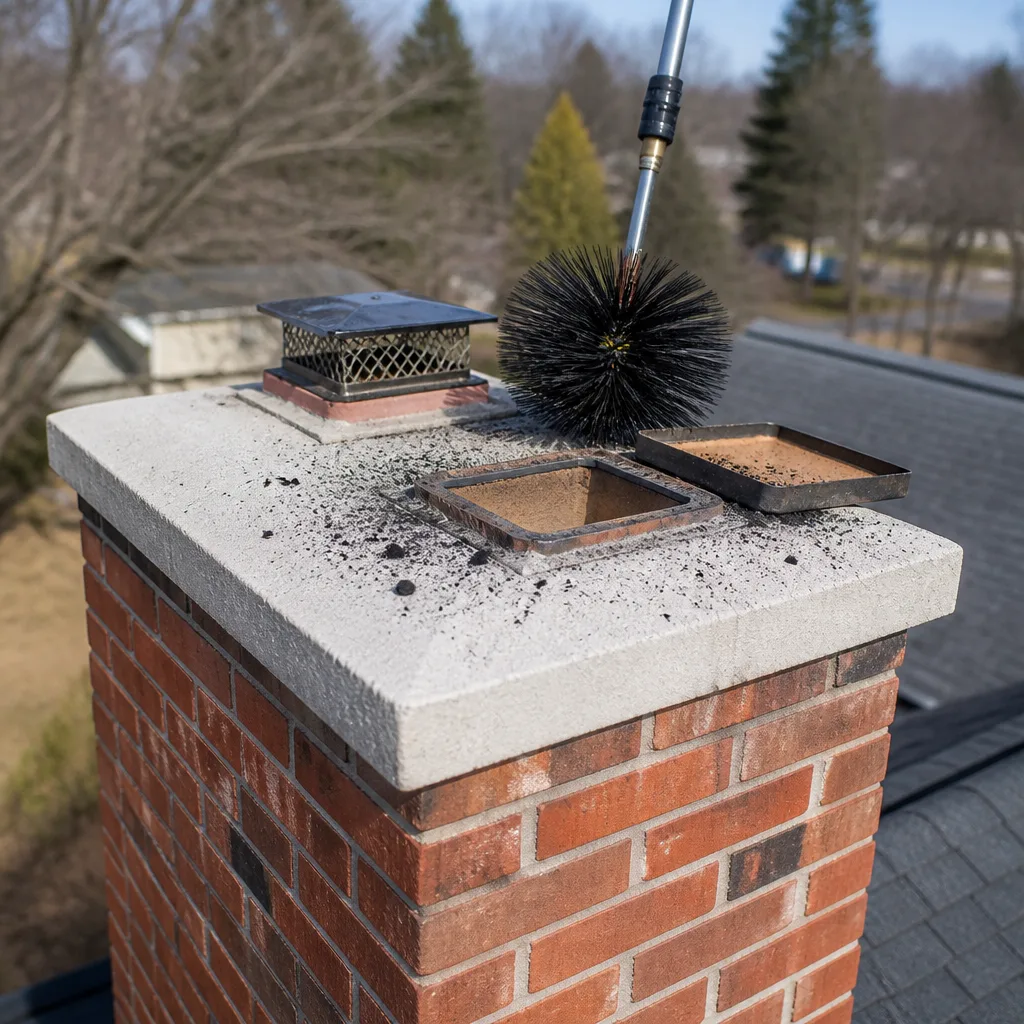
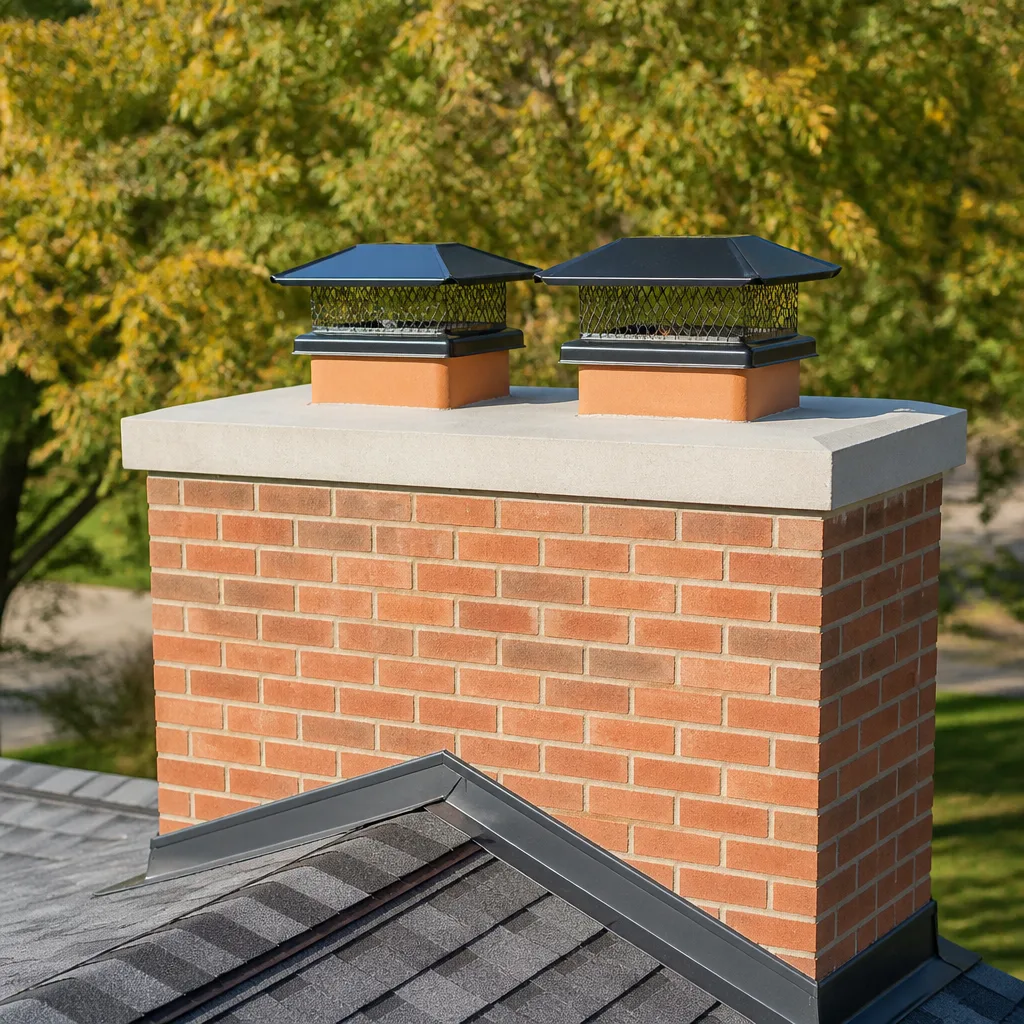
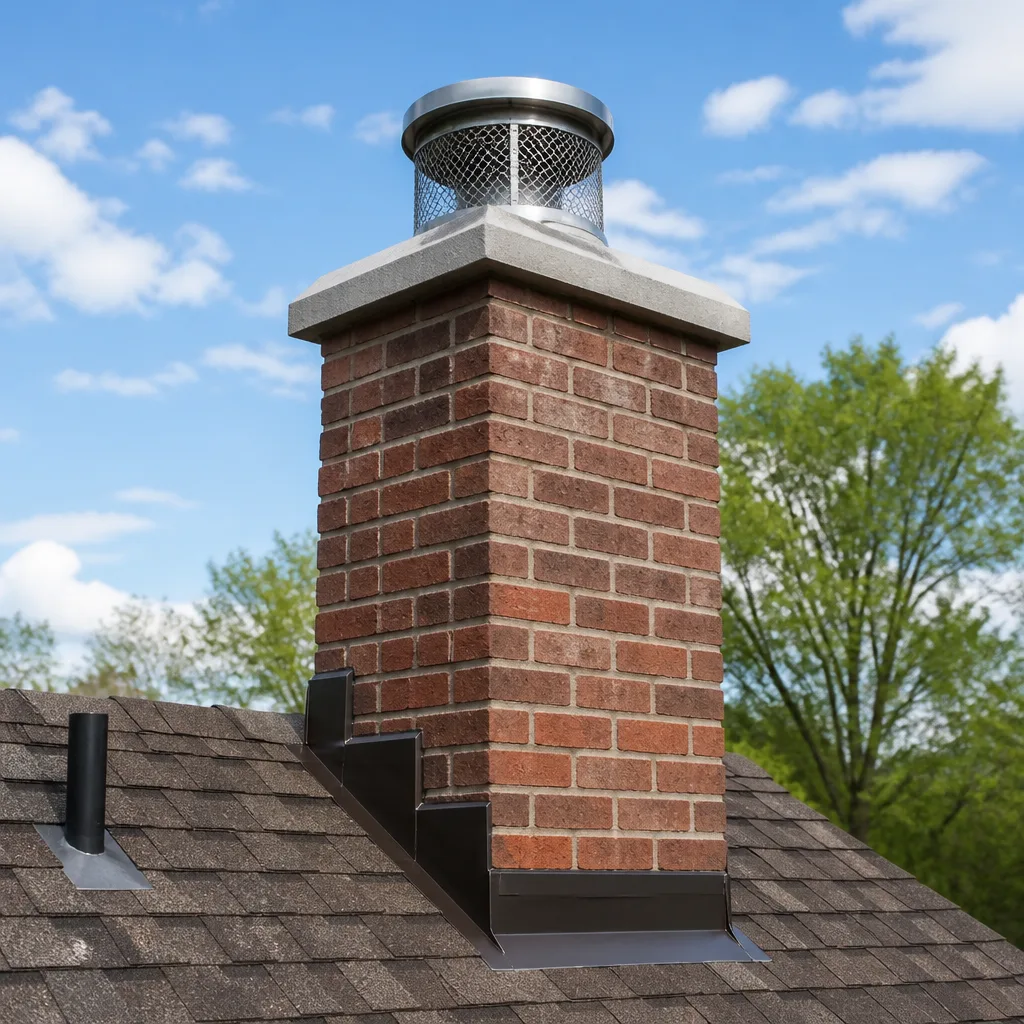
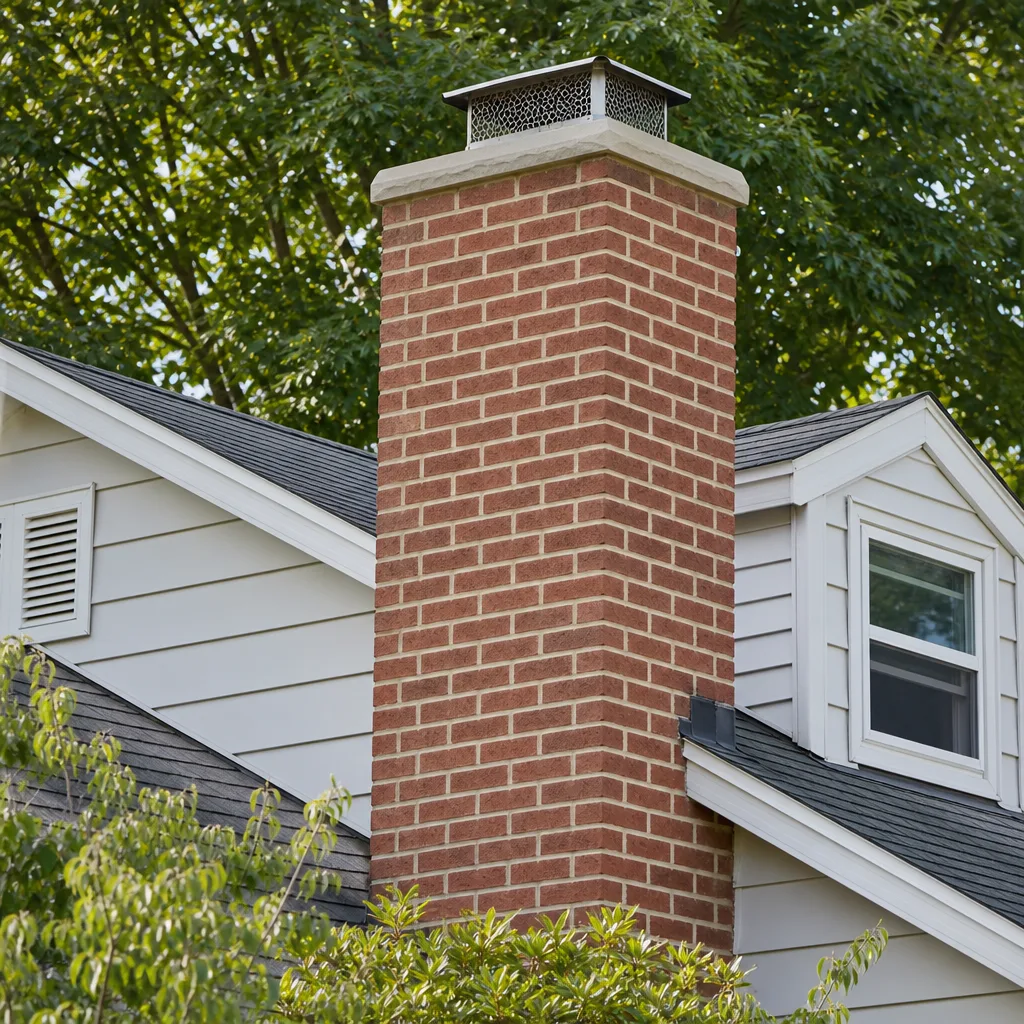
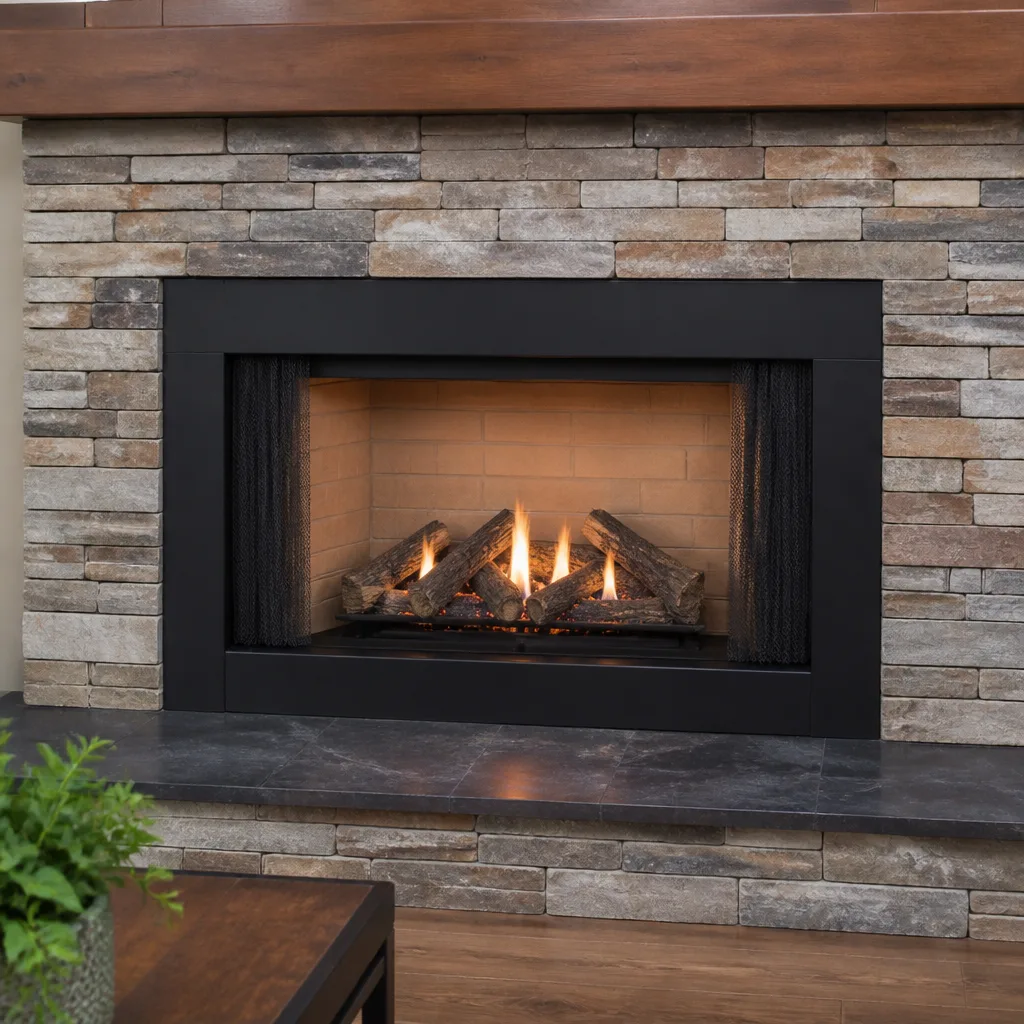
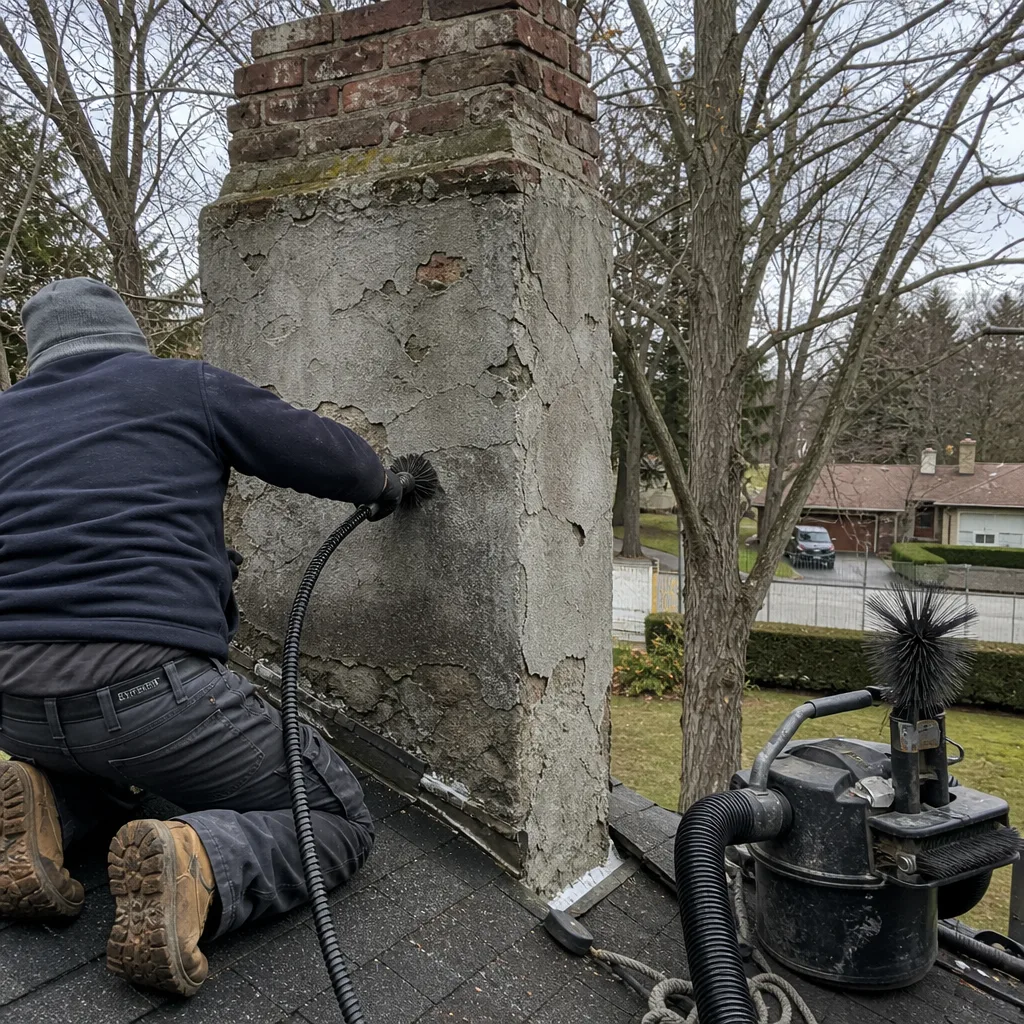 Before
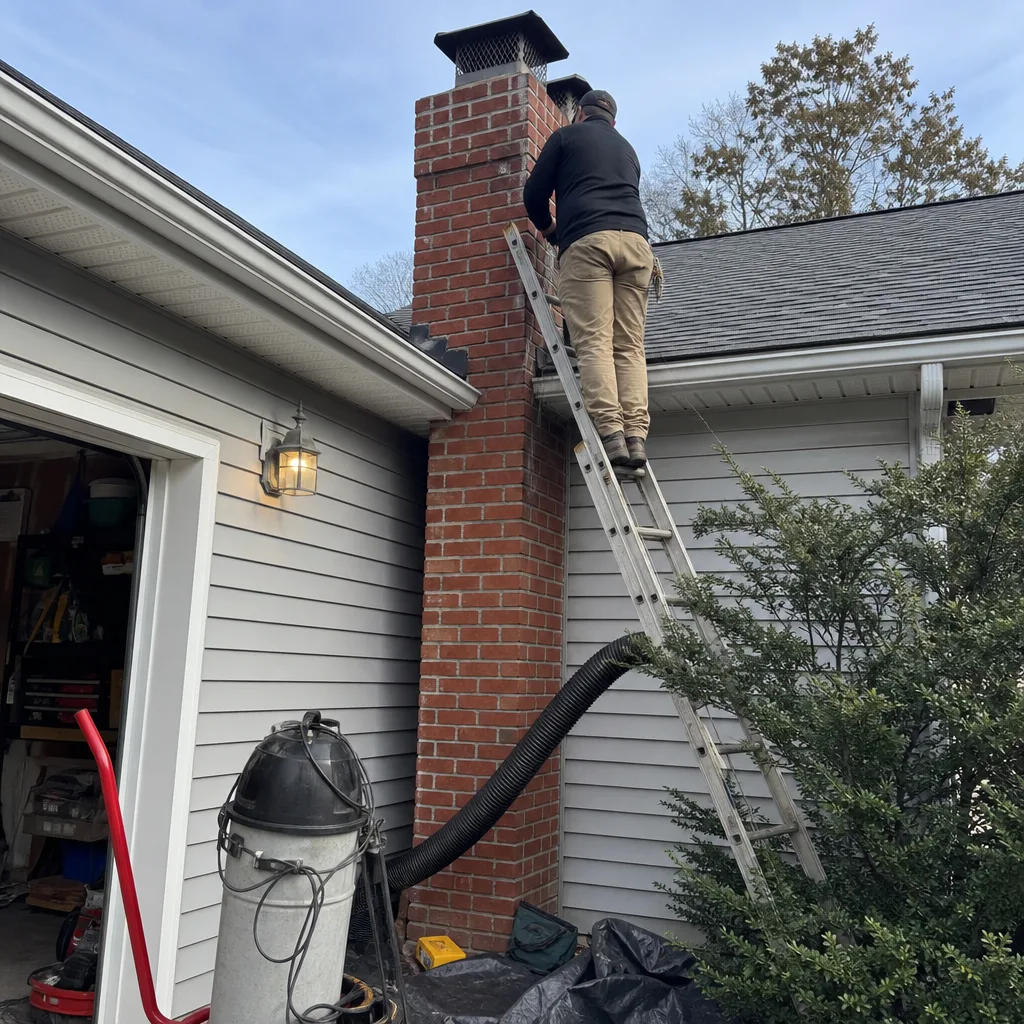 After
After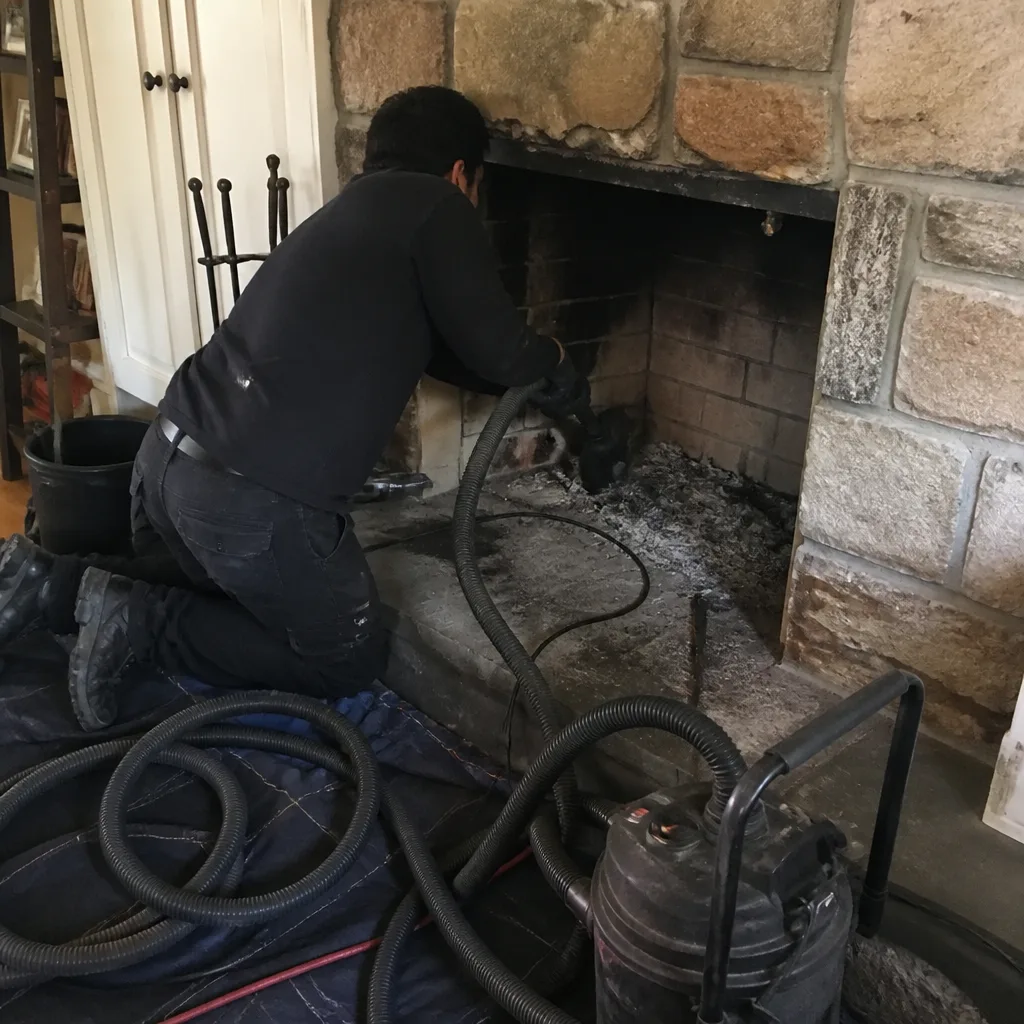 Before
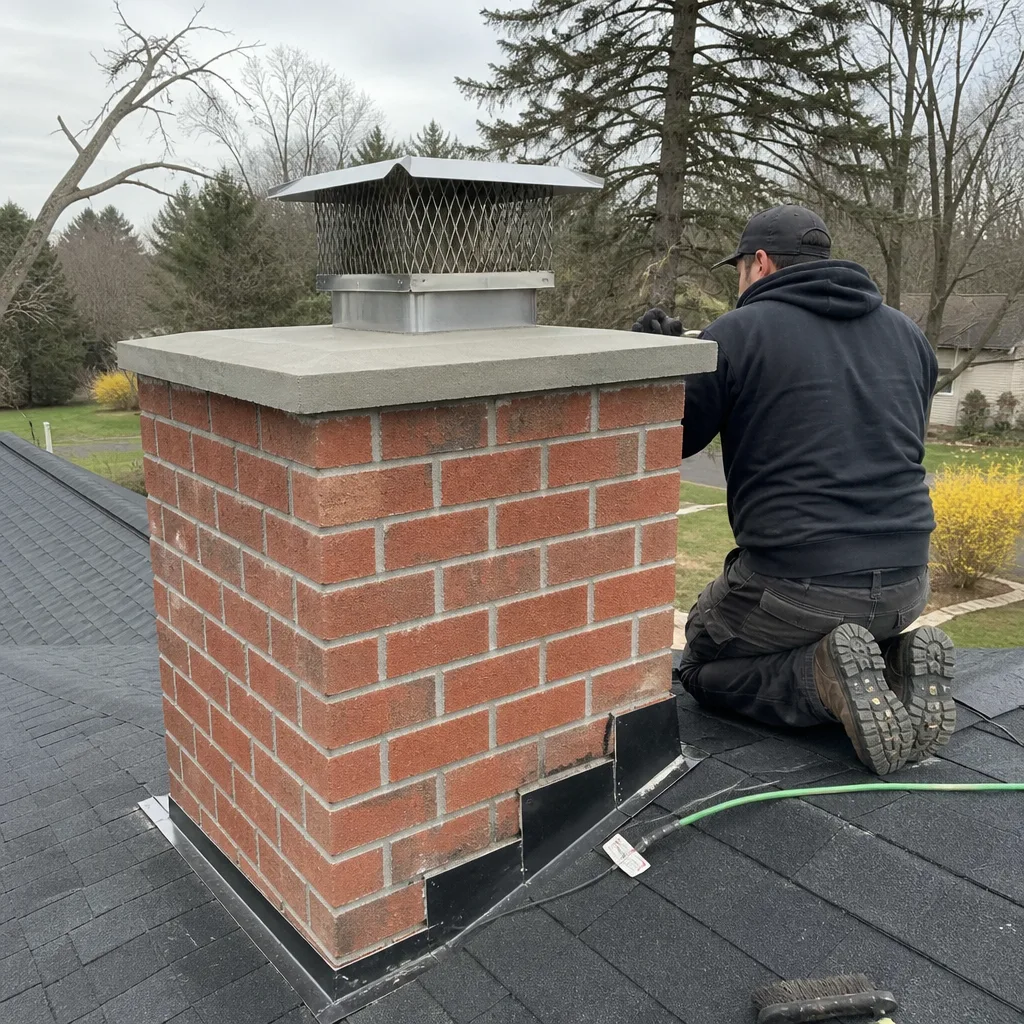 After
After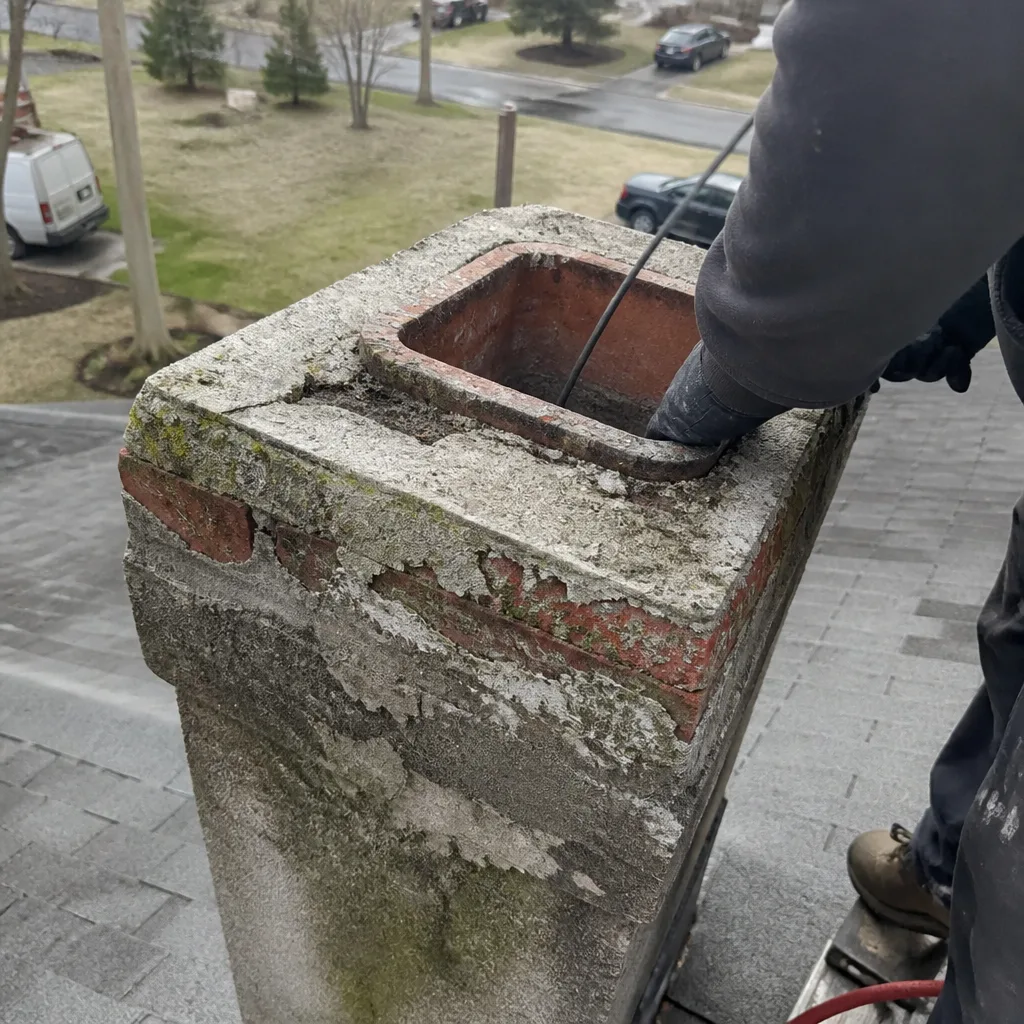 Before
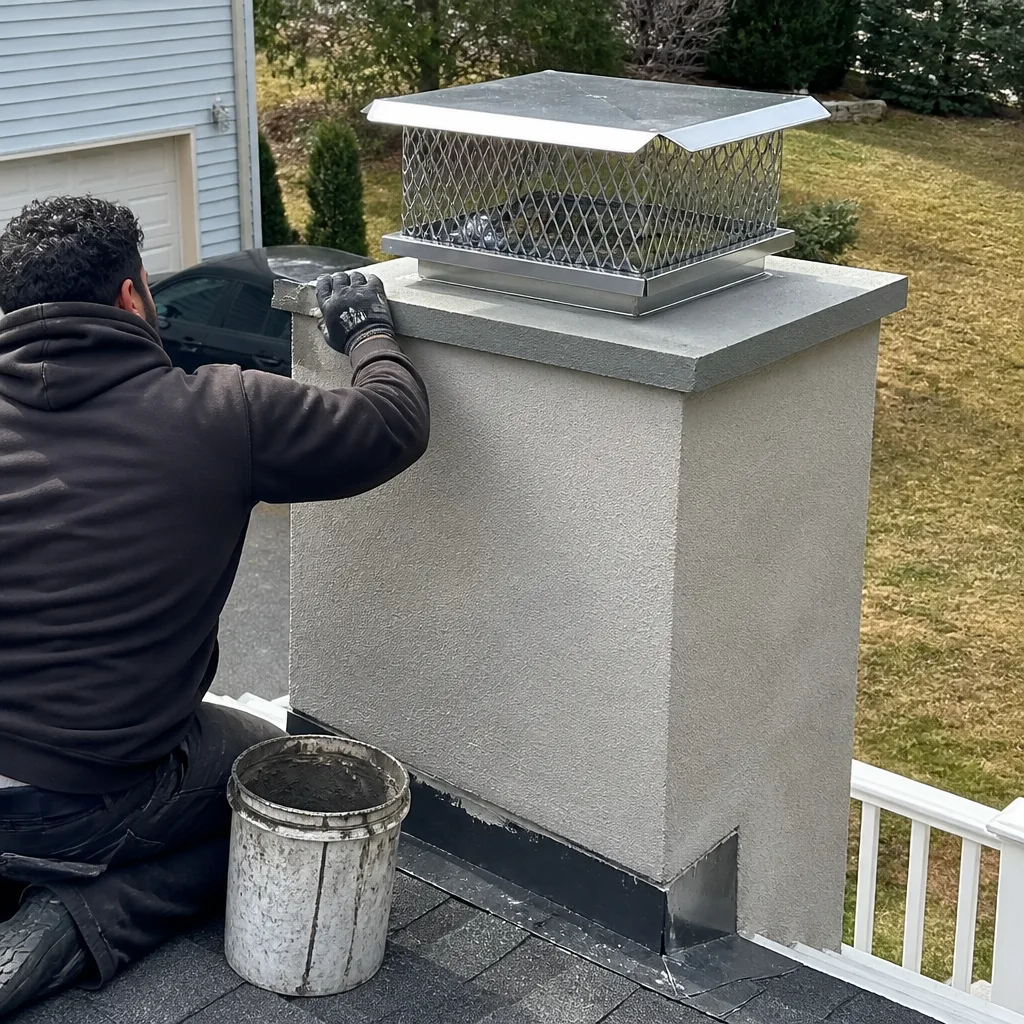 After
AfterThe Complete Guide to Chimney Cleaning in Dix Hills
Here’s a number that should stop you cold: the Chimney Safety Institute of America has spent the better part of thirty years documenting why homeowners feel cheated by chimney work, and the same root cause keeps showing up in complaint after complaint. People simply don’t know what they’re paying for until the van is already in the driveway. In Dix Hills, where a large share of the housing stock predates 1980 and still runs on original clay tile flues, that information gap gets expensive fast. This guide closes it, and our more guides & resources can help with related questions. You’ll learn exactly what a chimney cleaning includes, what it does not include, how pricing works in this market, what creosote stages actually mean, and the specific questions to ask before anyone puts a brush in your flue.
Quick Answer
A professional chimney cleaning in Dix Hills typically costs $189 to $389, depending on creosote stage, flue type, and roof accessibility. The job should include a full Level 1 inspection, mechanical brushing of the entire flue, and documentation of what was found. A legitimate sweep in this area will give you a firm price before tools come off the truck and will show you proof the work was done.
Table of Contents
- What a Level 1 Sweep Actually Covers
- Why Dix Hills Clay Tile Flues Need Different Treatment
- Creosote Stages in Plain Language
- Questions to Ask Before Anyone Touches Your Firebox
- What Chimney Cleaning Costs in Dix Hills
- What a Finished Job Site Should Look Like
- How to Spot Work That Wasn’t Actually Done
- Common Mistakes to Avoid
- When to Call a Professional
- Frequently Asked Questions
- The Bottom Line
What a Level 1 Sweep Actually Covers
Here’s the thing most national franchises won’t tell you on the phone: a “cleaning” and an “inspection” are not two different services. Under the National Fire Protection Association’s NFPA 211 standard, every chimney cleaning is supposed to include a Level 1 inspection as part of the same job. That inspection covers the readily accessible portions of the chimney interior, the firebox, the damper, and the exterior chimney structure. When you schedule a chimney cleaning in Dix Hills, you should get both, whether or not the invoice breaks them out separately.
A proper Level 1 sweep includes:
- Mechanical brushing of the full flue length using correctly sized wire or poly brushes
- Removal of creosote, soot, and debris from the smoke chamber and smoke shelf
- Cleaning of the firebox and removal of ash, soot, and old embers
- Visual inspection of the flue interior for cracks, gaps, spalling, or missing mortar joints
- Damper operation check - does it open, close, and seat properly
- Exterior check of the chimney crown, cap, and brick or stone veneer for visible damage
- Documentation of findings, ideally with camera footage or photos
What a Level 1 sweep does not include is just as important. It does not include a video scan of the entire flue if the technician isn’t lowering a camera. It does not include repair of any defects found. It does not include removing animals, replacing the cap, or rebuilding the crown. Those are separate line items, and you should know that before the job begins, not after. Wendell and his crew have been doing this work in Dix Hills since 1999, and the rule has always been the same: the camera footage and a plain-English verdict, every time, no exceptions.
Why Dix Hills Clay Tile Flues Need Different Treatment
Dix Hills wasn’t built in one wave. The neighborhoods off Half Hollow Road, the older sections around Carlls Straight Path, and the streets near the Northern State Parkway hold homes from the 1950s, 60s, and 70s. Most of those chimneys were built with terra cotta clay tile liners, and those liners have now been through forty, fifty, sometimes sixty winters. Clay tile is a different animal from stainless steel. It holds heat well, but it doesn’t flex. When a clay tile flue heats and cools hundreds of times a year, hairline cracks start to form. Those cracks are exactly where creosote condenses and builds.
This matters for cleaning because a clay tile flue demands more care than a modern steel liner. The brush has to be sized right. Too small, and glazed or Stage 2 creosote stays on the tile walls. Too large, and a cracked tile can be knocked loose entirely. We’ve seen more than one Dix Hills homeowner get a “cleaning” that turned into two cracked flue tiles because a franchise tech ran an oversized steel brush down a fragile 60-year-old chimney, which is why our DIY vs Professional Chimney Cleaning: The Dix Hills Homeowner’s Decision Guide stresses matching the tool to the flue. A proper sweep in this area involves inspecting the tile joints as the brush makes each pass, feeling for obstructions, and stopping at the first sign of structural weakness. That’s not something you rush.
If your Dix Hills home was built before 1980 and you haven’t had a camera inspection, the odds are decent that your clay liner has some degree of crack or spalling. It’s not an emergency in every case, but it does change how often you should be burning and how closely the flue needs watching. For local homeowners looking at chimney repair in Dix Hills, the good news is that most cracked clay tile flues can be resolved with a stainless liner rather than a full rebuild.
Creosote Stages in Plain Language
Creosote is what happens when wood smoke cools on its way up the chimney. The smoke carries unburned particles, and when those particles hit a cold flue wall, they condense into a residue. Over time, that residue layers up. The industry talks about three stages, and the difference between them is the difference between a $200 brush job and a $900 glaze removal. Here’s what each stage actually means for your Dix Hills chimney.
Stage 1: Soot and Flaky Creosote
This is the vanillla version. Light soot, some flaky black dust, maybe a thin film on the tile walls. A standard poly or wire brush knocks it right off. This is what most annual cleanings find in a well-maintained fireplace that burns seasoned wood. If this is all you’ve got, you’re in good shape. One visit, standard price.
Stage 2: Crunchy, Bubbled Creosote
Stage 2 looks like burnt sugar or cornflakes stuck to the flue walls. It’s harder, it’s thicker, and standard brushing doesn’t fully remove it. In our experience in Dix Hills, Stage 2 usually shows up when a chimney hasn’t been swept in two or three seasons, or when someone has been burning unseasoned wood, or when the flue is oversized and the smoke has extra room to cool. Removing it takes longer. Some sweeps use rotary loop tools, others use manual scrapers after the brush pass. Expect to pay more and expect the job to take an extra 30 to 45 minutes. First-degree creosote is a brush job. Third-degree is a glaze - catch it early.
Stage 3: Glazed Creosote
Stage 3 is what happens when Stage 2 sits through enough burn cycles. The residue hardens into a shiny, tar-like glaze. It’s concentrated fuel. It is also the most common cause of chimney fires in Suffolk County, because a hot enough draft can ignite it like a candle wick. You cannot brush Stage 3 off with standard equipment. It requires chemical treatments, rotary chains, or in some cases removal of the liner entirely. This is not a cleaning job anymore. This is a repair decision, and it needs a camera assessment before anyone quotes a price.
Questions to Ask Before Anyone Touches Your Firebox
The single best defense against price-at-the-door nonsense is a short list of questions asked on the phone, before the appointment is even booked. For a full walkthrough, see our How to Hire a Chimney Cleaning Contractor in Dix Hills: A Step-by-Step Guide. Write these down. Don’t skip any. If a company won’t answer them clearly, call someone else.
- “Is the price you’re quoting me now the full price, or does it depend on what you find?” A proper sweep will quote a base price and explain, in plain terms, what could change it. If they hedge, hang up.
- “Does the cleaning include a Level 1 inspection?” The answer must be yes. No exceptions. NFPA 211 requires it.
- “Will you show me the flue after the cleaning?” Camera documentation is standard practice. If they won’t show you proof, do not assume the work happened.
- “What brush size and type will you use on my flue?” This one catches the franchise techs. A chimney with a 8×8 clay tile liner takes a different brush than a 6-inch stainless liner. The person on the phone should be able to answer.
- “Who is actually doing the work?” You want to know if it’s a background-checked, uniformed employee or a subcontractor the franchise hired yesterday. In Dix Hills, the name on the invoice should be the name of the person standing in your living room.
- “What if I think the job wasn’t done right?” Ask for the guarantee in writing. Top Hat Chimney stamps the 90-Day Done Right Promise on every invoice: if the work isn’t right, one call brings Wendell back, no additional cost.
What Chimney Cleaning Costs in Dix Hills
Here’s a realistic breakdown for the Dix Hills market in 2026. These are the ranges we see across Suffolk County, and they assume a typical single-family home with a single flue and reasonable roof access.
| Service | Typical Dix Hills Range | Notes |
|---|---|---|
| Standard Level 1 sweep, Stage 1 creosote | $189 - $249 | Includes inspection and documentation |
| Stage 2 creosote removal | $289 - $389 | Rotary loop or extra brush passes required |
| Stage 3 glaze removal (chemical treatment) | $450 - $900 | Often requires multiple visits |
| Camera inspection (standalone) | $99 - $175 | Usually included or discounted with a sweep |
| Chimney cap replacement | $149 - $349 | Depends on flue size and cap material |
| Chase cover or crown repair | $300 - $1,200 | Varies widely by size and damage |
Roof pitch changes things. A lot of Dix Hills homes have steep rooflines, especially the larger colonial-style properties in the northern section of the hamlet. A chimney that requires a taller ladder, a roof harness, or a second crew member will land higher in the range. The number you hear on the phone should be the number on the invoice, period. If a company can’t commit to that, keep looking. And if you already have a written estimate from another shop, Top Hat Chimney offers a free second opinion on it.
What a Finished Job Site Should Look Like
You can tell a lot about a sweep by what they leave behind. Before the job, the crew should put down drop cloths in front of the fireplace and from the entry door to the hearth. The fireplace opening should be sealed with a vacuum-assisted cover or at minimum heavy plastic and tape. A true HEPA vacuum, not a shop vac, should be running throughout the brushing. After the job, the hearth should be cleaner than when they arrived, and there should be no footprint of soot outside the immediate work area.
Here’s what a complete job looks like:
- Drop cloths in place before any equipment enters the house
- Fireplace opening sealed, HEPA vacuum running through the entire brush pass
- Brush passes made for the full length of the flue, not just the bottom few feet
- Smoke shelf and smoke chamber visually inspected and cleaned
- Firebox swept and wiped down
- Damper operation verified and reported
- Any findings documented in writing, with photos or video
- Warranty or guarantee stated on the invoice
If your hearth is dirtier after the job than before, or if there’s soot dust on the furniture across the room, or if the technician says they’re done but never opened the damper to look, the job was not finished. Call them back. If they won’t come back, you’ve learned a $300 lesson about who not to use next year.
How to Spot Work That Wasn’t Actually Done
The worst thing we hear from Dix Hills homeowners is the story of the sweep who spent twenty minutes in the driveway, collected a check, and never put a brush in the flue. It happens more than the industry likes to admit. Here’s how to know, before and after.
Before the job, watch where they set up. If the technician doesn’t take a brush or rods out of the truck, something’s wrong. Ask to see the equipment. A legitimate sweep has no problem showing you the brush that’s going into your chimney. If they only bring a vacuum and a flashlight, they’re doing surface work.
During the job, you should hear the brush moving through the flue. It sounds like a stiff scraping against the tile or metal. If the technician is in and out in fifteen minutes without a single scrape, they didn’t brush anything.
After the job, ask for the proof. Camera footage doesn’t lie. Wendell has been doing this since 1999, and the rule in our shop is simple: the camera footage and a plain-English verdict, every time, no exceptions. If a company can’t show you before-and-after footage, you’re trusting a stranger’s word. In this business, that’s not enough.
Common Mistakes to Avoid
- Booking a sweep on the lowest phone quote without asking what’s included. The lowball quote often means no inspection, no camera, no documentation. You’ll pay more to fix what they missed.
- Skipping the inspection because “the fireplace works fine.” A working fireplace can hide a cracked flue. The smoke still goes up, but the flammable gas is leaking into the chase. That’s how house fires start in Dix Hills every winter.
- Only cleaning the chimney before burning season. Once a year, burn or no burn. Chimneys break in the off-season too, especially after heavy storms and freeze-thaw cycles on the masonry.
- Letting anyone use an oversized metal brush on an older clay tile flue. That’s how you turn a $200 cleaning into a $2,000 liner job. Ask the sweep what brush they’re using and why.
- Ignoring the creosote stage report. If they tell you it’s Stage 2 and you blow it off, you’re two burn seasons away from Stage 3 and a chimney fire. Clean it up now while it’s cheap.
- Assuming a chimney cap is decorative. It’s not. A missing cap lets rain into the flue, which turns creosote acidic and destroys clay tile. Ask anyone on your street who’s had a $4,000 rebuild.
- Choosing a company without a written guarantee. Verbal promises don’t hold up. Top Hat Chimney puts the 90-Day Done Right Promise on every invoice, in writing, because that’s the only way a guarantee means anything.
When to Call a Professional
Chimney cleaning is not a DIY project, and anyone who tells you otherwise has never stood on a Dix Hills roof in February. You need a professional when you can see creosote buildup on the flue walls, when you smell soot in the house even after the fire is out, when the damper won’t fully open or seat, when birds or squirrels have taken up residence, or when the last sweep was more than a year ago and you burn regularly. Also call if you’re selling or buying a home in Dix Hills; a documented chimney inspection is becoming a standard part of the closing conversation, and lenders are starting to ask. Top Hat Chimney offers free estimates in Dix Hills. Call (631) 318-8656 and you’ll get a live person on the line, not a voicemail box.
Frequently Asked Questions
Once a year, whether you burn or not. The National Fire Protection Association recommends an annual inspection and cleaning as needed. In Dix Hills, the freeze-thaw cycles in winter and the humidity from the Long Island Sound in summer both stress masonry joints, and off-season damage is common. A yearly check catches cracks before they become rebuilds.
Most standard cleanings in Dix Hills run between $189 and $249 for a typical single-flue chimney with normal creosote buildup. Stage 2 creosote removal runs $289 to $389. Roof pitch, chimney height, and flue type can push those numbers higher. Call (631) 318-8656 for an exact quote; Top Hat Chimney gives upfront pricing before any tools come off the truck.
In practice, nothing should separate them. A proper Level 1 chimney sweep includes both cleaning and inspection in the same visit. Any company selling them as separate services without explaining that the cleaning includes a baseline inspection is likely trying to add on fees. The flue is brushed, then examined for cracks, gaps, and creosote stage, and the findings are documented.
You need a liner if the existing one is cracked, spalling, or missing. In Dix Hills, where many homes have original clay tile flues from the 1960s and 70s, cracked liners are common. A stainless liner from brands like DuraFlex or Olympia Chimney will bring the flue back to code and stop heat and gas from leaking into the house structure. You don’t need a liner just because someone says so, though. Ask for camera proof. Top Hat Chimney will show you the footage and explain whether the work can wait.
Creosote builds. Stage 1 becomes Stage 2, then Stage 3. A chimney fire becomes possible, and even a small one can crack clay tiles and send flames into the attic. Carbon monoxide can also back up into the house if the flue is blocked, and that kills people without warning. It’s not scaremongering. It’s the physics of what happens when you burn wood in a dirty flue.
A professional crew shouldn’t. Drop cloths go down before any equipment enters, the fireplace opening is sealed, and a HEPA vacuum runs through the whole job. Afterward, the hearth should be cleaner than before. If a company leaves soot dust on your furniture, they didn’t do the job right. Every Top Hat Chimney job is covered by the 90-Day Done Right Promise, so if something isn’t right, one call brings Wendell back.
The Bottom Line
Chimney cleaning in Dix Hills is a straightforward job when it’s done right: a mechanical sweep of the full flue, a Level 1 inspection, and documentation you can see. Prices are fair and predictable when the company commits to a number before the work starts. The risk isn’t the chimney itself; it’s the unknown, the invoice that changes at the door, and the tech who spends twenty minutes in the driveway and calls it done. Ask the questions. Get the footage. And if you want a sweep who’s been doing this work in your community since 1999, with a written guarantee and a live person on the phone every time, you know where to find us. Call (631) 318-8656 for a free estimate on chimney cleaning, fireplace services in Dix Hills, or any chimney repair your home needs.
Written by Wendell Pike, Owner at Top Hat Chimney, serving Dix Hills since 1999.